Portuguese
  Spanish


Natural fields, savannas, and open areas support billions of people, store carbon in the soil, and enter the center of the global debate against drought and desertification
The UN raised an alert on World Day to Combat Desertification and Drought, celebrated on June 17, by drawing attention to a group of ecosystems often overlooked: natural fields, savannas, shrublands, and natural pastures. These open landscapes, known internationally as rangelands, cover about half of the Earth’s surface and directly sustain the lives of billions of people.
The problem is that up to half of these areas are already degraded or at risk of degradation, in a silent process that threatens food, water, biodiversity, and rural ways of life. Although environmental discussion often focuses on forests, scientists and international organizations have been emphasizing that the loss of natural fields can have equally severe consequences.
According to the message from the UN Secretary-General, António Guterres, released on June 17, 2026, protecting the future requires protecting the land. The statement was made in a context of growing concern about areas that store carbon in the soil, regulate water cycles and serve as a basis for activities such as livestock, family farming, and traditional herding.
-
New York removed the tracks from over 2,500 subway cars and dumped everything at the bottom of the Atlantic, and what seemed like trash turned into an artificial reef teeming with fish and divers.

-
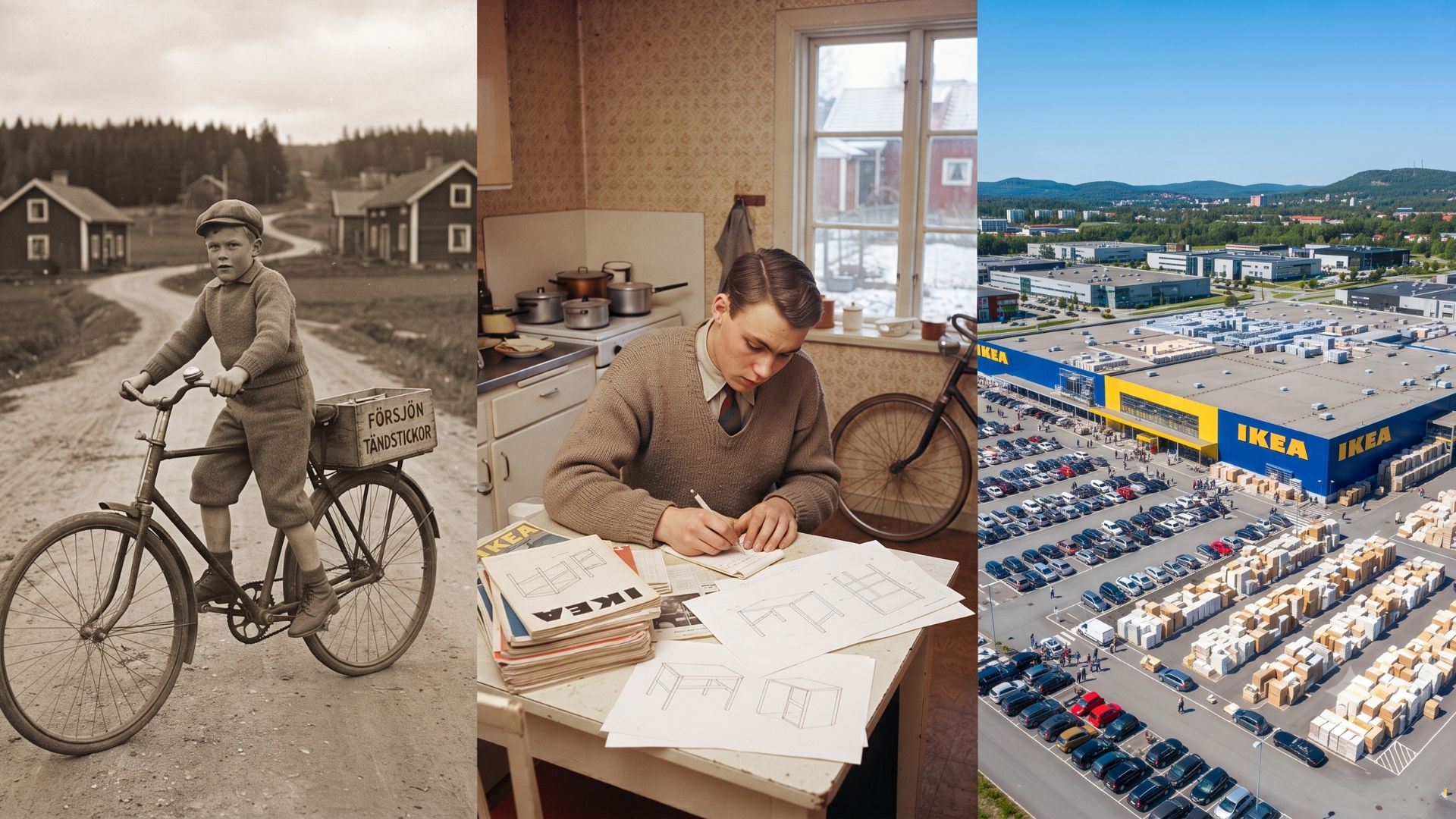
From matches sold by bicycle at age 5 to a global furniture empire: the lumberjack’s son founded IKEA at 17 in his uncle’s kitchen and transformed a small company into the largest furniture retailer on the planet.
-
The mansion in Flamengo, built in 1865 for the Baron of São Clemente and closed for 20 years, has become a spa, event hall, and gym for “Symphony,” a luxury condominium that sold 70% of its gross development value in the first month on the R$ 60 million land of the former Bennett College.

-
The Ipiranga convent, a 1924 building adjacent to the Museum that remained vacant for a decade and became home to dozens of cats, is reborn as “Alma Mater,” a luxury development worth R$ 130 million with a pool in the courtyard and a clubhouse in the former nuns’ chapel.




This year’s global campaign has the theme “Recognize, Respect, and Restore”, focusing on natural pastures and the people who depend on them. The international observation was held in Kenya, a country where pastoral systems have strong economic, social, and cultural significance.
The global alert on open lands that support billions of people
According to the United Nations Convention to Combat Desertification, rangelands encompass savannas, natural fields, shrublands, deserts, wetlands, and mountain regions used by wildlife or herds. They are very different ecosystems, but united by a common characteristic: they depend on the balance between soil, water, vegetation, and human management.
These areas provide meat, milk, fibers, natural resources, and essential environmental services. At the same time, they serve as habitats for countless species and help maintain carbon stored in the soil, a decisive point in the discussion on climate change.
The UN’s alert is direct because the degradation of these landscapes does not only affect rural communities. When the soil loses vegetation cover, fertility, and the ability to retain water, the consequence also appears in food inflation, water supply, and increased vulnerability to prolonged droughts.
Why desertification does not just mean advancing sand
The most common image associated with desertification is that of dunes swallowing plantations or villages. In practice, the phenomenon is broader and occurs when the land loses its productive capacity in arid, semi-arid, and dry sub-humid regions.
This process can be caused by climate change, deforestation, excessive land use, overgrazing, poorly planned irrigation, and inadequate exploitation of native vegetation. The result is a gradual loss of fertility, reduced water infiltration, and increased erosion.
The impact is often slow, making the problem harder to notice. A degraded area may continue to look “green” at certain times of the year, but it can no longer sustain the same biodiversity, agricultural productivity, or water storage capacity.
Desertification also does not mean that the entire affected territory will turn into a sand desert. In many cases, what occurs is the formation of impoverished, compacted soils vulnerable to droughts, with lower food production and greater dependence on external aid or rural migration.
Brazil enters the debate with Cerrado, Pampa, Caatinga, and Pantanal under pressure
In Brazil, the discussion about natural fields and savannas directly involves biomes like Cerrado, Pampa, and Caatinga, as well as open areas associated with the Pantanal. These environments are essential for national biodiversity but often receive less public attention than the Amazon.
According to information from the Ministry of Environment and Climate Change, the Brazilian Action Plan to Combat Desertification and Mitigate the Effects of Drought, released in December 2025, outlines 38 strategic objectives and 175 actions until 2045. The initiative targets areas susceptible to desertification and aims to reach about 39 million people in over 1,600 municipalities.
The Caatinga appears as one of the most sensitive territories, as it combines a semi-arid climate, a history of intensive vegetation use, and communities highly dependent on local natural resources. In June 2026, the federal government also announced the Recaatingar Program, aiming to recover 10 million hectares of degraded land by 2045.
The Cerrado, in turn, is a strategic tropical savanna for water production in the country. Its deep roots help with rain infiltration and the maintenance of springs, but the accelerated conversion of native vegetation for agricultural use has pressured soils, rivers, and endemic species.
In the Pampa, natural fields sustain a unique landscape in the South of the country, with a strong relationship between livestock, biodiversity, and regional culture. The replacement of these areas with crops, forestry, and intensive land use concerns specialists because it reduces the diversity of native plants and alters the water dynamics.
The Water Crisis Reinforces the Risk of Ignoring Open Landscapes
The debate about natural fields and savannas gains momentum at a time of water alert in Brazil. According to recent data from MapBiomas Água, the Amazon recovered part of its water surface in 2025 after two years of severe drought, but the country still shows a trend of reduction over the last four decades.
The Pantanal, one of the biomes most dependent on the natural alternation between floods and droughts, was 56% below the historical average of water surface in 2025. Even with an increase compared to 2024, the data shows that recovery is still far from the pattern observed between 1985 and 2025.
This change is concerning because fields, savannas, and wetlands function as natural regulatory structures. When vegetation is degraded, the soil retains less water, rivers receive more sediments, and dry periods tend to cause more intense damage.
Water loss does not depend solely on rainfall. It is also linked to how the land is occupied, the preservation of native vegetation, and the soil’s ability to absorb and release water slowly throughout the year.
Restoring Fields and Savannas Has Also Become an Economic Discussion
The restoration of these landscapes is not just an environmental issue. According to the UNCCD, investments in rangeland recovery can generate returns of up to US$ 35 for every US$ 1 invested, considering gains in productivity, water retention, soil carbon, and reduction of damage caused by degradation.
In practice, restoring does not simply mean “planting trees” anywhere. In natural fields and savannas, recovery needs to respect the typical vegetation of these environments, which often depends on native grasses, shrubs, deep roots, and proper management of fire and grazing.
This point is important because transforming every open area into a forest can lead to ecological error. In many cases, what needs to be protected is precisely the original open landscape, with its own biodiversity and its role in climate and water balance.
Traditional Peoples and Shepherds Enter the Center of the Solution
The UN also seeks to give visibility to indigenous peoples, traditional communities, family farmers, and shepherds who have managed these landscapes for generations. In various regions of the world, local knowledge helps prevent soil overload and maintain vegetation in conditions to regenerate.
According to the FAO, 2026 was declared the International Year of Rangelands and Pastoralists to highlight the importance of these groups in food security, ecosystem conservation, and climate adaptation. The proposal is to show that traditional management, when supported by public policies and science, can be part of the solution.
The challenge is to balance production and conservation without turning rural communities into scapegoats for a problem that also involves the market, land use policies, urban expansion, climate change, and production models poorly adapted to environmental limits.
In Brazil, this discussion is directly connected to the semi-arid region, the southern fields, the Cerrado, and territories where the permanence of families depends on technical assistance, water security, adequate credit, and the appreciation of native vegetation.
What changes when these areas stop functioning as natural protection
Healthy natural fields and savannas act as buffers against climate extremes. They help retain water, reduce erosion, support pollinators, shelter wildlife, and maintain economic activities linked to the countryside.
When these areas degrade, the effect appears in a chain reaction. Productivity falls, production costs increase, communities become more vulnerable to drought, and governments start spending more on emergency measures.
Degradation also affects biodiversity. Many species depend on open landscapes and do not survive in areas converted to monocultures, poorly managed pastures, or exposed soils.
Therefore, the UN’s message in 2026 is clear: looking only at forests is not enough. The protection of climate, water, and food security also depends on recognizing the value of natural fields and savannas that, despite being discreet, support an essential part of life on the planet.
The big controversy is that many of these areas are still treated as “voids” ready to become farmland, intensive pasture, or development. Do you think Brazil protects the Cerrado, the Pampa, and the Caatinga too little compared to the Amazon, or should economic production continue to be a priority in these territories? Leave your opinion in the comments.