Portuguese
  Spanish


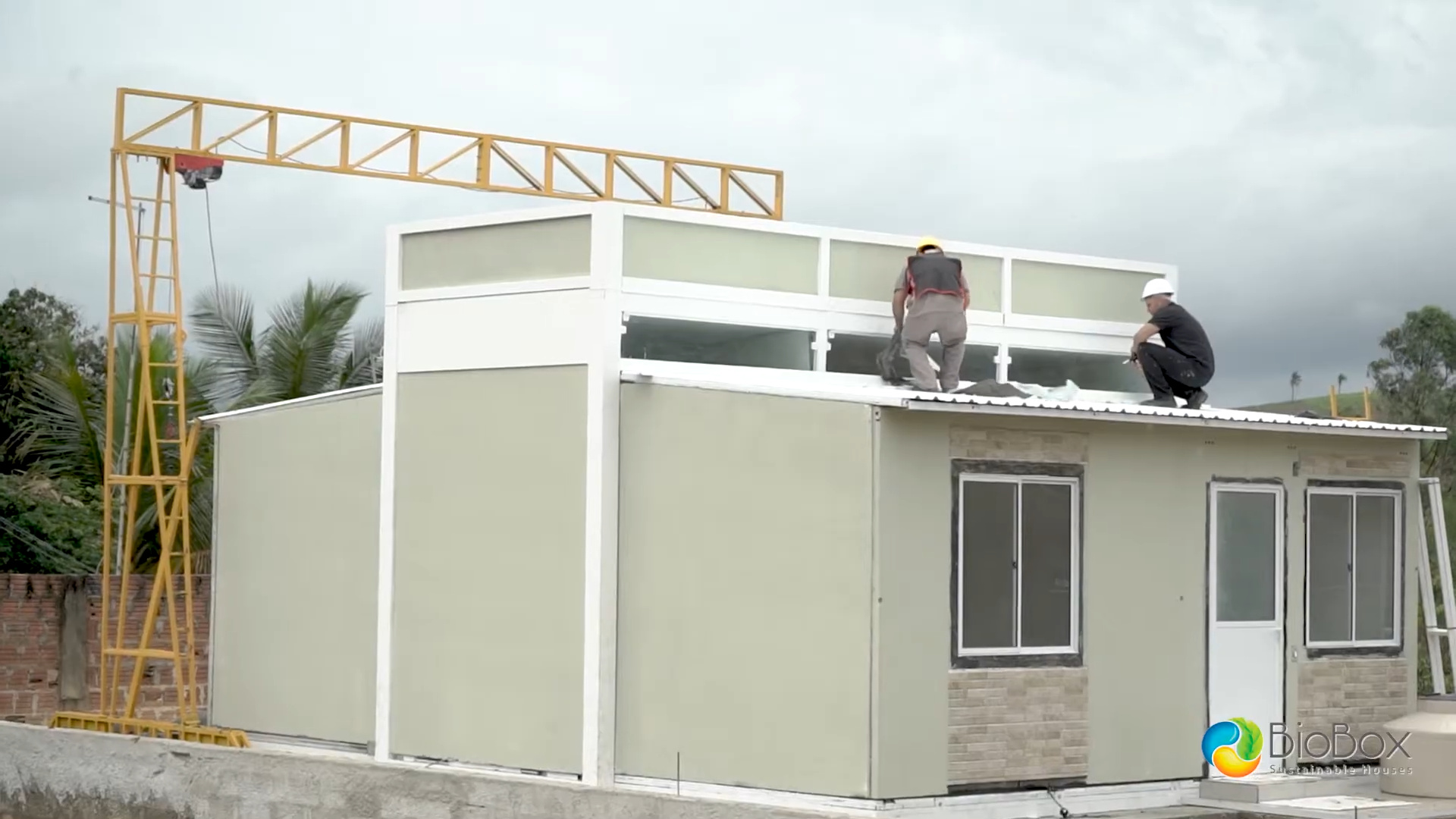

Brazilian company called BioBox Houses sells modular homes that arrive ready by truck and can be installed in a few hours.
In May 2026, the idea of a house leaving a factory practically ready and arriving at the site by truck was already appearing as a commercial product in Brazil with BioBox Houses, a company operating in the industrialized modular construction market. In the official portfolio consulted on May 9, 2026, the company states that its units leave the production line “fully ready” and can be shipped on a common truck, with models capable of being installed on the site in 8 hours, depending on the chosen configuration.
The differential lies in the level of industrialization of the property before delivery. According to BioBox itself, the modules are produced with a logic similar to an assembly line, with step-by-step control, and can include ready hydraulic and electrical installations, flooring, LED lighting, equipped bathrooms, kitchen with cabinet, sink, frames, and internal finishing. In practice, the system shifts a large part of the work from the construction site to the factory environment, reducing the dependence on long months of traditional construction on the land.
The models reported by the company range from 53.37 m² to 115.15 m², with layouts ranging from a compact unit with a suite to a larger house with four bedrooms, three bathrooms, and two suites.
-
U.S. City Builds Tiny Home Village on Water Company Land to House 136 Homeless People: Inside the Social Housing Units

-
Woman Turns Shipping Container into Home, Embraces Rural Life to Cut Monthly Expenses to Just Over $330
-
France Revamps 530 Social Housing Units with Large Balconies and Glass Facades Without Demolishing Existing Buildings

-
Facing high rent, couple transforms parents’ garage into a fully functional apartment, creating a complete home at a fraction of the market cost.




BioBox Houses bets on industrialized construction instead of traditional building methods
The logic of BioBox Houses differs from conventional construction. Instead of building the residence brick by brick on the site, the company manufactures complete structural modules within a controlled industrial environment.
After that, the units are transported by truck to the installation site. According to the company, this reduces construction time, waste, and climatic exposure during construction.


One of the main attractions of the modular system is precisely the level of pre-fabrication. The units already leave the production line with:
- electrical installations;
- hydraulic systems;
- bathrooms;
- lighting;
- coverings;
- frames;
- internal finishing.
This means that much of the assembly typically done on-site has already been completed at the factory.
Some BioBox Houses models can be installed in about 8 hours
According to information released by the company itself, certain models can be positioned and connected in approximately eight hours after arriving at the site.

This timeframe typically refers to the main structural installation. Nevertheless, the number is striking because it contrasts sharply with conventional construction projects that can last for months. The central proposal is to drastically reduce the time between manufacturing and occupying the house.
Portfolio ranges from 53 m² to over 115 m²
BioBox sells different sizes of modular residences. According to the official portfolio, models vary between:
- 53.37 m²;
- 69.40 m²;
- 88.05 m²;
- 115.15 m².
The company focuses on contemporary designs with large glazed surfaces and visual integration with outdoor environments.
Structures are produced in a controlled industrial environment
One of the frequently cited advantages of modular construction is the industrialization of the process. Producing modules in a factory allows for:
- climate control;
- greater standardization;
- less waste;
- stricter quality control;
- reduction of delays caused by rain.

Modular homes aim to reduce construction waste
Traditional construction usually generates large volumes of waste. Industrialized models try to reduce this problem by using more standardized processes and planned cuts.
Furthermore, some of the material losses typical of conventional construction can be minimized in a factory environment.

Another important aspect of the system is logistics. The houses are transported in modules by road to the client’s land.
This requires planning dimensions, routes, and transport capacity. Depending on the size of the unit, cranes may also be needed during positioning.
Despite their speed, these houses still require local infrastructure. Even highly industrialized models typically require:
- foundation;
- structural base;
- electrical connections;
- water;
- sewage;
- municipal approvals.
The main gain is in the reduction of structural work carried out directly on site.
Modular market grows in Brazil with a focus on speed and predictability
The modular sector has been gaining ground in Brazil in recent years. This growth is linked to factors such as:
- rising labor costs;
- frequent construction delays;
- search for predictability;
- interest in sustainable construction;
- modular tourism;
- expansion of tiny houses.
Industrialized houses aim to function as a product and not just as a construction project
One of the biggest changes brought by companies like BioBox is the attempt to transform housing into an industrial product.
Instead of each house being built practically from scratch, the system works with standardized modules and repetitive manufacturing.

This brings the sector closer to the industrial logic seen in automobiles and electronic equipment. A large part of modern modular homes strongly bets on contemporary architecture.
Large windows, straight lines, integration with nature, and minimalist finishes help differentiate these projects from old prefabricated constructions associated with simple or temporary structures.
Modular construction also advances in tourism and hospitality
In addition to permanent housing, the modular market has grown significantly in:
- hotels;
- cabins;
- resorts;
- glampings;
- rural accommodations;
- short-term rental projects.
The speed of installation has become one of the main attractions for investors