






 Portuguese
  Spanish


Storm chasers followed a tornado in Oklahoma on May 17, while recording pressure drop, wind of 128.8 mph, and debris on the road. The team tried to use a drone with sensors to measure the funnel, but the operation showed how extreme research depends on seconds, routes, and calculated risk.
Storm chasers got close to a tornado in Oklahoma on May 17, during a field operation to observe wind, pressure, and funnel behavior in real-time. The team recorded gusts of 128.8 mph, saw debris crossing the road, and attempted to launch a drone with sensors into the circulation.
According to a video published by meteorologist Reed Timmer on YouTube in May 2026, the operation’s record shows the team moving in a specialized vehicle, following the formation of more than one tornado and trying to position instruments while the storm changed intensity. The action involved direct measurements, an attempt to use an FPV drone, and confirmation of the tornado for the United States national weather service.
Tornado appeared in front of the team and changed the operation in seconds
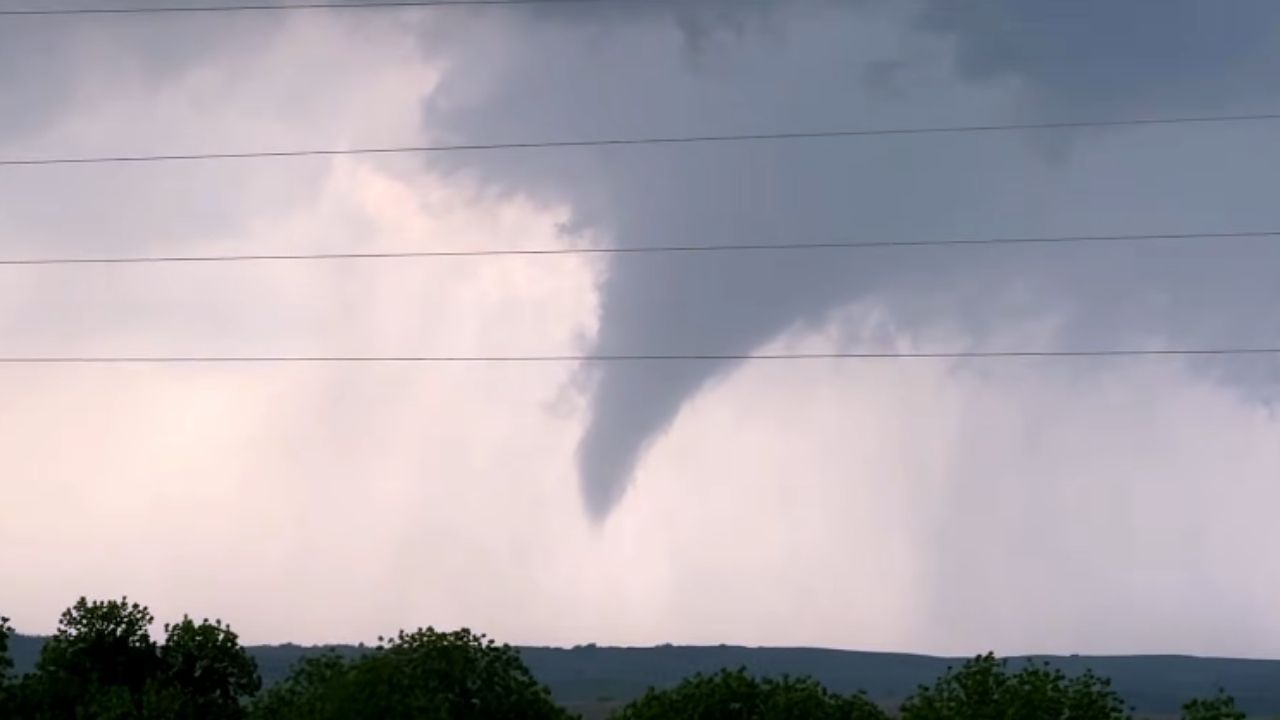
The chase began with the formation of an intense circulation in the storm. The team identified signs of rotation, inflow, and condensation while trying to position themselves on a safe route to intercept the tornado without missing the observation window.
-
Iranian Scientists Develop Artificial Brain in Lab Using Living Human Neurons Capable of Learning and Forming Neural Networks

-
UK Selects Abandoned Nuclear Island for Rolls-Royce Reactors to Test Mini-Plant Viability Over 60 Years

-
12-Year-Old Indian Girl Invents FreshPaper, a Spice-Inspired Sheet That Extends Fruit Freshness by Four Times, Now Patented in the U.S.

-
South Korea Tows 18 Concrete Blocks Weighing Up to 48,000 Tons Over 36 km to Construct a 3.2 km Underwater Tunnel Between Busan and Geoje, Installed Nearly 50 Meters Deep




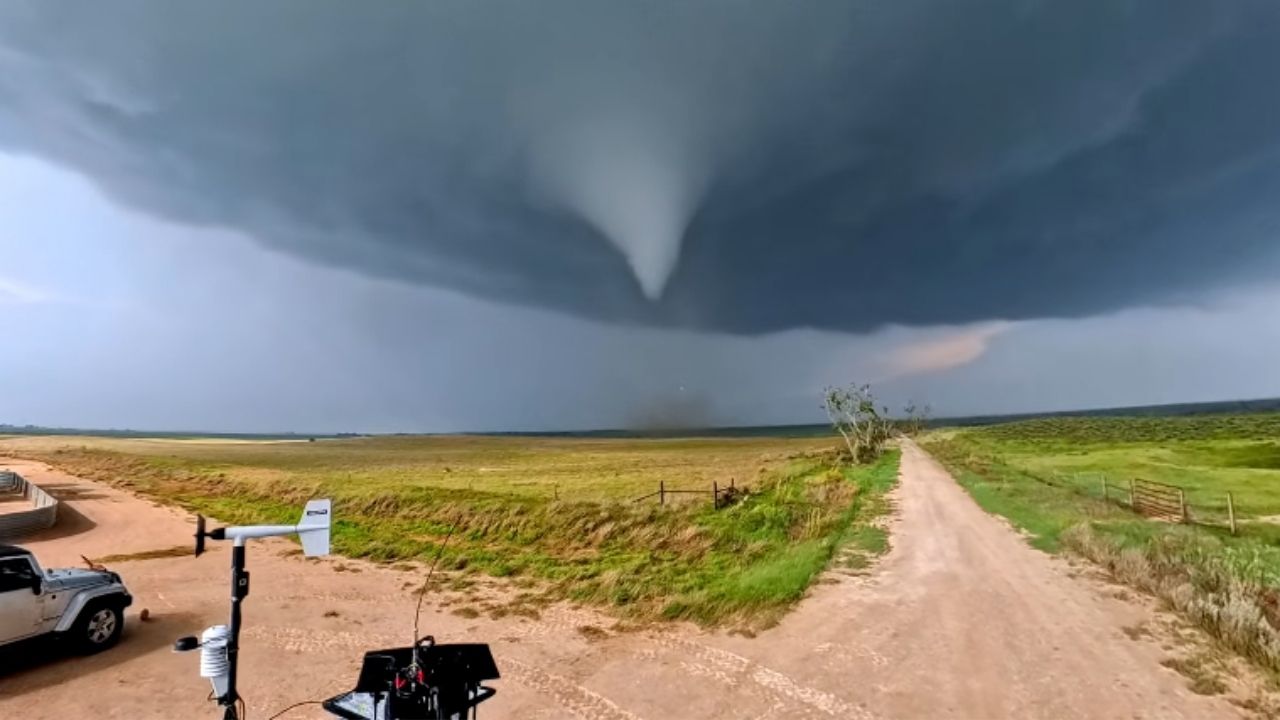
The scenario changed quickly when the funnel approached the road. In a few seconds, the operation went from being just distant observation to requiring immediate decisions: advance, stop, measure, launch sensors, or retreat before the circulation hit the vehicle.
Wind of 128.8 mph showed the strength of the phenomenon
During the interception, the instruments recorded wind of 128.8 mph, equivalent to approximately 207 km/h. The measurement appeared in a short interval, of about 30 seconds, precisely when the team was close to the circulation and trying to maintain control of the situation.
This data helps explain why Storm Chasers use reinforced vehicles and specific equipment. Wind in this range can turn loose objects into projectiles, lift dust, drag debris, and make any positioning error extremely dangerous.
Pressure drop helped reveal the interior of the circulation
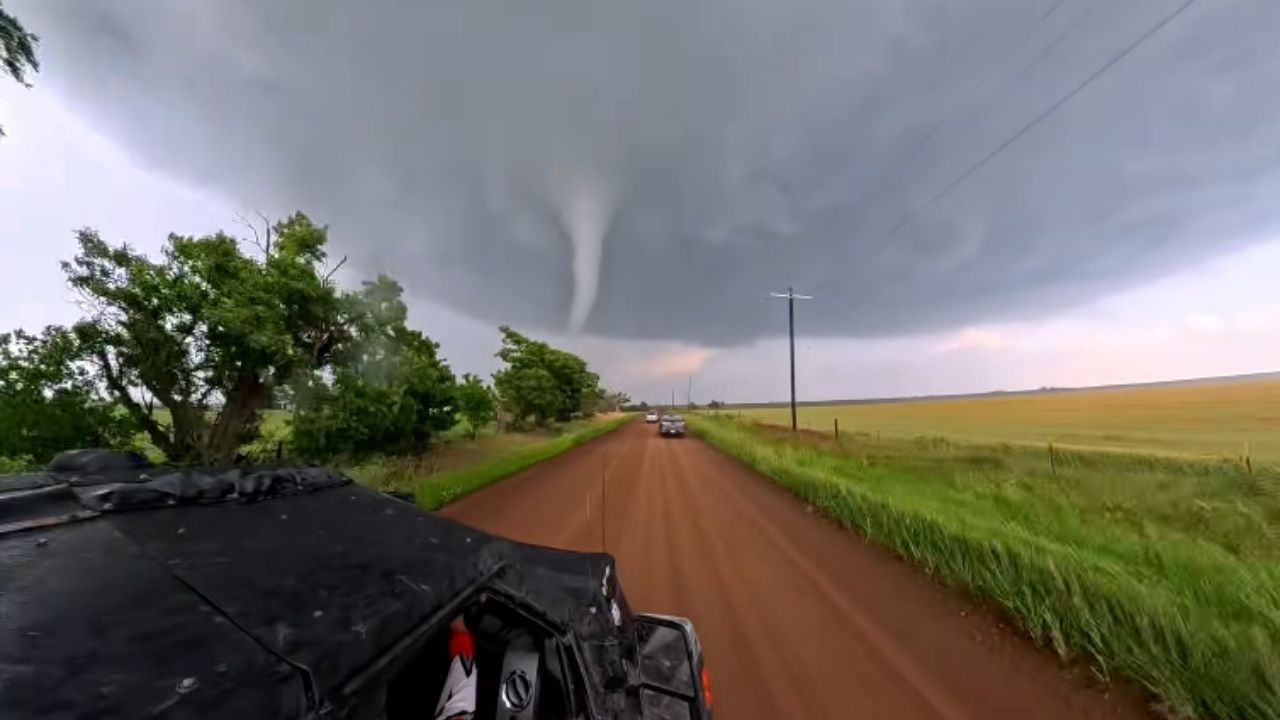
Besides the wind speed, the team also mentioned a pressure drop during the passage through the most intense area. This type of data is important because tornadoes are not just visible columns of dust or cloud; they also involve abrupt changes in atmospheric pressure.
Measuring pressure inside or near a tornado can help researchers better understand the structure of the phenomenon. The combination of pressure, wind, and close-range images offers a more complete reading of what happens inside the circulation.
Drone with sensors became a bet to enter the funnel
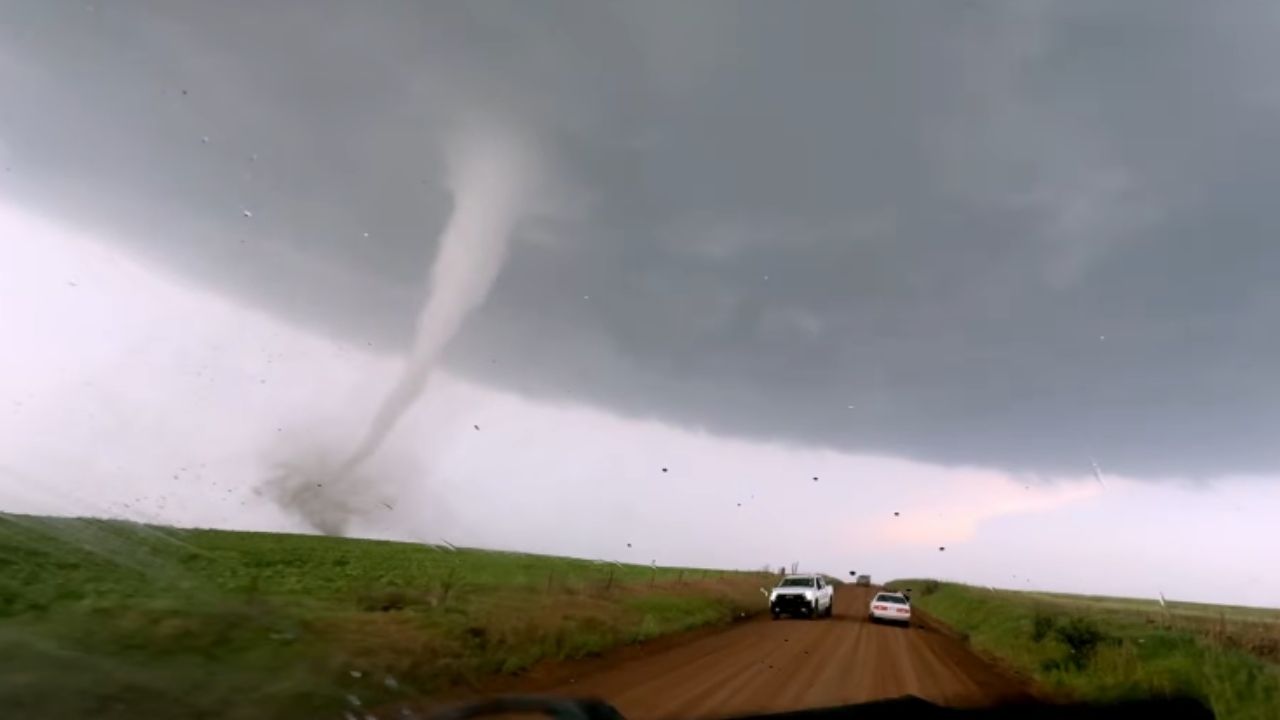
One of the objectives of the operation was to launch a drone with sensors to take instruments inside the tornado. The team tried to use equipment capable of extending the range of collection, with the idea of releasing small probes inside the circulation.
The attempt, however, showed how much this type of research depends on technical details. The drone faced calibration difficulties, problems arming during the vehicle’s movement, and operational failures in an unstable environment. Even with advanced technology, the storm set its own pace.
Debris on the road increased the risk of approach
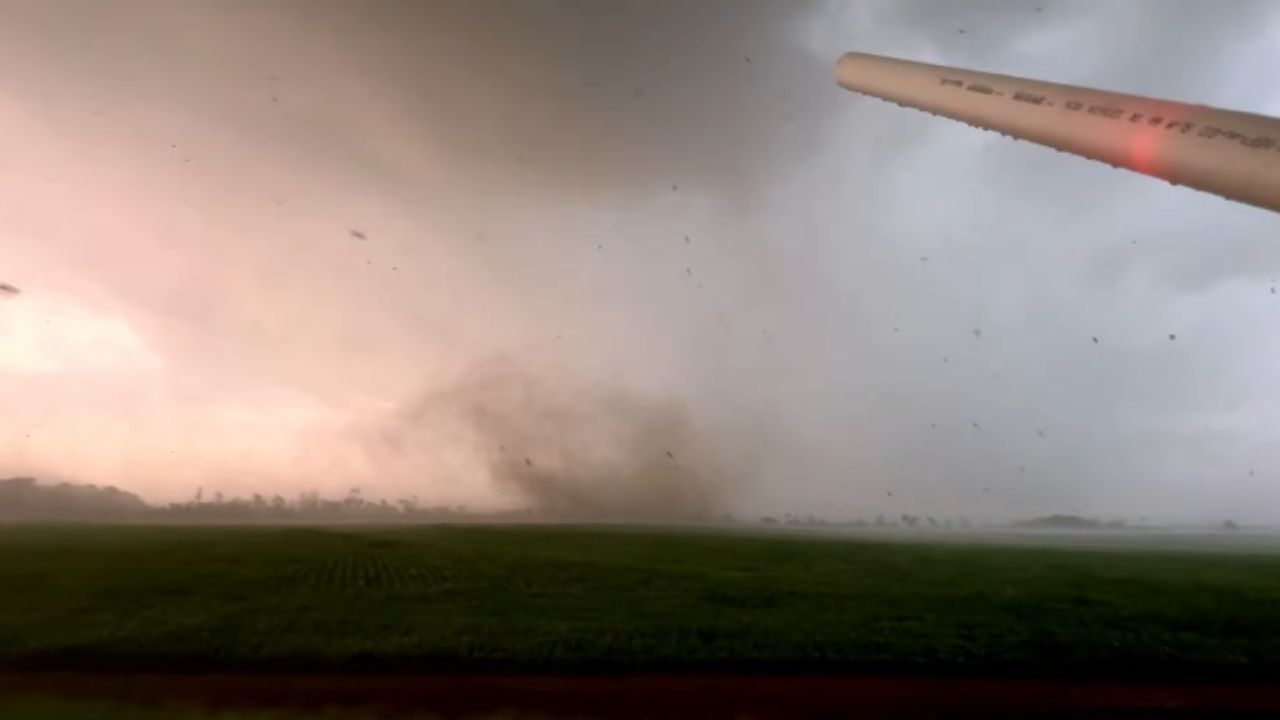
As the tornado advanced, the team observed debris and materials crossing the road. In one of the most tense moments, signs, wood, dust, and remnants of vegetation appeared near the path, indicating that the circulation was already strong enough to uproot and transport objects.
For storm chasers, this is one of the greatest dangers of interception. It’s not enough to know where the tornado is; it’s necessary to predict where it will go, which road still allows escape, and if there are obstacles, other vehicles, or debris blocking the route. The margin of error decreases when the funnel crosses the path.
Extreme science tries to measure what is normally avoided
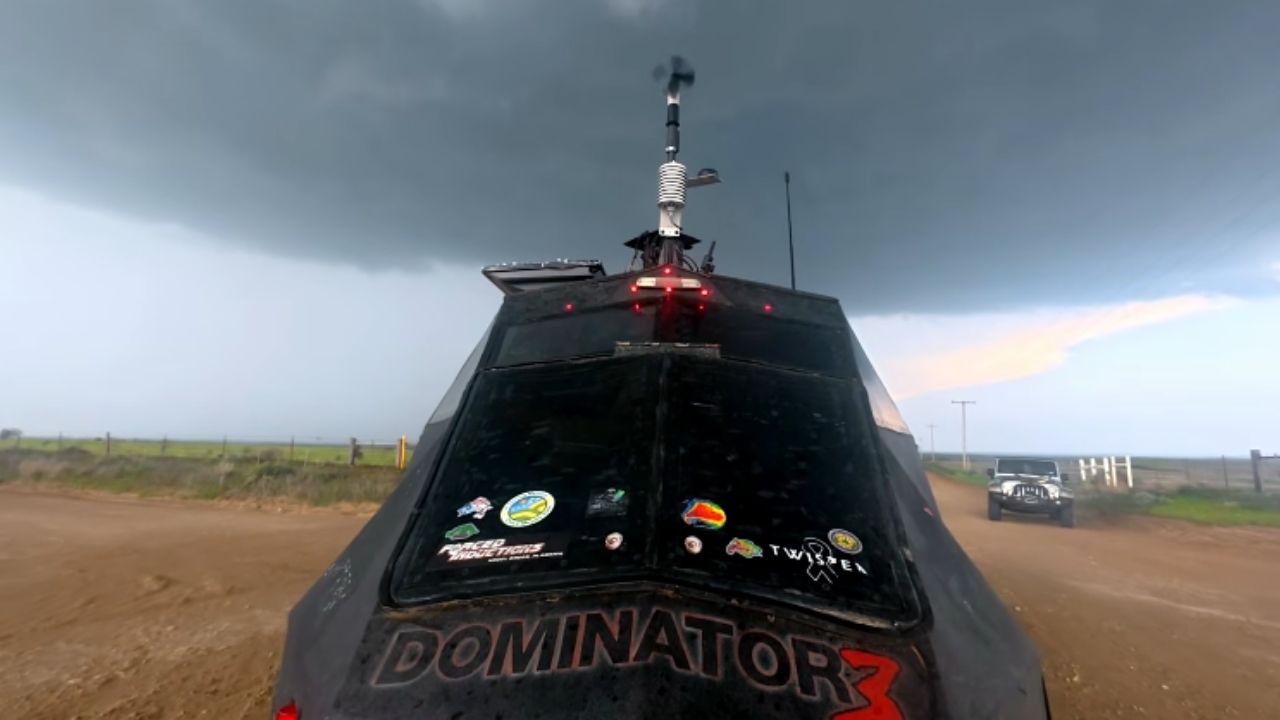
Most safety recommendations advise people to stay away from tornadoes, seek shelter, and avoid vehicles during severe storms. For research teams, the logic is different, but the risk remains high: they approach to collect data that would hardly be obtained otherwise.
These measurements can help improve models, understand wind variations, observe rapid changes in circulation, and assess how tornadoes form, weaken, or reorganize. The science behind the chase does not eliminate the danger, but it tries to turn controlled exposure into useful information.
Operation showed partial success and equipment limits


Even without being able to obtain all the desired data with the drone, the operation generated important information through the instruments installed on the vehicle. The measurement of 128.8 mph and the record of pressure drop indicate that the team managed to cross a relevant area of the phenomenon.
At the same time, the failures in launching the drone show that new tools still need to be perfected to work in the real field. In the laboratory, sensors and aircraft may respond well; in the face of extreme wind, dust, haste, movement, and immediate risk, every technical detail becomes a condition for operational survival.
The warning is for those who see the scene as an adventure
The images may seem cinematic, but the operation should not be mistaken for a common adventure. Storm chasers use radar, communication, escape routes, prepared instruments and vehicles, as well as training to interpret the atmosphere in real-time.
The case in Oklahoma shows how meteorological research can get close to the limit to understand violent phenomena. For you, does this type of operation justify the risk in the name of science, or are storm chasers getting too close to an uncontrollable force?


