Portuguese
  Spanish


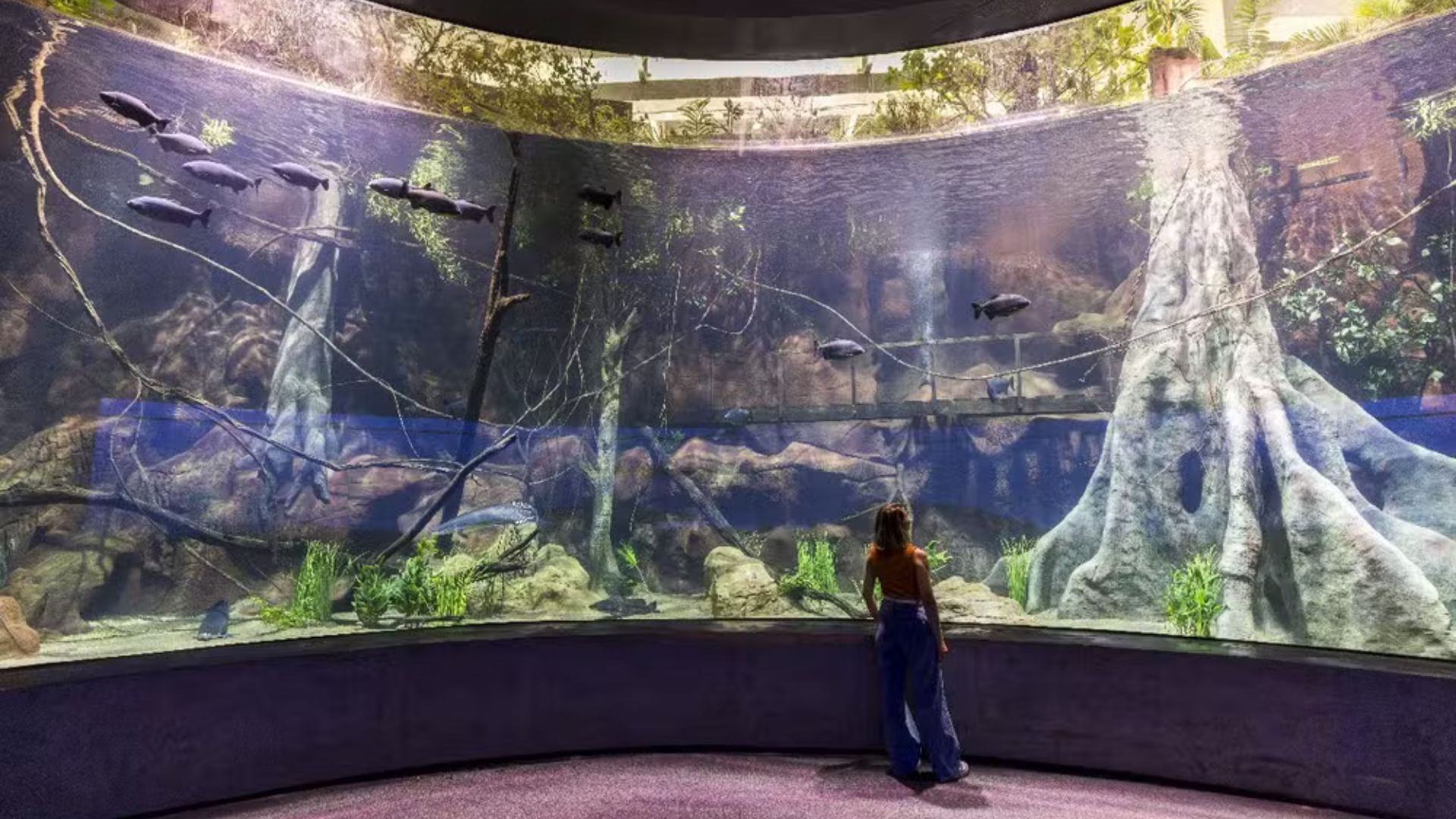

One of the largest aquariums in Latin America emerges next to the Iguazu Falls with 3.3 million liters of water and a structure designed to take tourists from rivers to the ocean
Foz do Iguaçu was already internationally recognized for the Iguazu Falls, but now it has gained a new giant of Brazilian tourism. According to AquaFoz and the Grupo Cataratas, the enterprise gathers 3.3 million liters of water, 23 thousand square meters of built area, and more than 300 species, establishing itself as one of the largest aquariums in South America.
The new complex was conceived to go beyond the traditional contemplative experience. According to AquaFoz, the immersive journey takes visitors through different aquatic environments, connecting the water paths from the Iguaçu and Paraná rivers to the ocean. The Grupo Cataratas states that the project was structured to unite tourism, research, education, and conservation in a single attraction.
AquaFoz joins the group of the largest aquariums in South America
The size of the enterprise is what first draws attention. According to AquaFoz, the tanks total 3.3 million liters of water distributed in a structure of 23 thousand m², with about 300 different species. These numbers place the aquarium among the largest projects of its kind on the continent.
-
Two Design Students from Brazil Turn Recycled Plastic into Fashionable Eyewear, Earning $10 Million in a Year

-
Self-Taught Brazilian Innovator Brings Solar Power to Shantytowns Using Scrap, Solar Panels, and Phone Batteries
-
Brazil Pioneers Innovative Project to Transform Used Baby Diapers into Sustainable Solutions for Schools and Cities
-
Cargo Ship Completes Historic Nighttime Voyage to Porto Alegre, Revolutionizing Large-Scale Navigation in Brazil After 42 Years




The Grupo Cataratas itself describes AquaFoz as one of the largest aquariums in South America, reinforcing the project’s ambition within Brazilian tourism. The scale of the work also helps explain why the space has become regarded as a new landmark for visitors in Foz do Iguaçu.


The most direct comparison in Brazil remains with AquaRio, in Rio de Janeiro. According to the official website of AquaRio, the marine aquarium in Rio has 4.5 million liters of water and 26 thousand m² of built area, maintaining the position of the largest marine aquarium in South America. This does not diminish the significance of AquaFoz, but correctly positions the new complex as one of the largest in the region, and not the largest.
More than 300 species occupy freshwater and marine environments
According to AquaFoz, the proposal was to create a route that presents visitors with different aquatic ecosystems in sequence, starting with the Paraná and Iguaçu rivers and advancing to marine environments. The project brings together more than 300 species, combining freshwater and saltwater animals in thematic and immersive spaces.
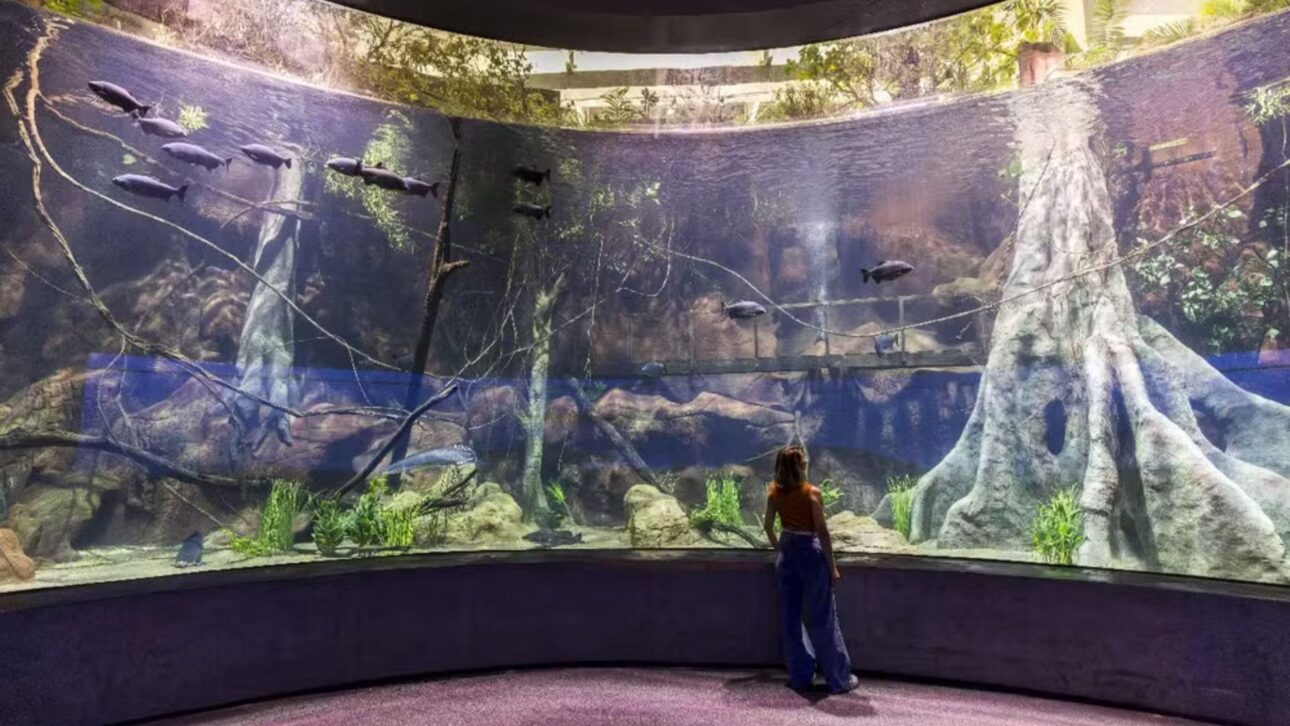
This design transforms the visit into something broader than a simple visit to exhibition tanks. The aquarium was structured to show how distinct aquatic systems are connected and how Brazilian biodiversity relates to broader ecosystems.
In practice, this gives AquaFoz its own identity within national tourism. Instead of relying solely on visual impact, the space tries to build a continuous narrative about rivers, flooded forests, aquatic fauna, and the ocean.
Grupo Cataratas project combines tourism, research, and conservation
According to Grupo Cataratas, AquaFoz was born with three central pillars: entertainment, research, and environmental education. The proposal follows a trend already observed in large contemporary aquariums, which operate not only as a tourist attraction but also as a space for biodiversity conservation and the dissemination of scientific knowledge.
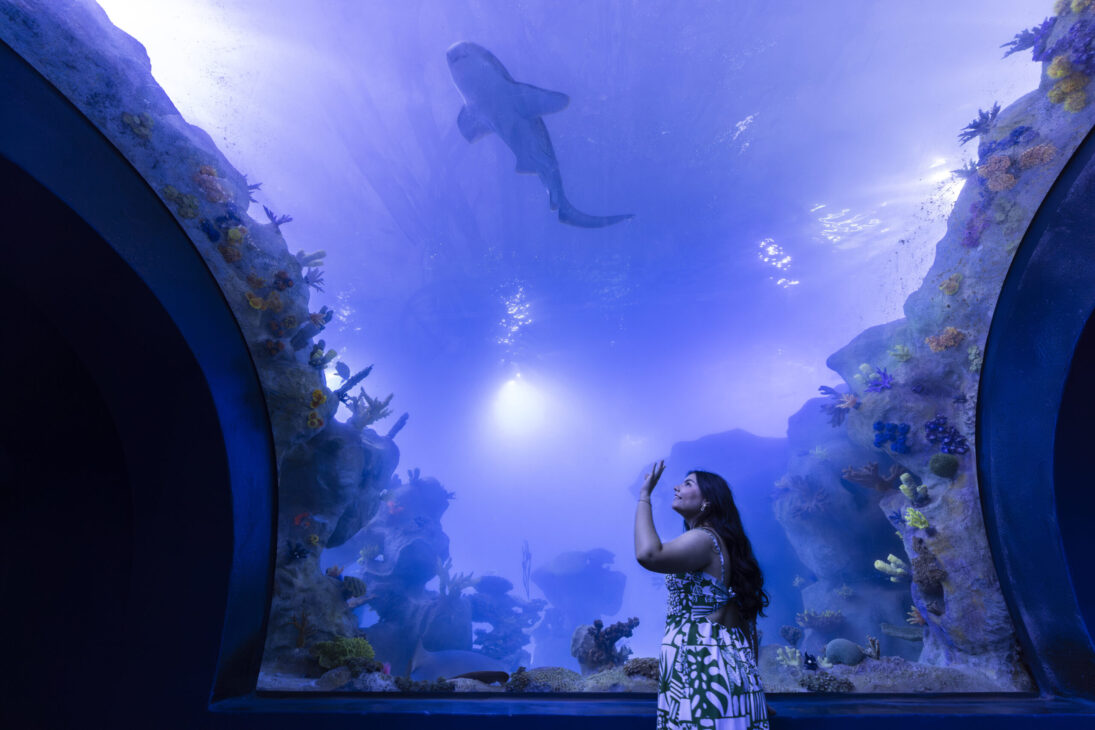
This definition helps explain the institutional positioning of the project. The aquarium was not conceived just to increase tourist flow in Foz do Iguaçu but also to strengthen the city’s image as a destination linked to nature, science, and environmental protection.
As Grupo Cataratas also operates other relevant attractions of sustainable tourism in Brazil, AquaFoz is part of a broader strategy of integration between visitation, conservation, and educational experience.
AquaFoz extends the stay of tourists in Foz do Iguaçu
The location of the development is one of the factors that most strengthens its tourism potential. According to Grupo Cataratas and AquaFoz, the aquarium is located on Avenida das Cataratas, in an area close to the Iguaçu National Park, which facilitates combining the two attractions in a single trip.
This positioning enhances Foz do Iguaçu’s ability to retain visitors for longer and diversify the tourist experience beyond the waterfalls. Instead of competing with the Cataratas, AquaFoz acts as a complement, offering an experience centered on the underwater universe that usually remains invisible to the visitor.

The result is a city with two large-scale attractions supported by nature, but with different proposals. On one side, the monumental force of the Cataratas. On the other, the aquatic biodiversity organized in one of the largest aquariums in South America.
Foz do Iguaçu gains a new giant of Brazilian tourism
AquaFoz reinforces the transformation of Foz do Iguaçu into an increasingly diversified tourist hub. With 3.3 million liters of water, 23,000 m², and more than 300 species, the complex positions itself among the major South American aquariums and expands the reach of local tourism beyond traditional itineraries.
The strength of the project lies precisely in this combination of scale, location, and institutional proposal. Visitors who come to see one of the greatest natural wonders of the planet now also find a large-scale attraction dedicated to aquatic life, environmental education, and conservation.
In the end, AquaFoz does not attempt to replace the prominence of the Iguaçu Falls. It enhances this prominence, adding a new reason for Foz do Iguaçu to remain at the center of Brazilian and Latin American tourism.