






 Portuguese
  Spanish
  4 min of reading
  0 comments


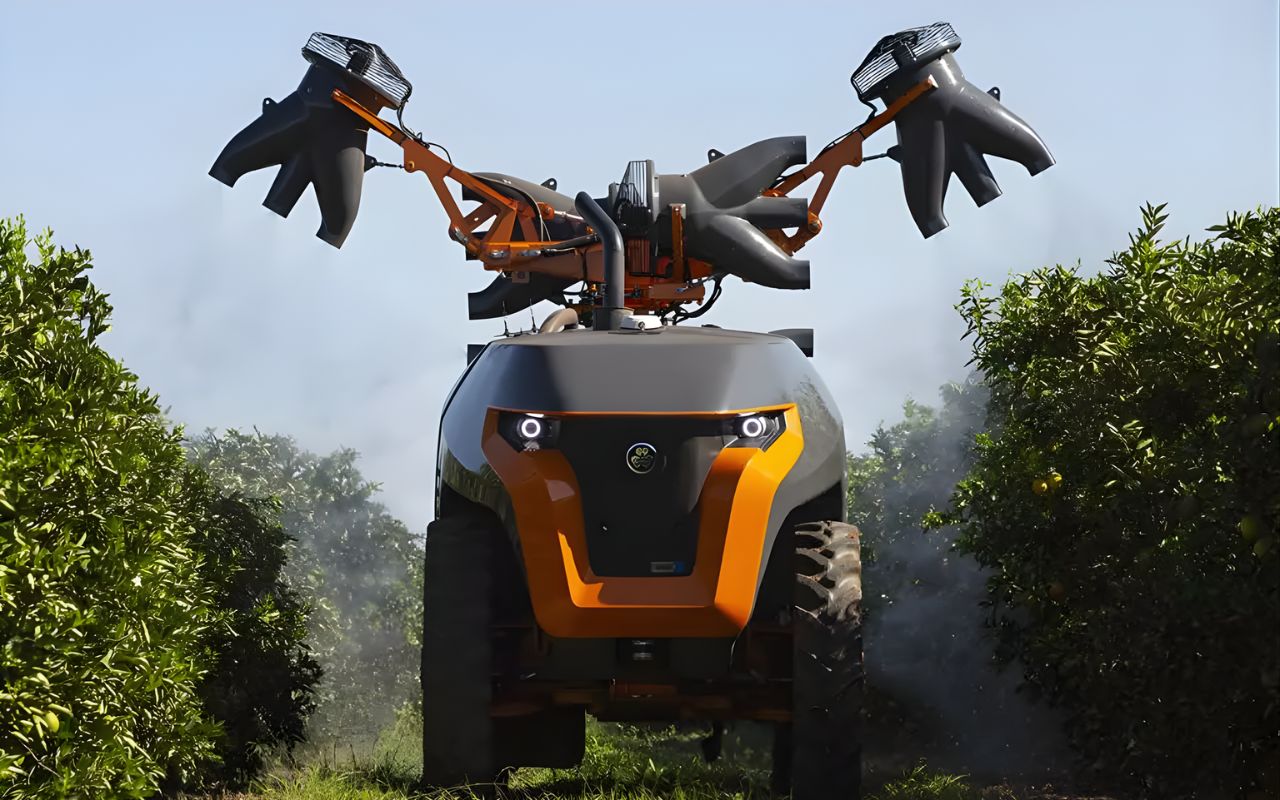
Jacto will present the autonomous sprayer Arbus 4000 JAV at Agrishow 2026, with up to 300% more productivity and advanced technology in the field.
Jacto will officially present, during Agrishow 2026, the commercial launch of the autonomous sprayer Arbus 4000 JAV, after years of field testing. The equipment, initially developed for citrus crops, was already operating in a rental regime and is now being sold to the agricultural public. The innovation arrives with a focus on safety, productivity, and automation, meeting international standards and reducing operational risks.
According to the company, the launch occurs after a long validation process. There were more than 16,000 hours of operation over nearly 60,000 hectares before the autonomous sprayer was considered ready for the market. Thus, the technology arrives at a time of maturation in the agricultural sector regarding automation.
Autonomous sprayer increases productivity and reduces risks in the field
The main differentiator of Jacto’s autonomous sprayer is its ability to operate without the presence of an operator on board. In this way, control is done remotely, which reduces exposure to chemicals and decreases worker fatigue.
-
Low-Demand Brazilian Beef Offal Gains Popularity Abroad: Indonesia Purchases $19.5 Million, Boosting Revenue and Reducing Waste

-
Soy Expansion in Former Brazilian Savanna Sparks Water and Land Conflicts in Major Agricultural Frontier
-
Mexican Pest Threatens U.S. Cattle Herds at Historic Lows, Potentially Boosting Brazilian Beef Exports as Burger Prices Soar

-
Avocado Boom for European and U.S. Markets Fuels Water Crisis in Drought-Stricken Chilean Region





Additionally, the equipment features a “convoy” function, allowing one machine to follow another in a synchronized manner. This way, a single operator can control up to four units simultaneously.
Among the main gains, the following stand out:
- Increase of up to 300% in productivity per operator
- Significant reduction in occupational risks
- Continuous operation, including during nighttime
Therefore, the technology not only improves efficiency but also contributes to safer working conditions.
Jacto technology ensures efficiency 24 hours a day
Another relevant point is the ability for uninterrupted operation. The autonomous sprayer can work 24 hours a day, which increases operational efficiency by up to 30% compared to traditional equipment.
Moreover, each machine has the potential to cover more than 1,000 hectares per month, provided that the operation is well adjusted. This represents a significant advancement for large producers seeking scale and agility.

Meanwhile, the uniformity in application also draws attention. The system maintains a constant speed and precise control of the applied volume, ensuring better agronomic performance.
Intelligent system of the autonomous sprayer improves input usage
The Arbus 4000 JAV features an advanced spraying system with up to six fans, allowing variable application according to the height of the plants. This means that the product is directed more precisely, avoiding waste.
Additionally, the autonomous sprayer uses laser sensors to scan the plants in real-time. This way, it identifies the size, position, and spacing of the canopies, automatically adjusting the application.
Consequently, there is a reduction in input consumption, which directly impacts the costs of agricultural operation.
The embedded technology goes beyond basic automation. The system uses artificial intelligence to create a virtual scenario of the crops, projecting the environment around the machine in real-time.
Thus, the autonomous sprayer can define the best route between the crop rows, staying centered and avoiding damage to the plants.
Another highlight is the use of telemetry, which constantly collects data. This information is processed quickly and made available for analysis, allowing for strategic adjustments in the operation.
Platform connects operations and expands production control
All data generated by the equipment is integrated into the Jacto Connect system. This platform provides a complete view of the operation, gathering information about machine performance and crop conditions.
With this, managers can make more accurate and real-time decisions. Additionally, data sharing between different machines increases the overall efficiency of the operation.

On the other hand, this connectivity also facilitates agricultural planning, making the process more predictable and organized.
Jacto’s autonomous sprayer marks a new phase in digital agriculture
The launch of the autonomous sprayer by Jacto represents a significant advancement in precision agriculture. The combination of automation, artificial intelligence, and connectivity reinforces the trend of digitalization in the field.
In this way, producers gain in productivity, safety, and sustainability. At the same time, technology paves the way for new autonomous solutions, consolidating a transformation that is already underway in Brazilian agribusiness.
Source: Revista Cultivar





Be the first to react!