






 Portuguese
  Spanish


18th-century ship found at hotel construction site in Alexandria, Virginia, revealed preserved hull in the Potomac River, near Washington. The discovery, announced in January 2016, includes colonial warehouse, latrines, and old shoes, exposing hidden layers of the old port city beneath modern works.
An 18th-century ship was found during excavations on the site of a future hotel in Alexandria, Virginia, near Washington, in December 2015. The discovery was reported by Smithsonian Magazine on January 5, 2016, based on the work of archaeologists and construction teams on site.
According to Smithsonian Magazine and Equipment World, the find occurred in Old Town Alexandria, on the banks of the Potomac River, in an area linked to the city’s former port development. Besides the preserved hull, the site also revealed remnants of a colonial warehouse from 1755 and old latrines with old shoes used as clues to local daily life.
Ship appeared during hotel construction in Alexandria
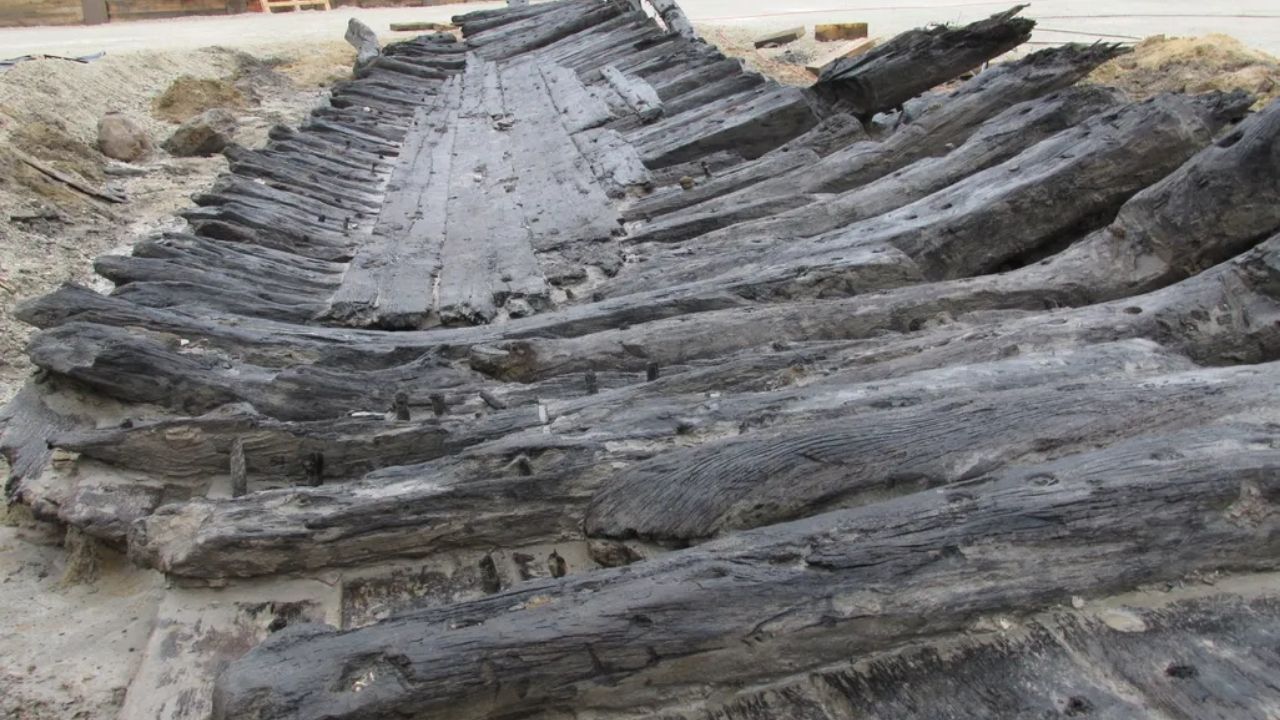
The discovery occurred when teams were working on the site of the future Hotel Indigo, in Alexandria, Virginia. During the excavation, workers identified part of the bow of an old ship buried in the mud of the Potomac River.
-
From Rural Brazil to Global Tech: Entrepreneur Builds a 800-Employee Company with Over $40 Million Annual Revenue in 19 Countries

-
Brazilian Farmer Transforms Soybean Land into Thriving Banana Plantation with 15,000 Trees Using Solar Power and Irrigation, Selling at $5 per Kilo
-
Canadian Entrepreneur Sells Company to Build Community with 99 Tiny Homes for the Homeless, Offering Jobs and Solar-Powered Amenities

-
Isolated Residents in Brazil’s Pantanal Create 8 km Road After Waterway Blocked by Aquatic Vegetation



What seemed like just an urban construction revealed a preserved layer of the colonial city. The site, now integrated into Alexandria’s urban fabric, was part of an important port region in the 18th century.
From the initial identification, archaeologists from Thunderbird Archaeology began to manually excavate the site. The goal was to document the hull, understand its structure, and carefully remove the remains for preservation.
The ship was in an urban environment already heavily transformed by centuries of construction. Therefore, the preservation surprised researchers, especially since it was a busy and significantly altered area over time.
Hull of almost 15 meters remained preserved in the mud
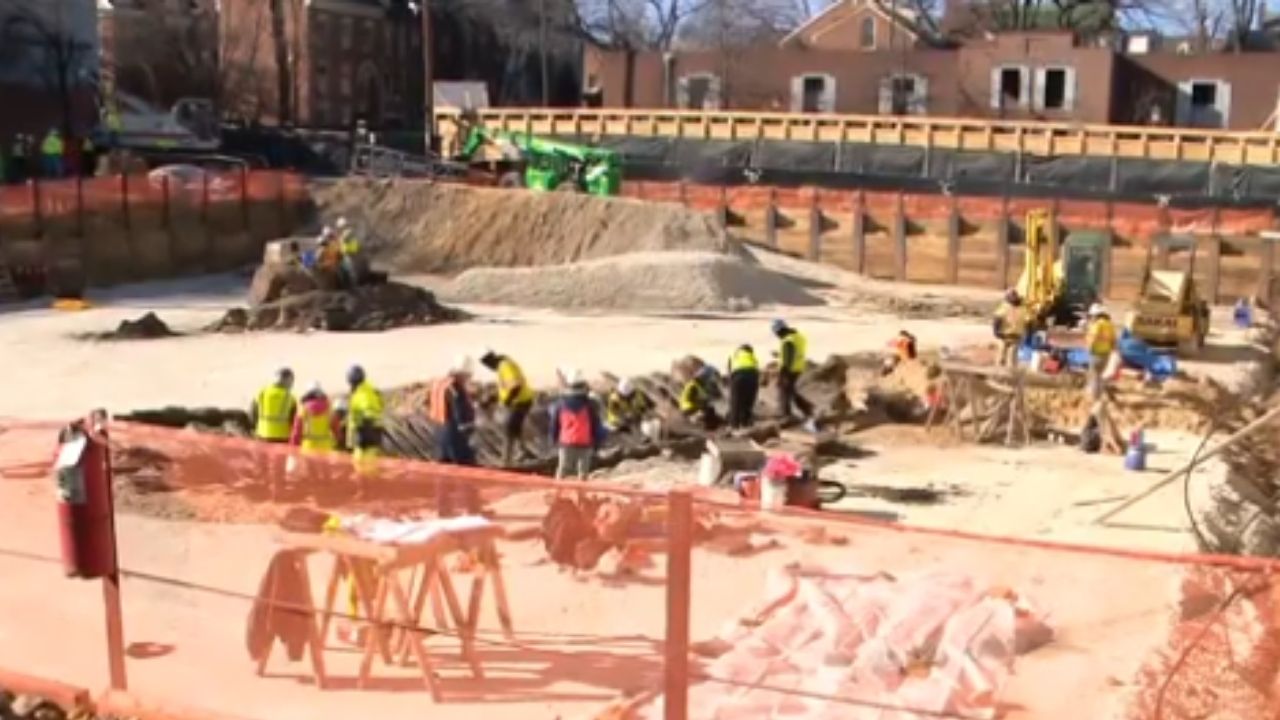
Archaeologists managed to unearth almost a third of the original hull. The preserved section extended for almost 15 meters, including parts of the keel, structure, stern, and floor of the vessel.
The wood survived because it was buried in oxygen-poor mud. Without enough air to accelerate decomposition, the hull remained protected in the Potomac sludge for centuries.
This type of preservation is rare in urban environments. Normally, foundations, constructions, pipelines, and successive excavations destroy or fragment archaeological traces before they can be studied.
In the case of Alexandria, the ship narrowly escaped major damage. According to reports from the time, workers laying brick structures for a future warehouse almost hit the remains of the vessel.
Original function of the vessel was still uncertain
Researchers had no confirmation about the original function of the ship or who built it. The hypotheses cited in the sources pointed to a heavy cargo vessel or possibly a military use.
This uncertainty is part of the archaeological value of the find. The hull may offer clues about shipbuilding techniques used by American colonists in the 18th century.
The vessel was associated with the period of the American War of Independence, but there was no specific record of the ship in the known historical maps of the Alexandria waterfront. This made the discovery even more unexpected.
Unlike the colonial warehouse found months earlier on the same site, whose existence appeared in old records, the ship was not clearly documented. It emerged as a hidden piece of local port history.
Old ships were used to form landfills
Researchers already knew that the Alexandria waterfront could hide ship remains. At the end of the 18th century, decommissioned ships were used as support structures for landfills in the expansion of the port area.
This type of practice helped advance over sandbanks and the Potomac shores. Instead of simply discarding old vessels, workers could incorporate them into the construction of the new urban terrain.
In the case of the found ship, archaeologists believe it may have been placed there to reinforce the landfill at Port Lumley, an area connected to the deep channels of the Potomac River near the city’s coast.
This hypothesis helps explain why an entire hull was buried at the site. The ship would have ceased to sail and become part of the very physical foundation of the expanding Alexandria.
Colonial warehouse from 1755 also emerged on the site
Before the ship, the same site had already revealed another important find: the wooden foundation of a warehouse dating from 1755. According to reports, the structure may be linked to one of Alexandria’s first public buildings.
The warehouse would have been built in an area linked to John Carlyle, a Scottish immigrant, city administrator, and landowner. The presence of this building reinforces the region’s role as a commercial circulation point.
Finding a colonial warehouse and an old ship on the same site changed the archaeological interpretation of the site. The location ceased to be just a hotel construction and began to reveal the city’s ancient port infrastructure.
The combination of findings shows how Alexandria grew over successive layers of occupation, commerce, landfill, and urban adaptation. The modern city was built on structures that once served the colonial economy.
Old shoes appeared in colonial latrines
Besides the hull and the warehouse, archaeologists found three old latrines at the site. These spaces, used in the past as disposal areas, are considered valuable to researchers because they preserve everyday objects.
Among the items mentioned in the excavations were many shoes. For archaeology, common objects can tell stories as important as large structures.
Colonial latrines functioned as deposits of domestic and commercial waste. Therefore, they can reveal consumption habits, food, clothing, disposal, and routines of residents from other times.
In the case of Alexandria, the old shoes help bring the find closer to real people. While the ship shows the port scale, these smaller objects point to the everyday life that existed around the Potomac River.
Archaeologists documented the hull before removal
After the discovery, the team planned to document the ship with 3D scans, photographs, and drawings on-site. This record was necessary before removing the remains for preservation.
The old wood, when removed from the mud, needs proper treatment. If it dries quickly or is handled without control, it can deteriorate after centuries preserved in the humid environment.
For this reason, the remains would be stored in water tanks until they could be studied by a conservation laboratory. This procedure helps to keep the structure stable while specialists determine the next steps.
The documentation also allows researchers to analyze the hull even after its physical removal from the site. Measurements, fittings, marks, and shapes can reveal details about shipbuilding from the colonial period.
Alexandria hidden beneath the modern city
The discovery shows how historic cities can hide important traces beneath streets, hotels, and current constructions. In Alexandria, the proximity to the Potomac River made the region a strategic point for trade and urban expansion.
The ship buried in the mud shows that the city did not grow only on solid ground but also on structures reused from its own port activity. This relationship between vessel, landfill, and urbanization is central to understanding the old waterfront.
The hotel construction ended up revealing an underground city made of wood, mud, warehouses, discarded objects, and forgotten vessels. Each layer helps to reconstruct the functioning of Alexandria in the 18th century.
The case also shows the importance of archaeological monitoring in historic areas. Without this care, the hull could have been destroyed before being identified and studied.
Potomac ship reveals history buried beneath constructions
The ship found in Alexandria turns a hotel construction into a window to the colonial past of the United States. The nearly 15-meter hull, preserved by the oxygen-poor mud, offers clues about shipbuilding, trade, and port expansion in the 18th century.
Alongside the 1755 warehouse and the shoes found in old latrines, the vessel shows that urban history is not always visible on facades. Sometimes, it is buried beneath construction sites, waiting for an excavation to reveal what the city has forgotten.
The discovery also raises a current question: how to reconcile real estate development and archaeological preservation in historic regions that continue to grow?
And you, do you think constructions in old cities should have mandatory archaeological monitoring before any building? Leave your opinion in the comments.


