






 Portuguese
  Spanish


Itapoá, in the Northern Coast of Santa Catarina, became the first city in the state to use LiDAR technology to monitor the beach with millimetric precision. According to NSC, the project, conducted by the Geological Service of Brazil in partnership with UFPR, was announced this Tuesday (19), and the local government will map coastal erosion over two years while the city carries out the largest beach widening in the country, with an investment of R$ 336 million.
The beach of Itapoá, in the Northern Coast of Santa Catarina, is being scanned by a laser sensor capable of measuring every centimeter of sand the city gains or loses as the seasons change. The equipment uses LiDAR technology, an acronym in English for light detection and ranging, and flies over the shoreline in aerial surveys that produce three-dimensional maps of the sand strip with unprecedented precision for the Santa Catarina coast. The project was established in April between the Geological Service of Brazil, the Federal University of Paraná, and the city government of Itapoá as part of the national Coastal Dynamics program, which has already delivered results in São Vicente, São Paulo, and conducts studies in Maricá, Rio de Janeiro, and Guaratuba, Paraná.
The beach monitoring happens at a unique moment: Itapoá has been facing coastal erosion for decades and is executing the largest sand strip widening ever done in Brazil, with an investment of R$ 336 million and a forecast to deposit 6.4 million cubic meters of sand over the shoreline, three times more than the volume used in the famous widening of Balneário Camboriú. The work was already 58.5% completed at the beginning of 2026, with 5 kilometers expanded and 3.4 million cubic meters deposited. But widening the beach without understanding the dynamics of the sea is like filling a leaky bucket. This is exactly what LiDAR aims to solve.
How the beach x-ray works

LiDAR is an optical sensor that emits laser pulses towards the ground and measures the time each pulse takes to return. With millions of points collected per second, the equipment creates an extremely detailed three-dimensional model of the surface. In the aerial surveys of Itapoá, the sensor is attached to an aircraft that travels along the shoreline from Pontal to Barra do Saí, producing what researchers describe as a true x-ray of the beach.
-
Argentinian Students Transform Cigarette Butts into Eco-Friendly Bricks, Cutting Cement Use by Over 50% and Halving Costs

-
For the First Time, Scientists Extract Ancient Human DNA from Cave Art, Revealing Insights into Prehistoric Cave Dwellers

-
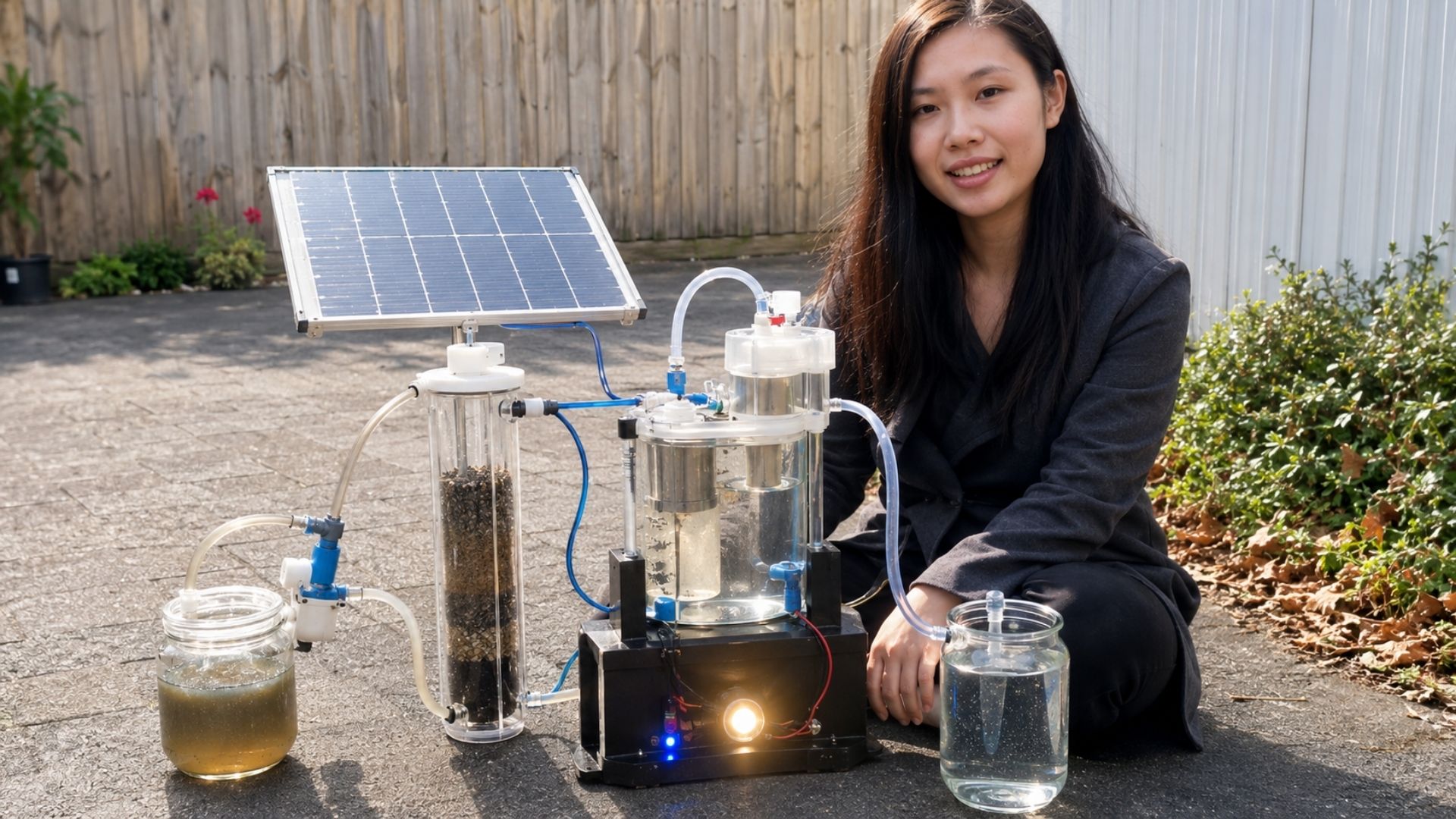
Australian Teen Invents Device to Simultaneously Purify Water and Generate Electricity Using Sunlight

-
Indian Student Designs Bamboo Houses with Floating Blocks and Recycled Bottles for Flood-Prone Areas; University of Texas Project Aims for Sustainable Housing in Vulnerable Communities



The collected data allows precise identification of which sections of the beach are undergoing erosion — where the sand is being carried away by the sea — and which are in accretion, accumulating sediments. In addition to the overflights, the project includes sediment collection and laboratory analyses to understand the composition and grain size of the sand at different points along the shore. Two survey stages have already been completed since the work began in November 2025.
Why Itapoá needs this monitoring

Itapoá has been facing coastal erosion problems for decades. The city grew over a naturally dynamic sand strip, and urban development close to the shore has increased vulnerability. Frequent storm surges have already caused the destruction of sidewalks, avenues, and leisure structures, forcing the city hall to seek emergency solutions.
The ongoing beach widening addresses the immediate problem by adding millions of cubic meters of sand to the shore. The sand is taken from the dredging of the channel that provides access to the ports of Itapoá and São Francisco do Sul, in an operation carried out by a 166.5-meter dredger that operates 24 hours a day. But the widening alone does not guarantee permanence: if the coastal dynamics continue to carry sand away faster than expected, new interventions will be necessary.
What the data will reveal about coastal dynamics
The work plan foresees two years of monitoring, with seasonal surveys that will capture the beach’s behavior under different climatic conditions. The results will include an analysis of the coastline, a vulnerability map to erosion, and a volumetric balance that quantifies exactly how many cubic meters of sand the beach gains or loses per season.
Researcher Marcelo Jorge, coordinator of the Coastal Dynamics project at the Geological Service of Brazil, explained that the technical deepening on coastal erosion is essential to mitigate the impacts of extreme events and optimize the application of public resources. The data produced by LiDAR will allow the city hall to direct future stages of beach widening — such as the one planned for the northern zone, between the Continental neighborhood and Balneário Cambijú — and implement safer occupation policies.
A project that can serve as a model for the Brazilian coast
Itapoá is the fourth Brazilian municipality to join the Coastal Dynamics project of the Geological Service of Brazil, but it is the first in Santa Catarina. Engineer Lucas Henderson, from the Itapoá Environmental Department, stated that the goal is to transform the city into a reference for high-precision coastal monitoring. The expectation is that the data generated will serve not only Itapoá but also as a methodological basis for other coastal cities facing erosion.
The Geological Service itself recognizes that coastal erosion is a phenomenon that affects naturally fragile regions, subject to the action of tides, winds, waves, rising sea levels, and human impacts. The project also involves undergraduate and graduate students from UFPR, forming a new generation of researchers with practical experience in beach monitoring with LiDAR. The model developed in Itapoá, if successful, can be replicated in hundreds of coastal municipalities facing the same dilemma: how to protect the beach without understanding what the sea is doing to it.
Do you live in a coastal city suffering from erosion? Do you think monitoring technology can really prevent beaches from disappearing, or is the advance of the sea inevitable? Tell us in the comments.


