Portuguese
  Spanish


Simulations led by researchers at Johns Hopkins University indicate that modern versions of the Nice model, used to explain the formation of the outer Solar System, may require an unlikely trajectory to preserve the moons of Uranus and Jupiter, raising doubts about this past.
The Solar System may have started with up to two giant ice planets beyond Uranus and Neptune, but new simulations indicate a difficult problem: the moons of Uranus might not have survived intact.
Nice model attempts to explain a chaotic past
Today, the planets follow predictable orbits around the Sun, aligned with the system’s orbital plane. This organized appearance, however, may hide a much more turbulent phase in the first billion years.
The Nice model, published in 2005, attempts to explain how gravitational interactions between giant planets and a debris disk could have caused instability in the outer Solar System. In modern versions, it admits one or two extra ice giants.
-
World Cup Ball Chip Uses Technology to Detect Invisible Touches, Confirms Offside, Secures Portugal’s Victory Over Croatia

-
36-Meter Hydrogen-Powered Superyacht Arrives in Brazil to Debut German Engines and Showcase Future of Clean Navigation

-
Indian Students from Jaipur Win Top Prize at World’s Largest Science Fair with EcoFog, an Affordable Mesh to Harvest Fog Water Without Energy

-
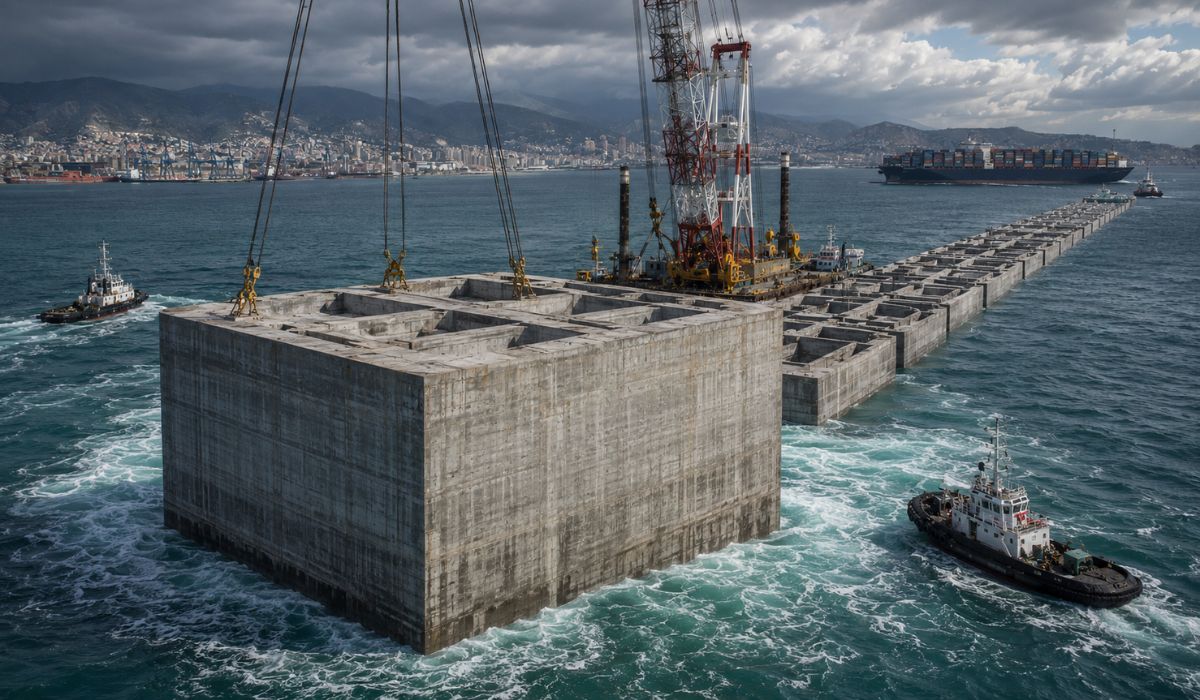
Italy Sinks Massive 11-Story Concrete Structures in the Ligurian Sea to Create a 6.2 km Barrier, Clearing the Way for 400-Meter Ships in Genoa



These hypothetical worlds would have migrated with the other giant planets. While Jupiter, Saturn, Uranus, and Neptune eventually stabilized in their current orbits, the additional planets would have been expelled beyond the known system.
The hypothesis helps explain broad aspects of the Solar System’s architecture, including the Late Heavy Bombardment and Jupiter’s collection of Trojans. The new work evaluated a more specific effect: the fate of the moons.
Moons of Uranus become critical point of the simulation
The team led by Matthew Clement from Johns Hopkins University created simulations to test two variants of the Nice model. One considered an extra ice giant; the other, two additional planets.
The researchers included encounters based on the full spectrum of initial conditions proposed for the outer Solar System. With this, they produced more trajectories than previously evaluated.
The most sensitive result appeared in Uranus. In most simulations, the Uranian moons were destabilized to the point of suffering collisions, ejections, or deep orbital changes. The current appearance of these moons does not match this scenario.
The moons of Jupiter fared better in the simulated encounters. Even so, the team found it difficult to simultaneously preserve the lunar systems of Jupiter and Uranus during the instability of some versions of the model.
Only one scenario allowed the moons of the two planets to consistently survive. This makes it more complex to defend certain current versions of the model amidst so many initial gravitational variables.
The Solar System may have followed an unlikely path
The results leave three main possibilities. The first is that Uranus’s moons were disorganized, with collisions and subsequent reconstructions during the unstable phase.
The second is that the Nice model needs to be revised to accommodate these satellite systems. The third is that the Solar System underwent an unlikely evolution, with few deep encounters involving Uranus.
This last possibility would preserve the moons but would require a rare sequence of events. Another alternative is that Uranus’s satellite system was born from a more violent history.
Uranus is already treated as a planet marked by an extreme event, associated with the lateral tilt of its axis. The new analysis raises the possibility of another phase of disturbance, linked to the Nice model.
Researchers emphasize that reconstructing events from about 4 billion years ago has important limits. No instability modeled so far needs to contain exactly the sequence of encounters that formed all current details.
The central question remains: did the Solar System preserve its moons by rare chance, remodel part of them after chaos, or does it require a different model to explain its origin? The debate remains open among simulations, orbits, and planetary evidence.
Leave your thoughts in the comments about this mystery: do you consider it more likely that the Solar System lost giant planets, that Uranus’s moons were remade after collisions, or that the current model still needs to change to explain this past?