Portuguese
  Spanish


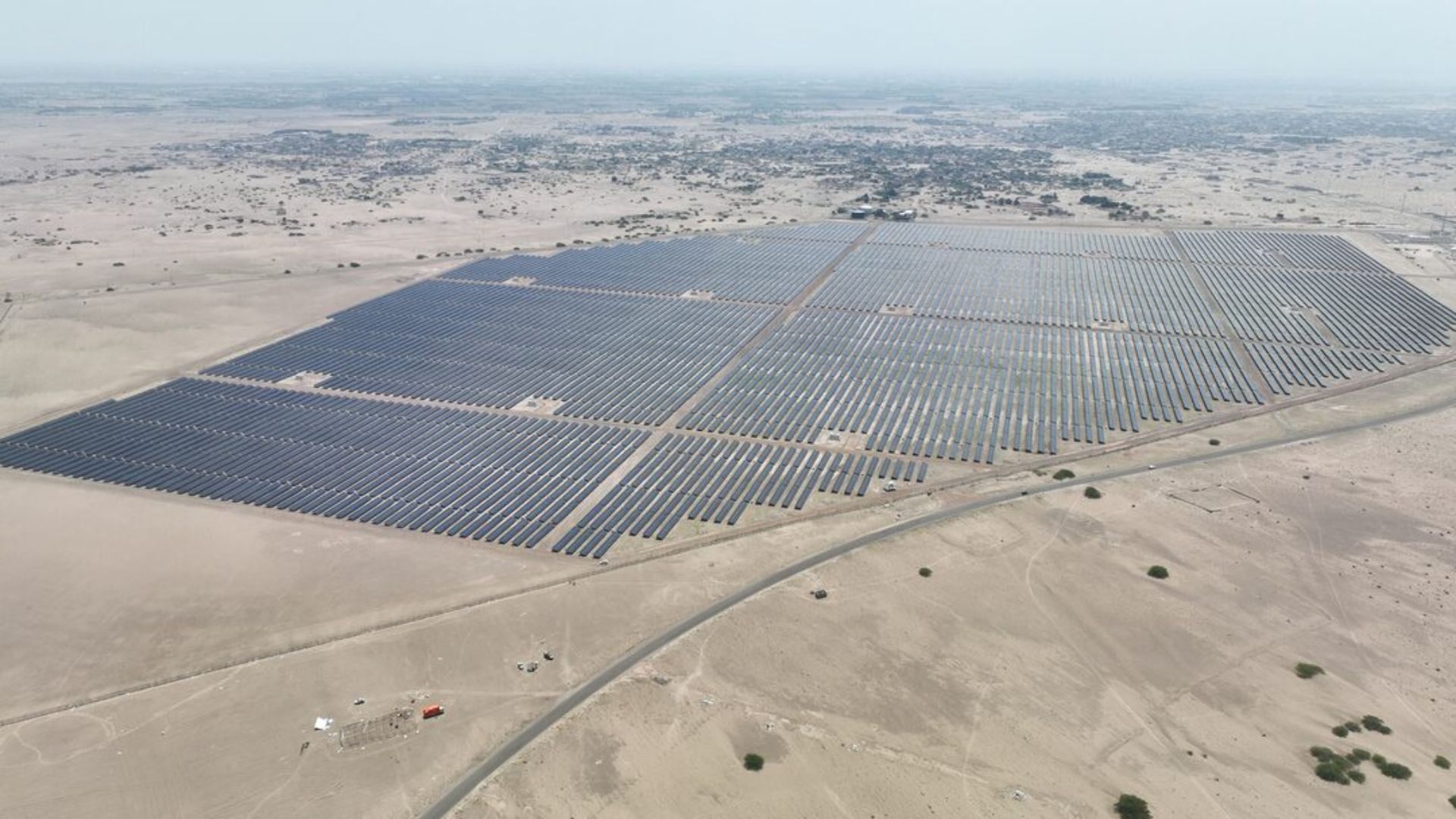

Solar project in Aden marks significant change in energy supply in country with history of blackouts, expands access to electricity for thousands of homes and introduces renewable alternative in system marked by scarcity, prolonged conflict and strong dependence on fossil fuels.
Yemen has begun operating its first large-scale solar power plant in the city of Aden, in a concrete attempt to reduce the blackouts that have compromised the daily lives of residents, the functioning of businesses, and the provision of services in one of the most fragile electrical systems in the Middle East for years.
Financed by the United Arab Emirates, the plant became fully operational in July 2024, with a capacity of 120 megawatts, sufficient to supply daily between 150,000 and 170,000 homes.
The entry of the plant occurs in a country where less than half of the population has access to electricity, according to the International Energy Agency, in a situation exacerbated by fuel shortages, deteriorating infrastructure, and years of war.
-
Seen from space, an astronaut captures in Canada a geometric carpet of crops drawn over the backdrop of a ghost lake that disappeared 12,000 years ago, was once larger than all the Great Lakes combined, and left a scar of fertile mud that still sustains agriculture.

-
Billionaire says the most valuable skill will help overcome job elimination caused by AI, following Bill Gates’ fears

-
A Dutchman created a ‘box’ that makes trees grow in the desert almost without water and without irrigation: the invention has already brought seedlings to dozens of countries and achieves up to 90% survival where common planting did not exceed 10%.

-
Abandoned warehouse hid a giant collection of rare computers, with over 2,000 artifacts from the 1930s to the 1980s.




In this context, the new plant not only represents an increase in the energy supply in Aden but also a significant change in a system that has operated under severe operational limitations and low responsiveness to demand for decades.
Solar energy in Aden begins to relieve historical blackouts
Installed north of Aden, the interim seat of the internationally recognized Yemeni government, the plant has begun to relieve some of the pressure on the local grid in a city that concentrates administrative activity, commercial circulation, and essential services.

The location helps explain the strategic weight of the project, as any improvement in electricity supply in the region has a direct impact on urban life, the operation of small businesses, and the stability of a central area for the south of the country.
In practice, the effect of the lack of electricity in Aden goes far beyond domestic discomfort.
During periods of intense heat, when the need for cooling increases, prolonged blackouts raise losses in commerce, affect food preservation, and hinder basic activities in stores, markets, and workshops.
Reuters reported that local traders have been accumulating losses from damaged goods during the outages, which has turned the energy crisis into a persistent economic problem, not just a technical one.
Electricity crisis in Yemen drags on for decades
The Yemeni electricity crisis did not start with the current war, although the conflict has severely deepened its effects.
The country has been facing chronic supply difficulties for about three decades, associated with dependence on fuels, the precariousness of the generation and distribution system, and the inability to ensure regular service to the population.
With infrastructure affected by years of instability and violence, the electricity sector has had to deal with a continuous combination of shortages, outages, and rising costs.
This history helps to explain why a single power plant has come to concentrate so much attention both inside and outside the country.
In robust electrical systems, a 120-megawatt project tends to be absorbed as part of a gradual expansion.

In the case of Yemen, however, the addition of this renewable capacity alters an equation marked by structural scarcity, dependence on conventional sources, and difficulty in maintaining supply for stable periods, especially in areas most affected by institutional fragility and accumulated damage to the grid.
Solar energy still has limited participation in the matrix
The latest data from the International Energy Agency shows that solar energy accounted for 10.4% of electricity generation in Yemen in 2023, while oil remained the dominant source, with 88% of the total.
This picture helps to understand why the Aden plant gained immediate relevance: although the country already had some solar generation presence, especially on a smaller or dispersed scale, the new plant inaugurates an unprecedented level of centralized production from a renewable source.
Moreover, the plant introduces a different kind of response to a crisis that has long been associated with a lack of fuel.
Instead of relying solely on a model pressured by irregular supply and damaged structures, Aden now has a source that reduces part of this vulnerability.
The change does not automatically eliminate the bottlenecks of the Yemeni system, nor does it resolve the national precariousness of access to energy, but it opens a concrete operational alternative in a historically restricted scenario.
Least electrified country in the Middle East seeks alternatives
The International Energy Agency classifies Yemen as the least electrified country in the Middle East, a condition that reinforces the symbolic and practical nature of the venture.
In a territory devastated by years of conflict, with weakened public services and low electrical coverage, the continuous operation of a solar plant of this scale partially breaks the image of paralysis that has consolidated around the national infrastructure.

More than a technical milestone, the plant has come to be seen as a sign that there is still room for interventions capable of moving from paper to reality. This symbolism, however, does not erase the magnitude of the challenge.
The country continues to have limited access to electricity, relies heavily on petroleum derivatives to generate energy, and carries a network that is deeply vulnerable to interruptions and lack of investment.
Still, the experience in Aden repositions energy in the debate about reconstruction, economic activity, and the daily functioning of Yemeni cities, especially because the effects of improved supply appear in very visible dimensions of urban life, such as refrigeration, lighting, and continuity of small businesses.
By providing electricity to up to 170,000 homes per day, the solar plant in Aden has come to represent a rare inflection in a country accustomed to scarcity.
The project does not alone reverse decades of crisis, nor does it immediately change the national picture of access to energy, but it establishes a relevant precedent in an electrical structure marked by low reliability and insufficient coverage.
In Aden, where the lack of light has ceased to be an exception and has become routine, any consistent increase in supply measurably changes the rhythm of the city.