Portuguese
  Spanish


Technology developed in southern Brazil reduces water and energy consumption in agriculture and projects young scientist to international research centers
A technological innovation of great impact in Brazilian agribusiness began to gain prominence in 2015, when a student decided to investigate solutions for water use in agriculture.
Fabiane Kuhn, daughter of a cleaner and a retiree with an income of a minimum wage, developed a patented soil moisture sensor that began to guide producers on irrigation.
Currently, the equipment is already present in about 5,000 hectares, distributed across 11 Brazilian states and applied in more than 20 agricultural crops, ensuring productive efficiency.
-
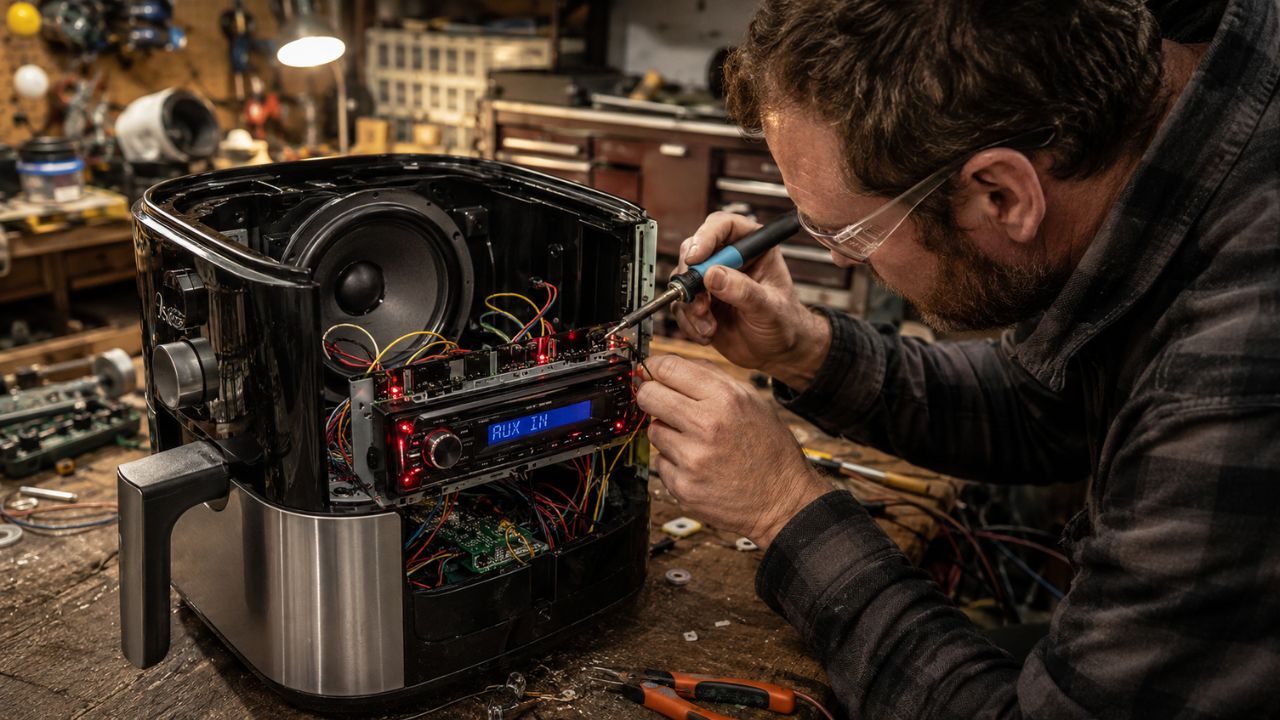
Brazilian Man Ingeniously Transforms Air Fryer into Functional Speaker with Radio and Volume Controls

-
Rows of “stone balls” emerge at low tide on California beach, with formations up to 1.5 meters aligned like a Pacific bowling alley

-
Japan Installs 800 Cameras in Tohoku Mountains Amid Rising Bear Attacks

-
Workers Installing Fiber Optics in French Town Discover 75 WWII-Era Concrete Training Bombs, Each Weighing 250 Kilograms



In addition, the technology allows for precise indication of when and how much to irrigate, which directly contributes to the reduction of water and energy consumption in agriculture.

Origin of the technology and context of the water crisis
Initially, the journey began in 2015, at the Fundação Liberato Technical School, located in Novo Hamburgo, Rio Grande do Sul.
At that time, Fabiane was 16 years old and was studying electronics integrated with high school, during a period when Brazil was facing a severe water crisis.
In light of this scenario, with reservoirs operating at dead volume, the student decided to better understand the technologies used for water use.
According to the researcher herself, her entry into agriculture occurred through technology, not family tradition, which reinforces the innovative nature of the initiative.
Development of the sensor and creation of the prototype
Subsequently, Fabiane began to work alongside her colleague Guilherme Ramos, analyzing sensors available on the market.
However, the tests conducted did not yield satisfactory results, which led the duo to develop a new solution aimed at rural producers.
During the winter break, with access to the school laboratory, the prototype was created intensively, taking advantage of the available structure.
Next, the project was registered for Mostratec, considered the largest science and engineering fair for high school students in Latin America.

Scientific Recognition and International Projection
Shortly after, the work won first place in electronic engineering, securing qualification for the Regeneron International Science and Engineering Fair (ISEF).
The competition, organized by the Society for Science, brings together around 1,800 students from up to 80 countries, being considered the largest in the world in the pre-university area.
Additionally, according to a survey by Startup Network, the developed sensor has been included in the list of the five best soil sensors in the world.
As a result, the technology paved the way for Fabiane’s participation in research centers and leadership programs in the United States.
Startup Expansion and Market Recognition
Currently, at 27 years old, Fabiane is the founder and CEO of Raks Agricultural Technology, based in São Leopoldo, Rio Grande do Sul.
Moreover, her work in the sector has been recognized by Forbes Brazil, which included her in the Forbes Under 30 list, highlighting young talents in various fields.
Thus, her journey demonstrates how a solution created in a school environment can achieve national impact and global recognition.
Direct Impact on Agriculture and Productive Efficiency
At the same time, the developed sensor allows for more precise decisions regarding irrigation, reducing waste and increasing efficiency in the use of natural resources.
Furthermore, the technology maintains crop productivity by indicating the ideal time to irrigate, avoiding excesses or failures in the process.
Therefore, the advancement reinforces the role of technological innovation in Brazilian agribusiness and highlights the potential of solutions created from educational research.
In light of this scenario, how can initiatives arising from technical schools continue to transform the future of agricultural production in Brazil?