Portuguese
  Spanish


On a 4-H geology club excursion in rural Kansas, the boy Corbin Bullard noticed some vertebrae sticking out of the rock and ended up finding an 80-million-year-old Tylosaurus fossil. The marine reptile, a type of Cretaceous mosasaur, was over 4.5 meters long.
What for most people would be just a strange rock, for Corbin Bullard was the find of a lifetime. During a club outing at a Kansas quarry, the boy noticed seven or eight huge vertebrae protruding from the rock and realized that it was bone, not stone. He was facing a marine reptile that swam there long before there were people to see it.
According to Newsweek, Corbin, a resident of Clearwater, made the discovery in September 2025, when he was still 11 years old, during an outing of the Sedgwick County 4-H Geology Club. The material was identified by experts as a Tylosaurus, a Cretaceous marine reptile that lived about 80 million years ago. The skeleton was over 4.5 meters long and even included the skull.
How the boy found the 80-million-year-old Tylosaurus fossil
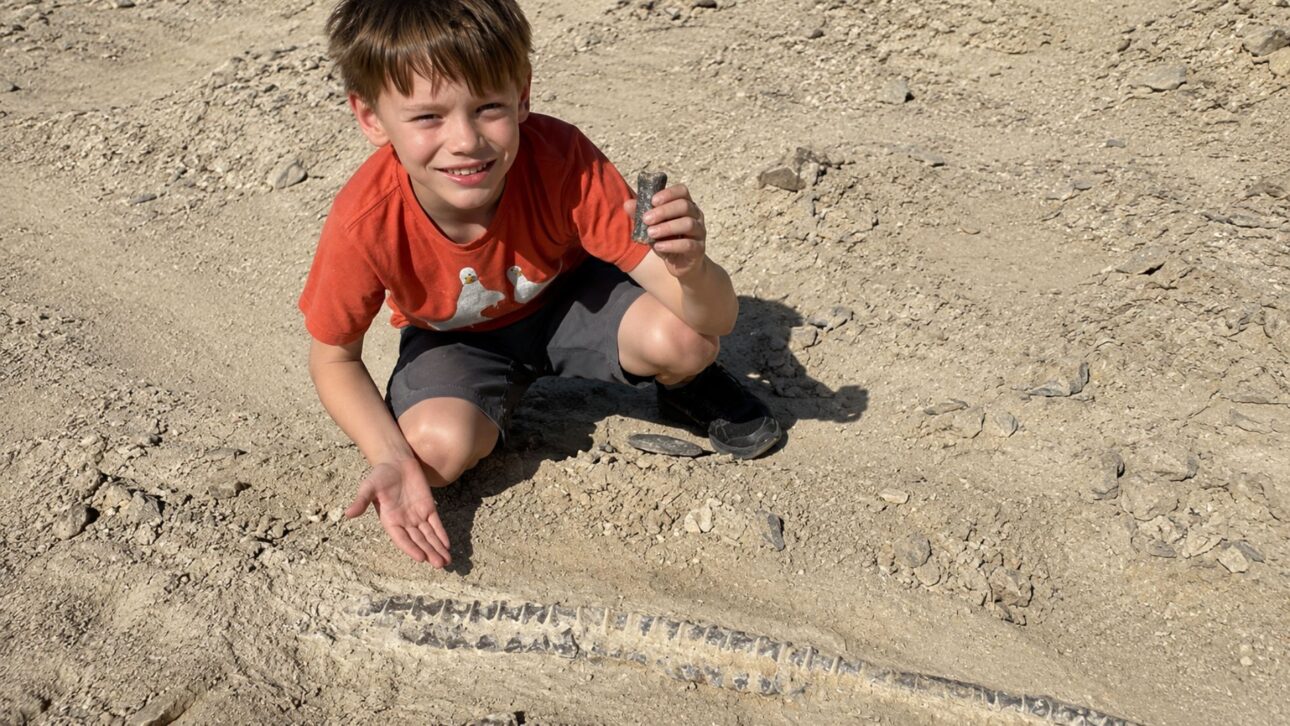
The 4-H group excursion was to a quarry in Jewell County, where rock removal had exposed ancient layers.
-
Rescue Teams Use Flashlights to Find 47 Dogs in Abandoned, Powerless U.S. Home, Offering Them a Fresh Start Through Responsible Adoption

-
Siblings Discover 1939 Superman Comic in Late Mother’s Attic, Sets Record at $9.12 Million Auction

-
At 24, Beatriz Becomes First Woman from Mato Grosso to Work on Live Power Lines with Energisa, Starting as a Meter Reader in 2022
-
Metal Detectorist Uncovers Up to 15,000 Roman Coins in Wales, Potentially the Largest Find of Its Kind in the Country



It was there that Corbin saw the aligned vertebrae sticking out of the rock face and immediately suspected they were bones.
For a geology club, such a sign is exactly what one looks for on a field trip.
The boy’s suspicion was correct: it was an 80-million-year-old Tylosaurus fossil, hidden beneath the surface.
Finding the vertebrae was just the beginning, because beneath them there was much more skeleton buried.
The luck of encountering the marine reptile soon turned into excavation work.
What is a Tylosaurus, and why it is not a dinosaur
Here lies the most common confusion about this type of find.
The Tylosaurus was not a dinosaur, but a marine reptile from the mosasaur group.
While dinosaurs dominated the land, the mosasaur reigned in the water as a top predator of the seas.
The Tylosaurus could exceed 12 meters in the largest species and had powerful jaws made for crushing prey.
This marine reptile breathed air, like today’s whales, but had an elongated body and paddle tail for swimming.
Calling the Tylosaurus a dinosaur is a technical error, even though it lived in the same era, the Cretaceous.
Understanding this difference is part of what makes the find so rich for teaching science.
The sea that covered Kansas in the Cretaceous
It may sound strange for a marine reptile to appear in the middle of the United States.
The explanation lies in the geography of 80 million years ago, quite different from today.
During the Cretaceous, a large inland sea cut through North America and covered much of present-day Kansas.
This shallow and warm ocean was home to mosasaurs, ancient sharks, and giant swimming reptiles.
When these animals died, they sank and were covered by sediments that became today’s rock.
That’s why Kansas, now dry and flat, is one of the best places in the world to find marine reptile fossils.
Corbin’s Tylosaurus is yet another chapter of this heritage left by the Cretaceous.
The three trips and the hours of cleaning
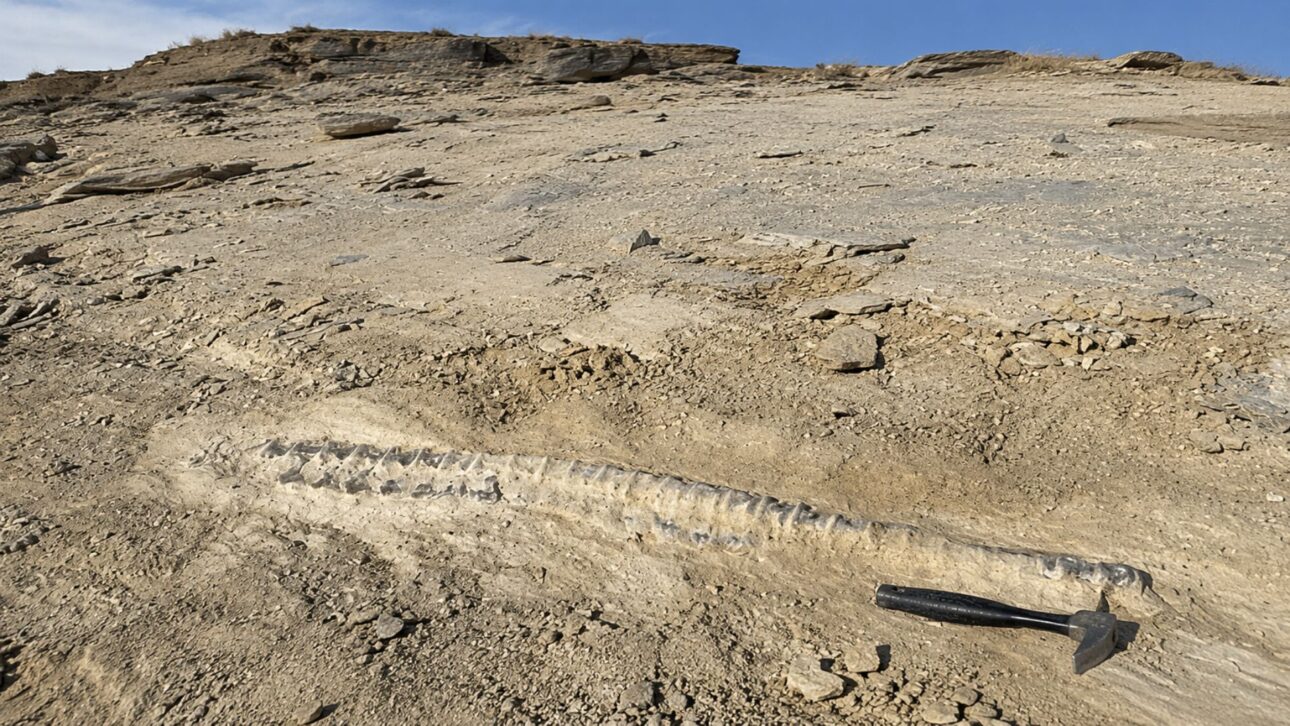
Corbin’s family had to return to the site on three different trips to excavate the entire skeleton.
It was only on the third visit that the skull appeared, the most valuable and impressive part of the Tylosaurus.
After being removed, the 80-million-year-old Tylosaurus fossil required patient cleaning work.
Corbin dedicated about 30 hours, over months, removing sediment stuck to each bone.
This careful home treatment is what transforms a block of stone into a skeleton ready to be studied and displayed.
Cleaning is a step that paleontologists take seriously because a mistake can destroy details of the marine reptile.
From the Quarry to the County Fair
The fate of the find is as curious as the discovery.
Instead of disappearing into a drawer, the Tylosaurus skull will become a public attraction.
Corbin plans to display the piece at the Sedgwick County Fair in July, so anyone can see the marine reptile up close.
Before that, he has been giving talks around the region, explaining how he found the 80-million-year-old Tylosaurus fossil.
At 12 years old, the boy became a sort of junior ambassador for local paleontology.
Bringing the mosasaur to the fair brings science closer to those who have never set foot in a museum.
It’s the kind of story that can spark curiosity in other children about the Cretaceous.
Why So Many Children Find Fossils Important
It’s no coincidence that such discoveries often appear with the youngest.
Children walk closer to the ground, observe calmly, and don’t have the rush of adults.
Curious and untainted eyes often notice what many people overlook, like a vertebra in the rock.
Clubs like the 4-H geology club put this instinct to the service of science, with guidance from those who understand.
Around the world, amateurs and students have already signed discoveries that yielded new species of marine reptile and mosasaur.
The golden rule is to notify specialists and not remove the fossil alone, to avoid destroying the context.
That’s what Corbin did, and that’s why the Tylosaurus arrived intact for the study phase.
What the Case of the 80-Million-Year-Old Tylosaurus Fossil Shows
The story has everything that captivates: a child, a huge number, and a sea monster in the country’s backyard.
It shows that real science can start on a club outing, with a keen eye on the rock.
But it’s worth keeping your feet on the ground.
Corbin saw and identified the find, but the excavation and confirmation depended on the family and experts.
The dating is around 80 million years, and some sources cite up to 85 million, so the number is an estimate.
And, although impressive, Kansas produces mosasaur fossils with some frequency, which does not diminish the boy’s achievement.
Even so, few cases summarize so well how childlike curiosity can turn into a real contribution to paleontology.
From a Cretaceous quarry in Kansas to the county fair, Corbin’s tylosaurus continues to tell a story of 80 million years.
And you, would you have recognized a marine reptile in some vertebrae sticking out of the rock or would you have walked past it? Comment here if you would take your child to a geology club in search of an 80-million-year-old tylosaurus fossil.