Portuguese
  Spanish


The Argentine Martín López started with a market stall, where each partner invested US$ 4,000. Today, the fruit grower from Villa Regina, in Patagonia, has about 550 hectares and processes 18 million kilos of pears and apples per year, in an agribusiness focused on direct export to Brazil.
A story of entrepreneurship in the fruit agribusiness started small and grew significantly. According to a September 2025 report from Diário Río Negro, the Argentine Martín López set up a simple fruit stall in Mar del Plata in 2000, in partnership with two brothers-in-law, where each partner invested only US$ 4,000. Twenty-five years later, he became one of the prominent fruit growers of Villa Regina, in Patagonia.
Today’s numbers are impressive. His company, Frutas Escorpio, processes about 18 million kilos of pears and apples per year, gathering the harvest from approximately 550 own hectares and the fruit he still buys from other producers. And the direct international destination for all this production is one: Brazil.
The market stall and the US$ 4,000
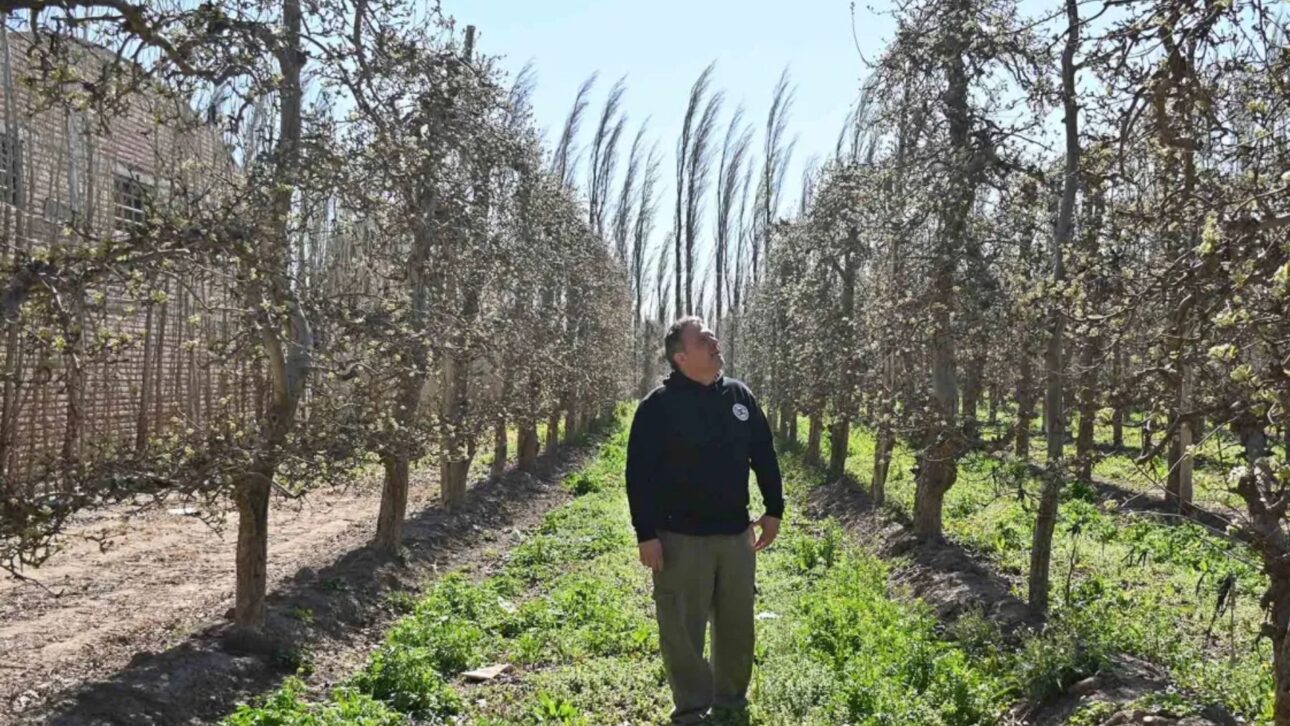
It all started in retail, far from the land. In 2000, Martín López joined his brothers-in-law Sandro and Andrés Pancani to open a fruit sales point in Mar del Plata, on the Argentine coast.
-
At 93, Brazilian Farmer Restores 56 Hectares of Forest and Revives Spring in the Amazon, Installs First Climate Tower in the Region

-
Brazilian Cheesemaker Wins European Award for Ant-Infused Cheese with Nutty Flavor Inspired by Indigenous Tradition

-
Brazilian Family’s Cheese, Started with One Cow in 1984, Named Best in the World, Beating 2,700 Competitors from 30 Countries
-
Brazilian Ranchers Use Satellites to Optimize Pasture Management and Prevent Feed Loss in Cattle Farms


The initial investment was modest: each partner invested US$ 4,000, and the fruit sold at the stall was bought in the Alto Valle of Río Negro.
It was an intermediation business, not production. At that stage, the trio bought pears and apples from those who planted and resold to the consumer, learning in practice how the fruit chain worked.
It was at this counter that the future fruit grower understood the market even before having a single tree.
This humble beginning is an essential part of the story. Starting from a market stall run with $4,000 per partner and reaching an operation of millions of kilos shows how market knowledge, combined with constant reinvestment, can transform a small business into a significant agribusiness in Patagonia.
The crisis that became a turning point
The leap into production was born out of a sector problem. According to Diario Río Negro, it was the generational exchange crisis in fruit growing, with many older producers lacking heirs willing to continue, that pushed López to take a step beyond just buying and reselling.
The solution was to acquire farms and become a producer.
Starting in 2006, he began buying land. Instead of relying solely on third-party fruit, the fruit grower started planting and harvesting on his own, ensuring volume and quality to supply the business.
Where others saw a struggling sector, he saw the chance to grow by buying what was being left behind.
This insight is the heart of the case. Turning an agribusiness crisis into an opportunity required the courage to invest in an uncertain moment, and it was precisely this move that consolidated the operation in Patagonia.
The turning point was not luck, but a strategic bet on going from the stall to the farm.
550 hectares in Patagonia
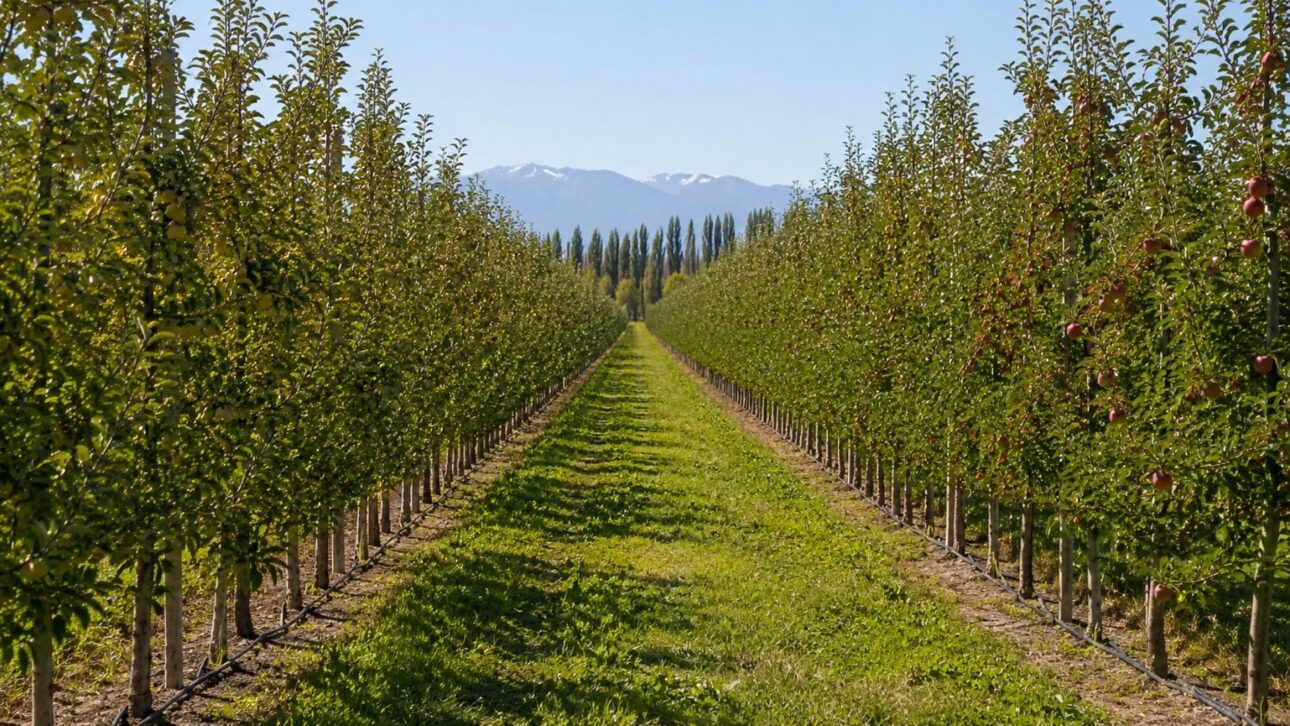
The base of everything is the land of Alto Valle. Today, López’s operation gathers around 550 hectares, mostly owned, spread across the areas of Villa Regina, Chichinales, and General Godoy, in the heart of Argentine Patagonia’s fruit growing.
It is one of the most productive regions in the world for pears and apples.
The climate explains the vocation. The Alto Valle of Río Negro combines intense sun, water from the Andes melt, and thermal amplitude, ideal conditions for quality fruit.
Not by chance, Patagonia has become synonymous with Argentine pear, and it is from this land that much of what supplies the local agribusiness comes.
Accumulating 550 hectares was not done all at once. The area was built gradually, with purchases made since 2006, as the business generated cash to reinvest.
Each new piece of farm increased the fruit grower’s ability to control his own production, reducing dependence on suppliers.
18 million kilos of pears and apples per year
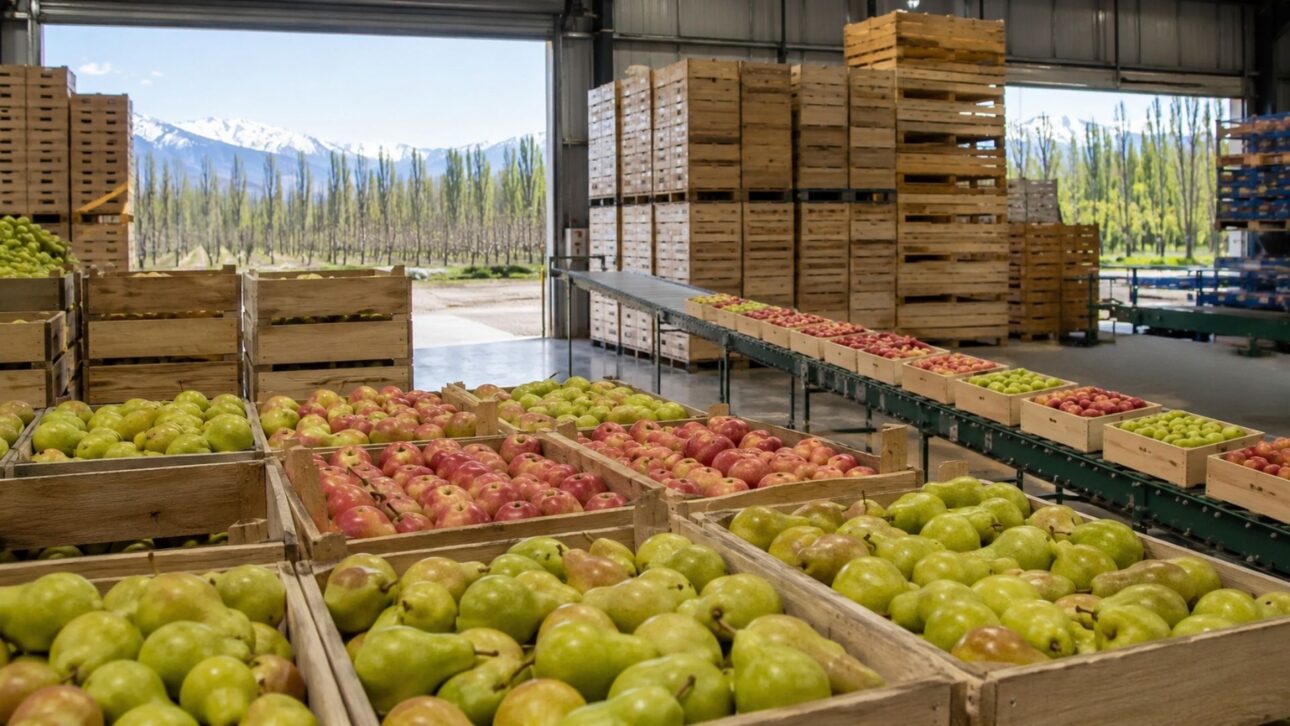
The processed volume gives the dimension of the business. Frutas Escorpio handles about 18 million kilos of fruit per year, equivalent to 18 thousand tons.
Of this total, approximately 11 million kilos are pears and 6 million kilos are apples, in addition to a smaller share of stone fruits.
Not everything comes from his orchards. The number combines the harvest from his 550 hectares with the fruit López continues to buy from other producers, in the same spirit as when he started at the market stall.
Thus, the company processes much more than it plants, functioning as a link between the field and the market.
Processing pears and apples on this scale requires structure. There is classification, packaging, and logistics to handle millions of kilos per harvest, a mechanism that transformed the former market vendor into a complete agribusiness operator.
The fruit grower effectively became the owner of the entire chain, from the orchard to the ready-to-ship box.
Direct export to Brazil
Here comes the chapter that closely interests the Brazilian consumer. According to Diário Río Negro, Brazil is the only direct international destination for López’s production.
In other words, a large part of the Argentine pears and apples he processes crosses the border and ends up in the markets and supermarkets of Brazil.
The choice makes economic sense. Brazil has historically been the main buyer of pears from Alto Valle, and having the export concentrated in a large neighboring market gives predictability to the business.
For a Patagonian fruit grower, selling to Brazilians is almost a natural extension of the domestic market.
This link shows how agribusiness unites the two countries. The fruit that fills many people’s fruit bowls in Brazil may have come exactly from these 550 Patagonian hectares.
Direct export, without international intermediaries, is what keeps the mechanism running and brings the Argentine orchard closer to the Brazilian table.
The recipe behind the growth
López credits his success to those who came before him. In a statement to Diário Río Negro, the fruit grower said it was the producers themselves who trained him, recalling with emotion those who helped him along the way and are no longer around.
It is a statement that reveals respect for the chain that supported him since the market stall.
The conviction about the choices is total. When questioned about the trajectory, he stated that if he went back 25 years in time, he would do exactly the same.
The phrase sums up the confidence of someone who bet on the fruit agribusiness in a country with an unstable economy and still built an operation of 18 million kilos per year.
For Brazil, the lesson of the chain remains. Stories like López’s show how reinvesting, integrating production and sales, and targeting a clear market, in this case, exporting to the neighbor, can transform a small business into a reference.
It is the type of path that Brazilian producers of pears and apples can also closely observe.
And you, do you know the origin of the fruit you eat?
The trajectory of Martín López proves that it is possible to go from a market stall, set up with US$ 4,000 per partner, to an agribusiness that processes 18 million kilos of pears and apples per year.
All this in Patagonia, with about 550 hectares and direct export to Brazil, according to a report from September 2025.
And you, do you usually notice where the pear or apple you put in the fruit bowl comes from? Share in the comments if you imagined that a good part of this fruit comes from fruit growers in Patagonia like López and if agribusiness stories like this inspire you to value the origin of what you consume.