






 Portuguese
  Spanish


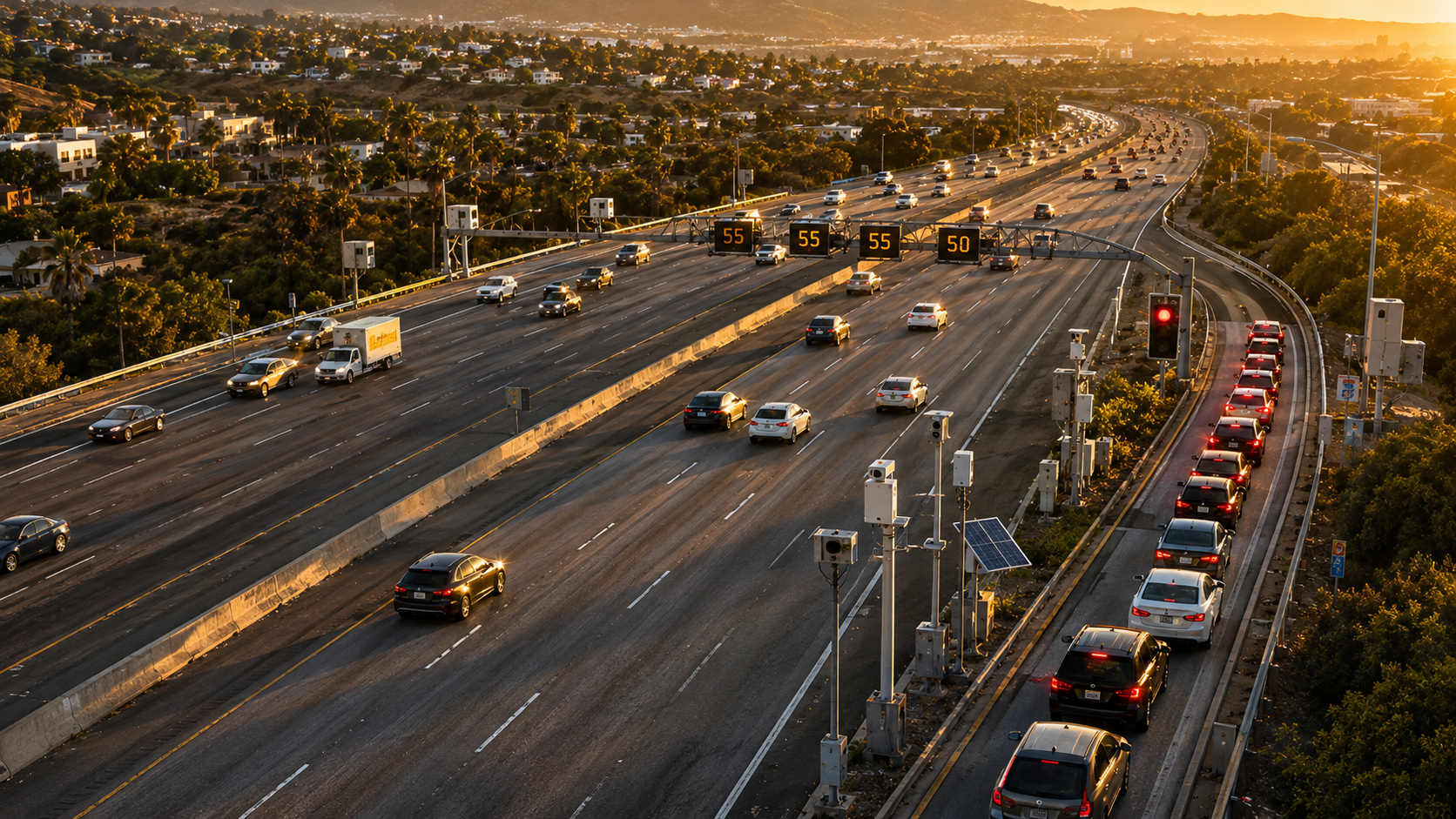

Smart highway on I 15 uses sensors and traffic lights to reduce congestion, organize entries, and provide more predictability to trips.
The 13 km smart highway in the United States is already operating on I 15 in California, with the function of adjusting car entry when the road receives a large volume of vehicles. Since June 1, 2026, drivers have encountered traffic lights at access points and panels indicating a recommended speed.
When several cars enter a crowded road at the same time, braking can multiply and turn into an ever-growing queue. The I 15 system tries to act before this point, regulating how many vehicles reach the main road during peak hours.
The information was released by the Riverside County Transportation Commission, a public transportation agency in Riverside County. The pilot project operates northbound on I 15, between Temecula and Murrieta, and will be evaluated for two years.
-
Scientists Used Space Particles to Reveal Structures Above a Submerged Tunnel Without Drilling

-
Astronomers Use James Webb Telescope Data to Trace the Path of Giant Exoplanet WD1856b, Which Survived Its Star’s Destruction and Migrated to a Close Orbit 80 Light-Years from Earth

-
After 79 Attempts, Students Create Corn Waste Bioplastic That Turns into Fertilizer and Grows Plants When Buried
-
Brazilian Public School Students Win $5,000 at World’s Largest Science Fair with Innovative Water Filter Made from Local Charcoal


Why congestion spreads even without an accident
Congestion can grow without a crash, construction, or blockage ahead. It’s enough for many vehicles to enter an already loaded highway for the driver to slow down and brake.
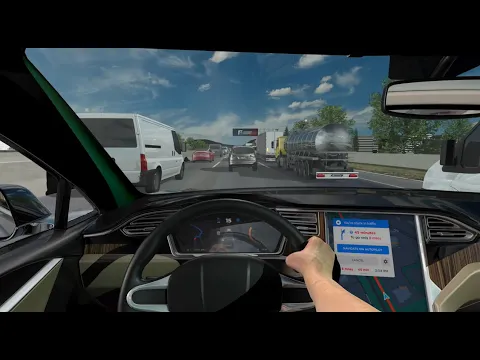

The first brake usually reaches the cars behind. In a short time, the road experiences successive stops and starts, creating the well-known stop-and-go that extends the queue for several kilometers.
On I 15, the problem arises when access points introduce many cars to the main road at the same time. The smart highway was installed to try to reduce this effect before traffic becomes even slower.
Car entry has become a control point on the smart highway
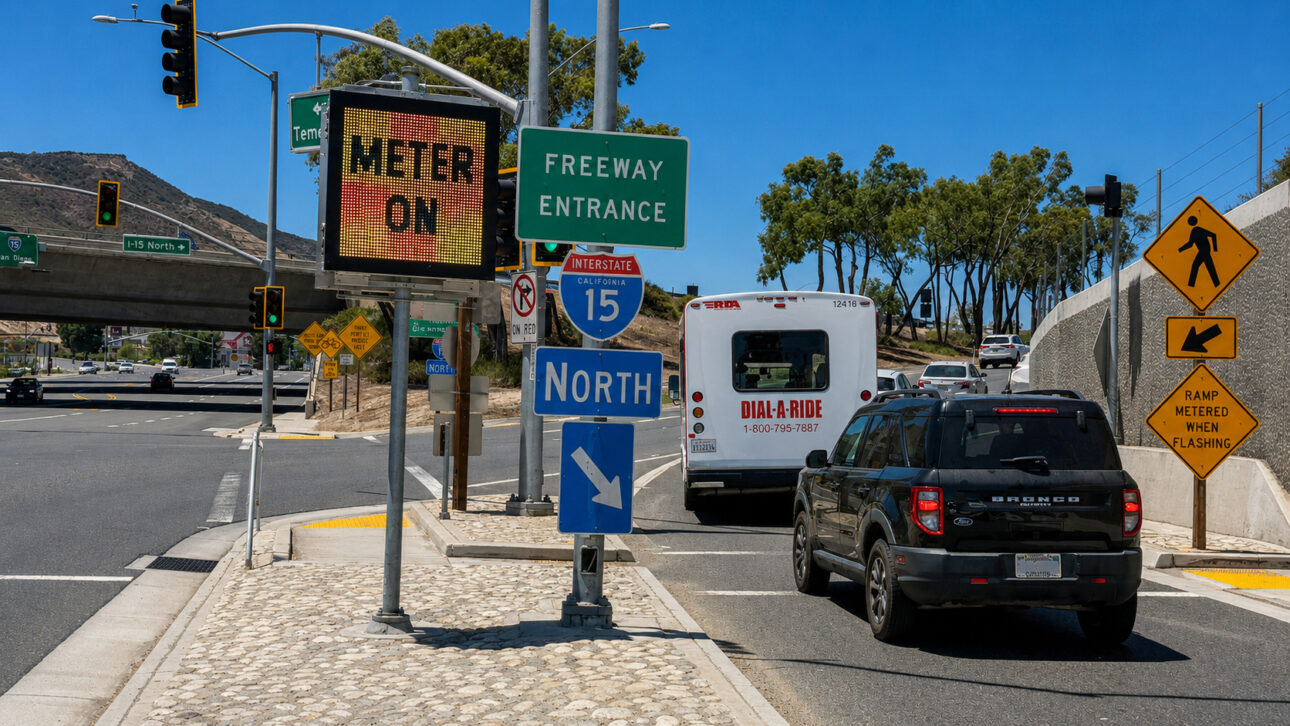
The traffic lights installed at the access points do not close the highway. They release more or fewer cars based on traffic conditions, in an action that changes in real time.
This control is called ramp metering. In simple terms, it regulates vehicle entry to prevent too many cars from reaching an already crowded road at once.
The driver can wait a little longer before entering the I 15. The intention is to reduce the number of braking and improve the travel time on the entire stretch, not just at the access point.
Sensors and panels show real-time traffic
The sensors monitor the volume of vehicles, speed, and time spent on the route. This flow data helps the system decide when to allow more cars or decrease entry via the access road.
The electronic panels show the recommended speed for that moment. The indication aims to keep cars at a more regular pace and reduce sudden speed changes.
Riverside County Transportation Commission, the public transportation agency of Riverside County, detailed that the system only collects flow data. It does not photograph vehicles, issue fines, or store personal information of drivers.
The recommended speed aims to reduce chain braking
The speed displayed on the panels does not turn the lane into a free lane. It guides the driver to avoid sudden acceleration and braking when there are many vehicles on the highway.
With fewer differences between the speed of one car and another, there is a greater chance of reducing chain braking. The goal is to decrease the constant stop-and-go and make the journey less unpredictable.
The system does not promise to end congestion. It acts on a point that often worsens the problem, the entry of cars onto a lane that is already near its limit.
Technology can improve the highway without opening new lanes
The smart highway does not create physical space for more cars. What it tries to do is make better use of the existing lanes, controlling the moment vehicles enter the I 15.
This choice can be important on roads where expanding the highway requires large works, high costs, and time. Still, sensors and traffic lights do not replace maintenance, public transportation, and planning for city growth.
The pilot project will have a two-year evaluation. This period will allow observing if the longer wait at the accesses helps improve travel along the 13 km of the highway.
Brazilian Marginals and Ring Roads Face a Similar Problem
In many Brazilian cities, marginals and ring roads receive cars from various accesses in just a few minutes. When the main road is already full, a concentrated entry can increase the queue for everyone.
The experience of the I 15 shows a possibility of traffic management before the flow stops. To work in another city, it would be necessary to evaluate each access, the volume of vehicles, and road conditions.
There is no single solution for traffic jams. However, a system that monitors traffic and organizes the arrival of cars can help provide more predictability to those who depend on the highway every day.
The I 15 already uses sensors, panels, and access traffic lights to try to contain the advance of queues. The result still depends on the evaluation of the pilot project, which will continue for two years.
The main change is in acting before traffic collapses. Instead of waiting for the highway to jam, the system tries to control the arrival of vehicles when the road starts to lose fluidity.
Would you be willing to wait a little longer at the access to try to reduce queues on the rest of the highway? Leave your opinion in the comments and share this idea with those who face traffic every day.


