






 Portuguese
  Spanish


The caatinga of the São Francisco Valley became the 2nd largest wine hub in the country and produces grapes year-round in a piece of land that geography deemed impossible
The wine from the Brazilian hinterland is born where no one would bet on a vineyard: in the semi-arid São Francisco Valley, between Pernambuco and Bahia, where the sun beats down for more than nine dry months a year. In July 2025, when the Caminhos da Reportagem series aired the region as the “technological hinterland,” the statistic that circulated Brazil was this: 98% of all the grapes the country exports come precisely from this land that seemed doomed to caatinga.
How did a desert become a vineyard? The answer lies in the water of the São Francisco River combined with the science of irrigated cultivation: instead of waiting for rain, the producer controls every drop, and the vine, deceived by the constant heat, produces clusters in any month of the calendar. The result is a region that today is the second largest producer of fine wines in Brazil.
The paradox of planting grapes where rain hardly falls
The first thing that impresses those who arrive at the Petrolina-Juazeiro axis is the contrast. On one side of the road, the low, gray vegetation of the semi-arid. On the other, green rows of loaded vines, shining under the same scorching sun. It’s the kind of image that makes the visitor doubt what they’re seeing, and it’s precisely this paradox that has transformed the São Francisco Valley into one of the most unlikely terroirs on the planet.
-
China Limits Brazilian Meat Imports After Returning 20 Soybean Ships, Causing Factory Shutdowns and Concerns in Brazil’s Meat Industry

-
Brazilian Producer Adopts Hydroponic Strawberry Farming in Western Paraná, Achieving Year-Round Harvests and Becoming a Model for Continuous Production

-
Vertical Farming Company Backed by SoftBank and Jeff Bezos Files for Bankruptcy, Valuation Plummets from $1.9 Billion to Under $15 Million

-
Indian Inventor Develops Solar-Powered Machine Enabling Blind Farmers to Independently Manage Crops with Sensors and Audio Alerts




According to Embrapa Uva e Vinho, the region is classified as having a tropical semi-arid climate, and it is this condition, combined with irrigation from the river’s water, that allows something rare in global viticulture: the vineyards produce grapes in every month of the year. While Europe waits for a single harvest per season, here the vine practically never rests.
A technology that deceives the plant itself
In the Old World, the vine follows the seasons: it sprouts in spring, ripens in summer, rests in winter. In the hinterland, there is no harsh winter or defined spring, so the producer dictates the rhythm. Pruning and controlled irrigation work like a switch: the farmer decides when the plant “wakes up” and when it delivers the clusters. By taming the biological clock of the vine, the Valley managed to stagger production year-round, something no traditional region can achieve.
This agricultural engineering did not arise by chance. According to Embrapa, the first consistent investments in viticulture in the region began back in the 1980s, in a slow process of trial and error to discover which grape varieties would withstand the extreme heat and how to manage the soil under intense irrigation. What was an experiment became an economic vocation.
From Experiment to National Leadership in Exports
The scale leap is what impresses. The São Francisco Valley went from being an agricultural curiosity to becoming the backbone of Brazil’s export fruit industry. According to Agência Brasil, 90% of the mangoes and 98% of the grapes exported by the country come from this strip of land between northeastern states, an almost absolute dominance of a single hub over the entire national agenda of these fruits.
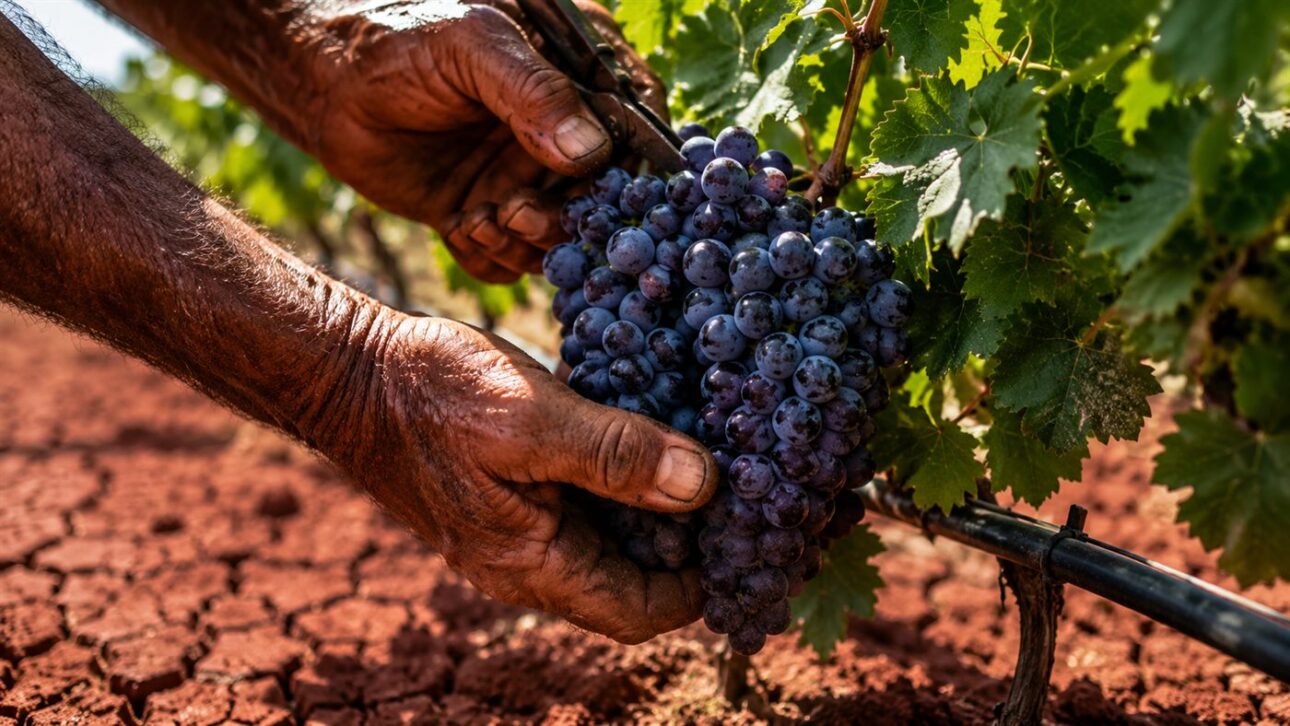
This number transforms the grape map in Brazil. When a consumer from the South or Southeast takes home national table grapes or finds the Brazilian fruit on European shelves, the overwhelming probability is that it was born in the sertão, under irrigation, and not in the mild climate mountains that intuition would associate with vineyards.
Seven Wineries that Put the Northeast on the Wine Map
Table grapes are only half the story. The other is wine. According to Agência Brasil, the São Francisco Valley is already the second largest wine region in Brazil, behind only the Serra Gaúcha, and concentrates seven wineries, five in Pernambuco and two in Bahia. A handful of producers made the Northeast break a tradition that always belonged to the South of the country.
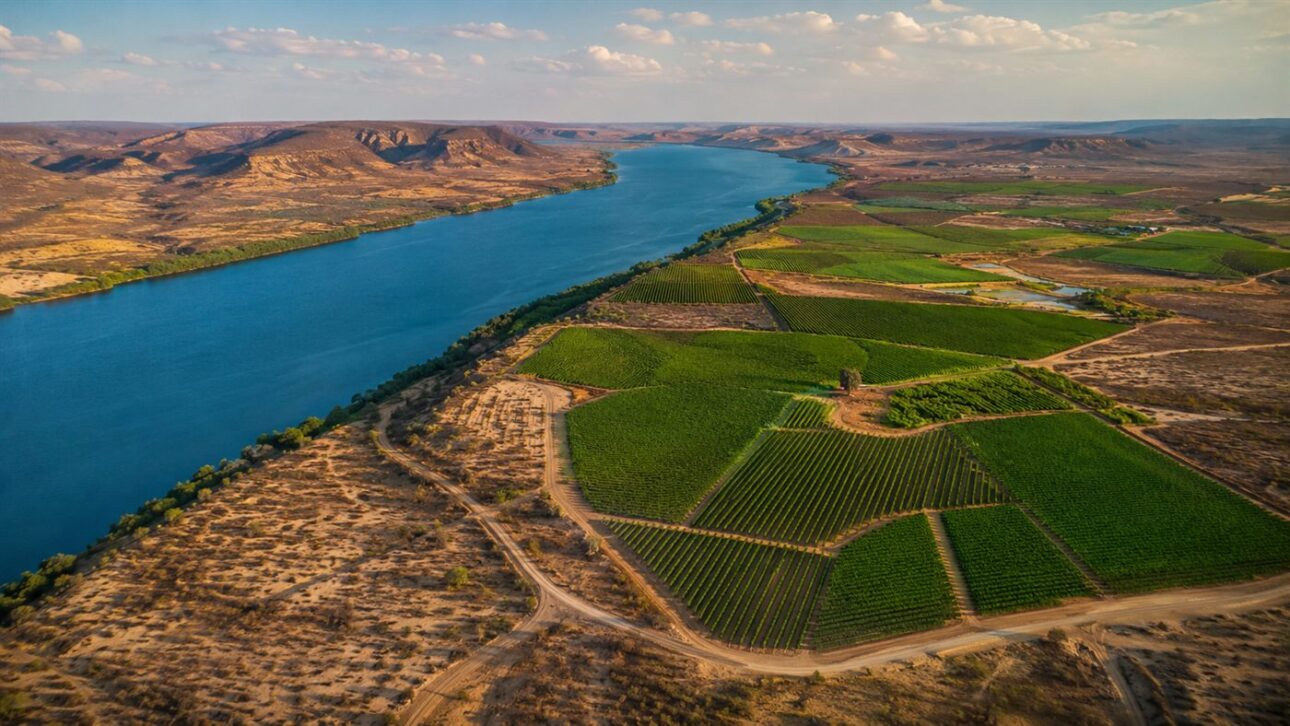
The labels from here carry their own identity. Agência Brasil describes what comes out of these wineries as wines produced in a tropical environmental condition, a typicity that does not exist in any temperate climate wine. They are fine still wines, sparkling wines, and also liqueur products, all marked by the strong sun and accelerated maturation that only the semi-arid offers.
What the 500 hectares of vineyard hide
The physical size of the wine-growing hub belies its importance. According to Embrapa, the area of vineyards with varieties intended for the production of fine wines in the region is around 500 hectares, concentrated along the Petrolina-Juazeiro axis and in municipalities like Casa Nova, Lagoa Grande, and Santa Maria da Boa Vista. It is a tiny green spot on the map of the Northeast that, nonetheless, puts Brazil in the conversation of tropical wines.
The ratio is disproportionate: few hectares, a growing international reputation, and a production that runs all year round. This density of value per hectare is what makes the irrigated fruit cultivation of the Valley a case studied by technicians from other hot climate countries who dream of replicating the model.
The indication of origin that formalized the terroir
In the wine world, having a proper name is worth gold. That’s why the region pursued a geographical indication. According to Embrapa, the institute that brings together local producers was created in 2003, and the formal project for structuring the indication of origin ran between 2014 and 2017, with the technical documents filed in 2018 for official registration.
This seal is not bureaucracy: it is the certificate that the wine from the hinterland has recognized origin, method, and identity. According to Agência Brasil, the official recognition of tropical wines reached the market as a turning point, giving the Valley a passport to compete on shelves where geographical origin weighs as much as flavor.
The oasis that sustains the hinterland wine all year round
While much of the northeastern interior suffers from drought, the irrigated strip of the São Francisco functions as a productive oasis. Agência Brasil summarizes the region as a world reference in irrigated fruit cultivation, an economic counterpoint to the historical image of poverty and drought associated with the hinterland. The river’s water, distributed by canals and drip systems, has become the engine of an economy that doesn’t stop even at the peak of heat.
The grape in the hinterland, besides wine, sustains a chain of employment that spans Pernambuco and Bahia all year round, precisely because the harvest never ceases. Where rain fails, irrigation engineering delivers predictability, and it is this predictability that attracts investment to the wineries of Pernambuco and Bahia.
From wine to tourism: the hinterland that became a destination
The success of the product opened a second income front: wine tourism in the Valley. Visitors who once never imagined associating the hinterland with wine glasses began to visit the region to see the irrigated vineyards, taste tropical sparkling wines, and witness the harvest that defies the calendar. The improbable became an attraction, and the attraction became a business.
The São Francisco Valley shows that an agricultural frontier is not just a matter of favorable climate, but of technology, science, and boldness.
A land that nature reserved for the caatinga today delivers almost all of the country’s export grapes and the 2nd largest volume of fine wine in Brazil. If the semi-arid region achieved this with 500 hectares and well-managed water, how far will the wine of the sertão go when the next wave of wineries comes into operation?


