Portuguese
  Spanish



Industrial strategy behind the 1.5 engine redefines the global automotive market with tax benefits, production scale, and surprising technological evolution
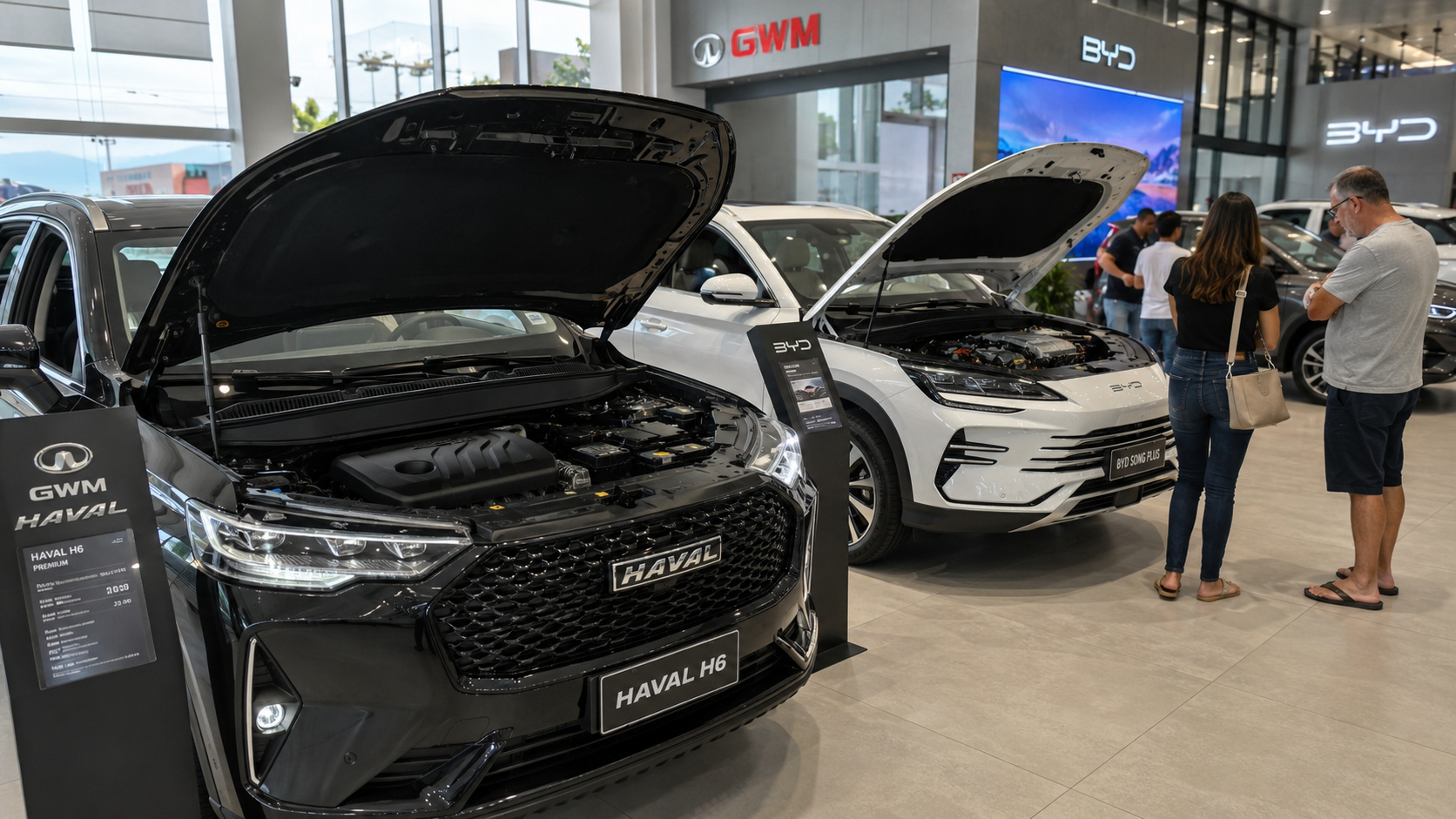
Since June 27, 2026, the debate over the standardization of 1.5 engines in Chinese cars has regained strength in the global automotive sector. This is because models like GWM Haval H6, BYD Song Plus, and vehicles from Caoa Chery continue to consolidate this engine size as the dominant standard. The information was released by “Quatro Rodas”, which details how this choice goes far beyond engineering, involving tax incentives, trade agreements, and an extremely sophisticated industrial strategy.
At first, it may seem like just a technical decision. However, when analyzing the complete context, it is clear that the 1.5 L engine has become a true key piece in the global expansion of the Chinese automotive industry. Furthermore, this standardization did not happen by chance: it is the direct result of decades of development based on economic and regulatory factors.
Technological heritage and historical basis of the Chinese industry
To understand this choice, it is essential to go back to the year 2000, when the joint venture between Toyota and FAW began producing 1.3L and 1.5L engines based on the 8A family, originally launched in 1978 in the Toyota Corolla. Later, brands like Geely started using these engines from 2003, even before developing their own technologies.
-
Chevrolet Unveils Onix Log 2027: A Hatchback Without Rear Seats, Featuring 1.0 Engine and 1,045 Liters of Cargo Space, Perfect for Businesses and Delivery Workers

-
Suzuki Jimny Nomade 5-Door: A Rugged Family SUV with 1.5L Engine and 4WD, Priced Around $18,000 in Brazil

-
Suzuki XL6: Affordable Premium Minivan in India Offers Seating for Six, Hybrid Engine, and Impressive Fuel Efficiency

-
Banco do Brasil and Uber Launch Cashback Program Offering Up to 3.5 Loan Installments Back, Drivers Gain Access to New Cars Worth Up to $30,000 Through Move Brasil Initiative





At the same time, other manufacturers resorted to Mitsubishi Orion 4G15 (1.5L) and 4G18 (1.8) engines, also created in the late 1970s for the Mitsubishi Lancer. As a result, these engines became the basis for numerous Chinese projects, directly influencing brands like BYD and Chery.
Currently, this heritage is still visible. The 4G15 engine, for example, served as the basis for the 1.5 EcoBoost of the Ford Territory (produced in China by JMC) and also for the GW4B15 engine used in the GWM Haval H6 sold in Brazil, including in its new flex version.
The tax mathematics that changed everything
However, the most decisive factor was not just historical, but fiscal. In China and in ASEAN countries, there is a critical limit: engines up to 1,500 cm³ pay only 5% import tax. On the other hand, any value above that raises the rate to 30%.
In this way, this “tax guillotine” forced automakers to focus intensely on developing 1.5 engines. Instead of investing billions in larger engines, the solution was to extract maximum performance from this displacement.
Consequently, significant technological advances emerged. Today, 1.5 engines can replace old 2.0 and even 2.4 naturally aspirated blocks, thanks to technologies such as:
- Direct injection of up to 350 bar
- Miller and Atkinson cycle
- Variable geometry turbos (VGT)
Furthermore, the thermal efficiency of these engines exceeds 40%, reaching an impressive 44.5% in recent projects by Omoda & Jaecoo.
Economy of Scale and Global Competitiveness
Another essential point is the economy of scale. Developing an engine from scratch costs billions. Therefore, by using a single block in millions of vehicles, the unit cost drops drastically.
Chery is a clear example of this. Since 2003, in partnership with AVL, the company has developed the Acteco line, which today has more than 20 variations of the 1.5 engine, including naturally aspirated, turbo, hybrid, with direct and indirect injection versions.
Meanwhile, Western brands followed a different path, betting on 1.5 three-cylinder engines. BMW, Ford, Nissan, and Volvo use 500 cm³ cylinders for modularity. Still, China maintained its preference for four cylinders, prioritizing robustness and industrial adaptation.
Consequences in Brazil and the Global Market
In Brazil, the scenario is different. Here, engines up to 999 cm³ are more fiscally favored. However, many Chinese models are hybrids, which guarantees exemption or reduction of IPVA.
Thus, the 1.5 engine does not necessarily represent isolated technical superiority, but rather a highly efficient response to global market rules. It is a strategy that combines technology, cost, and legislation.
Finally, an important question remains: how will these engines, subjected to high pressures and intensive use, behave in the long term in the Brazilian used car market? Although they have a reliable origin in Japanese engineering, the real test is still ongoing.
Would you buy a car with a 1.5 turbo engine knowing that it works at the limit to deliver the performance of larger engines?