






 Portuguese
  Spanish


Displayed at the Anneken Memorial in Rolante, the relic brings together portraits of Martin Luther, the Augsburg Confession, and printing methods used in the 18th century.
A Lutheran Bible published in 1747, in the German city of Nuremberg, has crossed centuries and is now preserved in Rio Grande do Sul.
The copy is on display at the Anneken Memorial, located in Rolante, in the Paranhana valley. The work was acquired at a second-hand bookstore in February 2026.
The acquisition was made by Caminho das Águas, a cooperative from Rio Grande do Sul founded in 1923 and part of the Sicredi system.
-
Before Japan Became a Football Powerhouse, Zico Transformed the Amateur League, Boosted the J.League, and Was Honored with a Statue at Kashima Antlers

-
House Left Isolated in the Middle of New Chinese Highway as Owner Refuses Compensation Deal, Construction Continues Around the Property

-
Venetian Factory Luigi Bevilacqua Crafts Velvet by Hand on 18th-Century Looms, Producing Just 30 Centimeters a Day

-
From Customer Service to Pipeline Welding: She Becomes the Second Female Welder in Utility’s History, Now Leading a Team in San Diego



According to the institution, the volume is considered the oldest Lutheran Bible on display in Brazil. The piece was brought from Germany by immigrants during the 20th century.
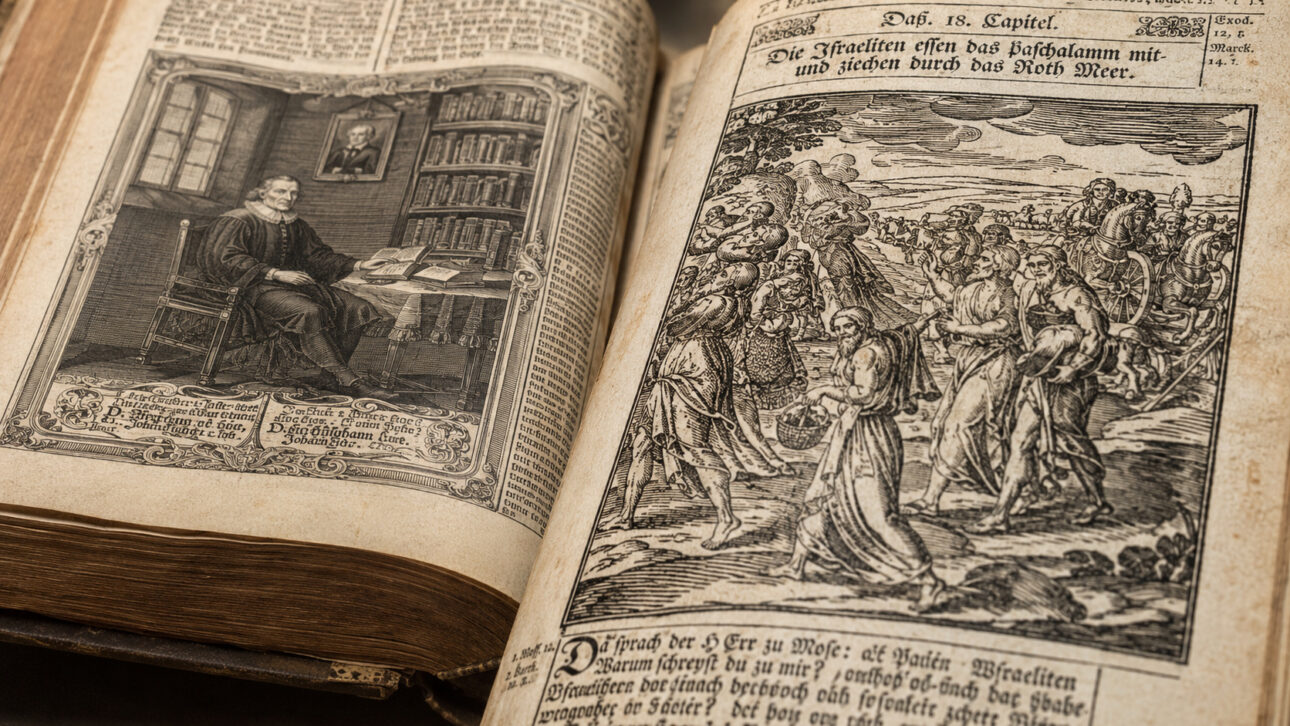
German relic arrived in Brazil with immigrants
The Lutheran presence in Brazil officially began in 1824, before the arrival of the copy currently displayed in Rolante.
Records of the Evangelical Church of Lutheran Confession in Brazil indicate the arrival of German immigrants in Nova Friburgo and São Leopoldo that year.
This religious tradition dates back to the 16th century, when Martin Luther led the movement known as the Protestant Reformation.
Luther was an Augustinian monk and university professor in Wittenberg, Saxony. In 1517, he presented reflections opposing the sale of indulgences.
The criticisms questioned the granting of religious forgiveness through payments. The movement brought profound changes to the religious, social, and political structures of Europe.
Luther’s translation gave rise to a new Bible
Martin Luther translated the New Testament into German in 1522. The work used as a reference a Greek version organized by Erasmus of Rotterdam.
The first complete version of the Lutheran Bible was published in 1534. The Old Testament was translated based on Hebrew texts.
Seven books were set aside by Luther for being considered useful, but not divinely inspired. These texts would be removed from later Protestant editions.
A new editorial project emerged about a century later. Duke Ernest I asked the printer Wolfgang Endter for a Bible based on the Lutheran model.
The result was the Kurfürstenbibel, known as the Elector’s Bible. The work started the lineage of the so-called Ernestine Bibles.
These editions were printed between 1641 and 1758. The volume preserved in Rolante belongs to this historical tradition.
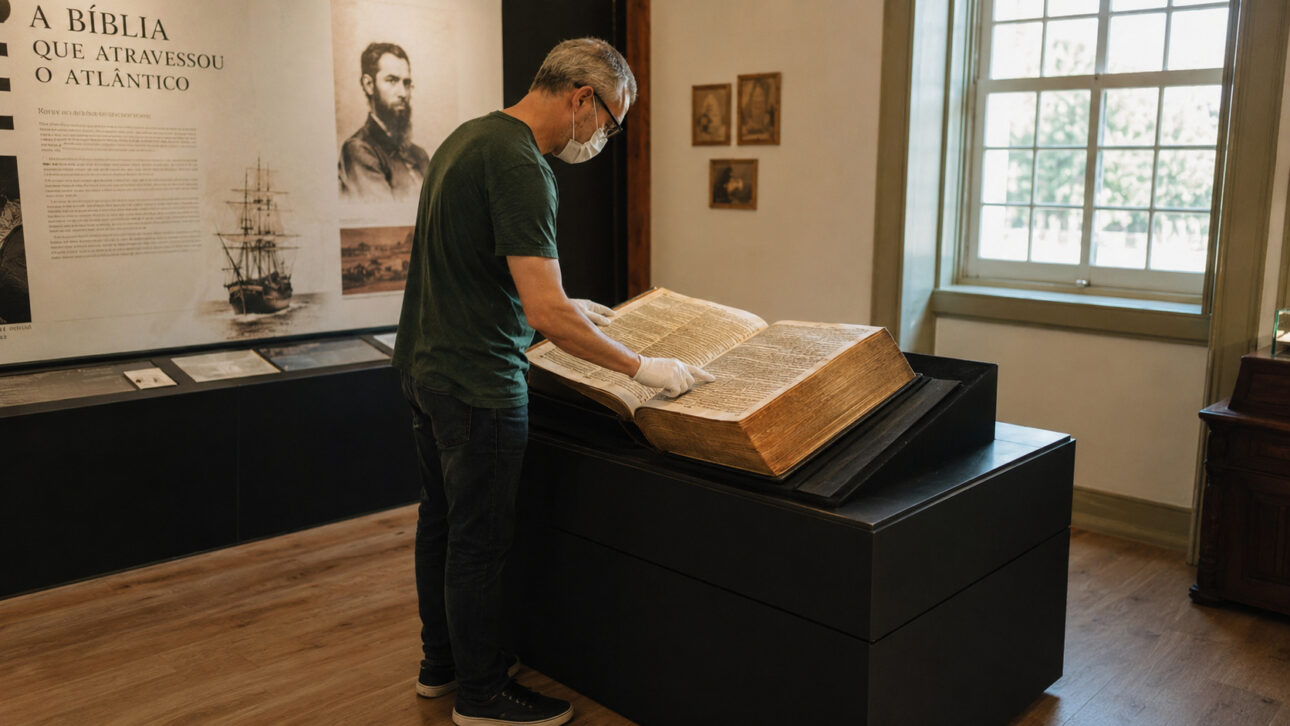
1747 Bible holds historical texts and portraits
The edition displayed at the Anneken Memorial preserves elements that help explain its cultural and religious importance.
Among the main contents present in the copy are:
- preface written by theologian J. Michael Dilherr;
- portraits and short biographies of Martin Luther;
- images of the Dukes of Saxe-Gotha;
- Augsburg Confession;
- seven books later removed from new Protestant editions;
- illustrations produced in wood and copper plates.
The Augsburg Confession represents one of the main doctrinal documents adopted by Lutheran churches.
Pages were produced with time-resistant paper
The paper used in the production of the Bible was known as rag paper. Its composition combined linen and cotton fibers.
This material showed greater resistance to acidity and wear caused by time. The pages did not become brittle easily.
The preservation of the volume is also related to the quality of the materials and the artisanal methods used in its manufacture.
Techniques created after Gutenberg marked the printing
The printing of the 1747 Bible followed techniques developed after the creation of the movable type press.
Johannes Gutenberg began printing pamphlets with this method during the 1440s. A well-known edition of the Bible was produced by him around 1455.
Each letter was represented by a small metal piece. The typographer manually arranged the words, line by line, in a tray.
An oily ink was applied over the metal types. The paper was placed over the composition and pressed to receive texts and images.
Wood and copper engravings enrich the edition
The smaller illustrations were produced through woodcut. The technique used drawings carved into wooden blocks.
The larger images, on the other hand, were created with engraving. The method allowed for engraving very fine lines on copper plates.
The artist used a steel tool called a burin. The ink remained in the grooves and was transferred to the paper by the pressure of the rollers.
The engravings of the 1747 Bible were produced by Andreas Nunzer. The details allowed for the representation of shadows, textures, and facial expressions.

Binding could take up to two years
The printed sheets were manually sewn after drying. The binding received a tanned pig leather cover over wooden boards.
The surface of the cover was decorated through dry embossing. Heated metal rollers created designs directly on the leather.
Brass clasps and corner pieces protected the edges and kept the book closed. The structure also prevented deformations caused by humidity.
The complete production of a Bible of this size could take up to two years.
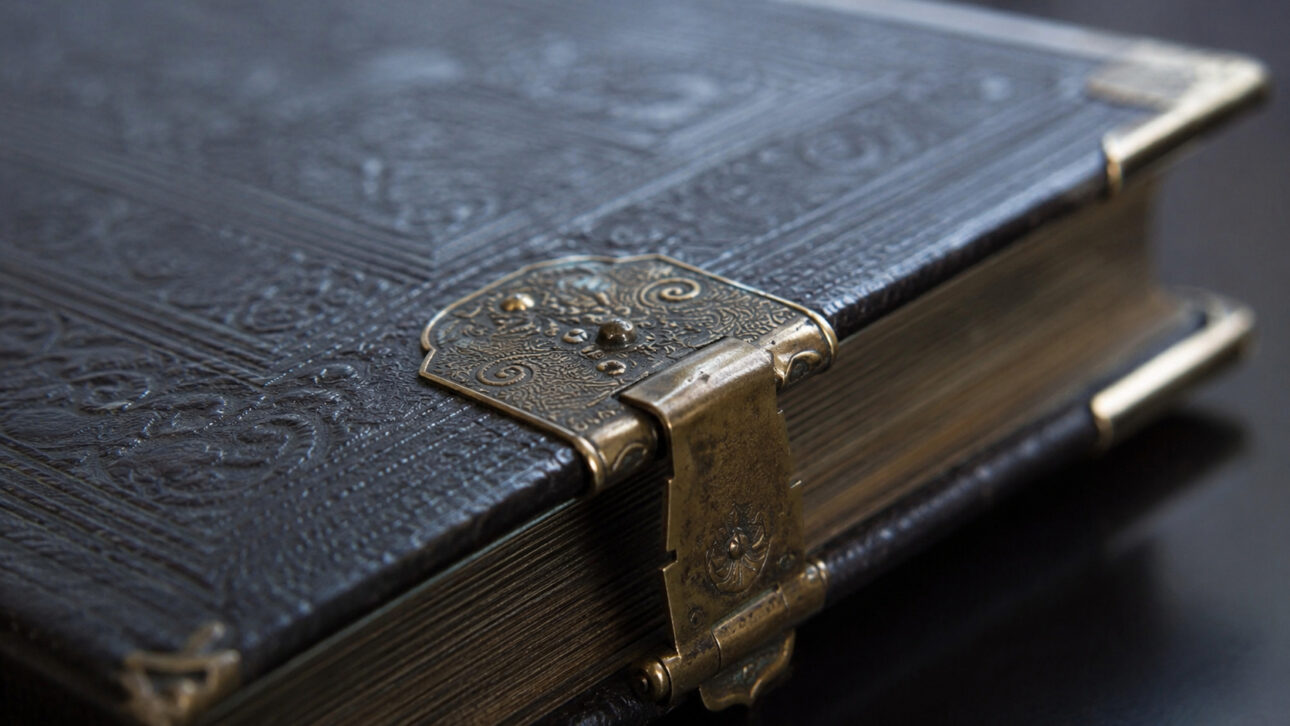
The work preserves part of religious and editorial history
The 1747 Bible brings together technical, artistic, religious, and historical aspects in a single volume.
The copy also preserves the memory of German immigration and the Lutheran presence in Brazil, currently represented by IECLB and IELB.
The exhibition at the Anneken Memorial allows the public to learn about ancient printing and bookbinding methods that have remained in use for centuries.
Should a work capable of spanning nearly three centuries be seen only as a religious book or as a historical heritage of the entire society?


