Portuguese
  Spanish


Paraná Bets On Concrete Technology To Increase Durability And Reduce Costs On Its Highways, Transforming The Road Network And Boosting Logistics In All Regions Of The State.
Paraná consolidated, in June 2025, a new standard for its road network by reaching the mark of 500 kilometers of highways paved with concrete, distributed across all regions of the state.
The investment totals US$ 3.1 billion, encompassing 18 segments at different stages of execution, from planning to completion.
The central goal is to increase the durability of the roads, doubling the lifespan of Paraná’s highways compared to traditional asphalt.
-
New Helmet Rule in Brazil Requires Inmetro Digital Seal and QR Code from July 1, 2026, But Existing Helmets Are Exempt — Here’s What Changes and How to Verify Authenticity

-
Bus Strike in Rio Disrupts Public Transport, but Court Ruling Ensures 50% of Fleet Remains Operational
-
Driver who “holds” the left lane can receive a hefty fine and 4 points on their driver’s license even if they think they are going at the correct speed for the road.
-
São Paulo Government puts R$ 343 million on the table and releases 31 km of duplication, 9.84 km of third lanes, 4 reinforced viaducts, and 8 grade-separated returns.


Concrete Highway Increases Lifespan And Reduces Costs
Among the main works underway, the highlights are the 140 kilometers of concrete on PRC-280, in the Southwest, as well as the duplication of PRC-466, which connects Guarapuava to Pitanga, in the central region of the state.
On the Coast, the connection between Matinhos and Praia de Leste gains a new configuration with the duplication in rigid pavement.
In Greater Curitiba, notable examples include the duplication of Rodovia dos Minérios and the paving of the road that connects Mandirituba to São José dos Pinhais.
These interventions are part of a modernization policy that has been repositioning Paraná as a national reference in road infrastructure.
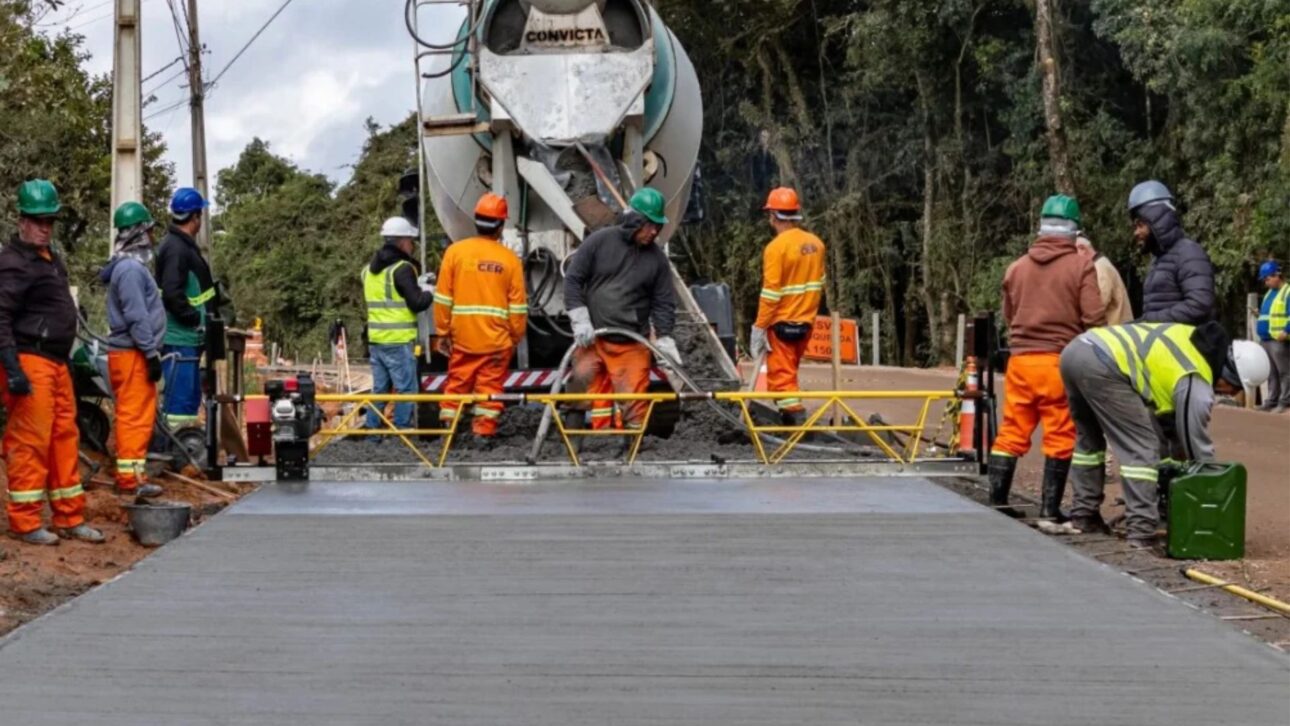
Benefits Of Rigid Pavement On Paraná’s Roads
The replacement of asphalt with concrete brings measurable advantages, according to specialists from the Paraná Department of Roads (DER/PR).
The new pavement has a projected lifespan of 20 years, double the 10 years estimated for asphalt roads.
This durability contributes to a reduction in maintenance costs, as concrete withstands deformation, cracking, and potholes better.
Maintenance work becomes less frequent and, when necessary, tends to be targeted and less costly, which directly impacts the public budget in the long term.
Record Investment In Road Infrastructure
According to the state governor, Carlos Massa Ratinho Junior, the decision to invest in concrete highways aligns Paraná with international standards.
He emphasizes that the model was inspired by solutions adopted in countries such as the United States and Germany, known for their excellence in road infrastructure.
“We implemented this program in an unprecedented manner in Paraná. Concrete highways were a distant dream and are now part of the daily life in some key regions for our economy,” claims the governor.
Road Safety And Impacts For Drivers
In addition to the economic aspect, the use of concrete offers gains in road safety.
Being a lighter-colored material, it reduces heat on the roadway, increases nighttime visibility, and provides greater traction, decreasing the risk of aquaplaning during rains.
For drivers, there is another benefit: maintenance interventions not only become less frequent but also avoid recurrent lane blockages and slow traffic, favoring flow and predictability in travels.
PRC-280 And Whitetopping: Highlighting Innovation
In Southwest Paraná, PRC-280 stands out as one of the state’s priority logistics corridors, especially for the flow of agricultural and industrial production.
The concrete paving project was carried out in different stages, including the application of a technique known as whitetopping, where a new layer of concrete is placed over the existing asphalt, speeding up execution and reducing costs.
According to Fernando Furiatti, director of DER/PR, the excellence of this technique has already attracted delegations from other Brazilian states interested in the results achieved in Paraná.
Main Works Delivered And Underway
The data shows concrete advancements.
Only on the stretch between Palmas and Clevelândia, also on PRC-280, 45 kilometers were revitalized, with investments close to US$ 188 million.
On another front, the duplication of PRC-466, connecting Guarapuava, Palmeirinha, Turvo, and Pitanga, represents 84 kilometers in length and almost US$ 948 million in financial contributions.
Still in the schedule, the stretch between Pitanga and Manoel Ribas is in the bidding phase, expecting restoration with whitetopping on 43 kilometers, the implementation of third lanes, and improvements in drainage and bus stops.
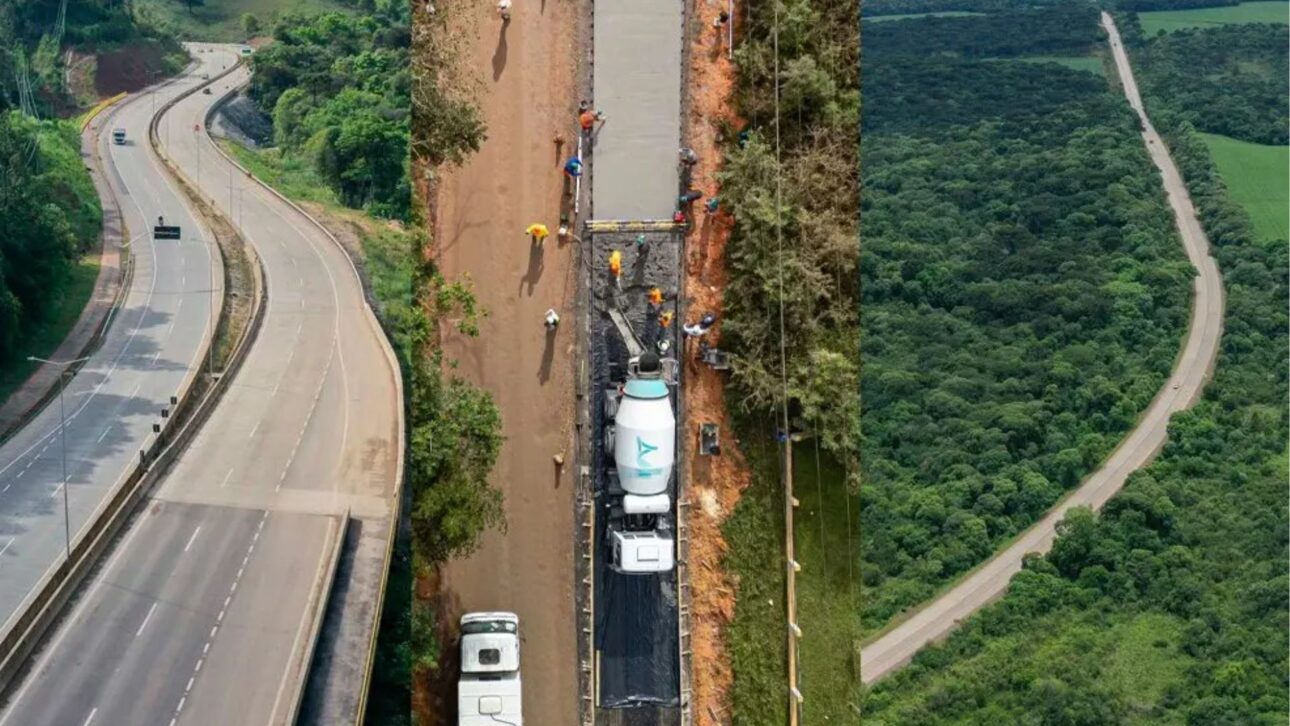
Rodovia dos Minérios, Coast And Metropolitan Region
Another highlight of the package of works is the Rodovia dos Minérios (PR-092), between Curitiba and Almirante Tamandaré.
After 30 years of waiting, the 4.74 kilometer stretch was delivered in October 2024, accompanied by special artworks such as bridges, viaducts, bike paths, sidewalks, and public lighting, at a cost of US$ 152 million.
The second stage of duplication is underway, while the third, covering 8.3 kilometers, awaits the conclusion of bidding.
On the Coast, the duplication of PR-412, between Matinhos and Pontal do Paraná, involves 14.28 kilometers in length, including the construction of a central concrete lane, asphalt access roads, new bridges, and viaducts, at a cost of US$ 274.5 million.
Among the improvements, the inclusion of bike paths, sidewalks, and expanded drainage systems stand out, measures that enhance safety and comfort for users.
The capital of Paraná and its metropolitan region have also been included with the construction of a strategic connection between Mandirituba and São José dos Pinhais, a stretch of 26.61 kilometers and a budget of US$ 96.8 million.
The project meets historical demands from the population, in addition to boosting tourism and industrial logistics.
Other Structuring Projects And Impact On State Logistics
Among the completed works is the duplication of Contorno Oeste de Cascavel, with 19 kilometers in length and investments over US$ 24 million, essential to connect important federal highways and improve urban access to the city.
In Ponta Grossa, the restoration of PR-151, with lane expansions and the implementation of third tracks, represents an investment of US$ 257 million in 32.7 kilometers.
On the list of initiatives underway, bidding, or recent delivery, stretches such as the expansion of PRC-487 and PR-460 between Nova Tebas and Pitanga, with over 51 kilometers and an investment of US$ 267 million are included; as well as the new Contorno Sul de Curitiba, which will connect BR-116 to BR-476 in Araucária, anticipating track duplication, bike paths, and complementary works, with a budget exceeding US$ 355 million.
Concrete Highway As A National Reference
The investment in concrete highways is supported by numbers and already visible results, consolidating Paraná as a national reference in infrastructure.
The state demonstrates that the combination of technology, planning, and investment can transform the road network, promoting greater safety, economy, and logistical efficiency.
Given this advancement, do you believe other states should adopt concrete paving as a standard in their highways? What other benefits do you consider important for the choice of materials in public works?