Portuguese
  Spanish


The jet was presented in a rollout ceremony in Linköping, Sweden, on June 2, and will proceed to flight tests before arriving in the country. The 2026 budget allocates 2.1 billion reais for the Gripen fighters, amid the continuous decline of the Brazilian Air Force fleet.
The Brazilian government plans to invest 2.1 billion reais in the Gripen fighters in 2026, at the same time the Swedish manufacturer Saab presented the first example of a version created by requirement of the Brazilian Air Force. According to the Ministry of Defense budget, released by CNN Brazil, the amount is allocated to the acquisition project of the F-X2 fighters, the F-39 Gripen, and should finance the delivery of two aircraft and the advancement of the assembly of other units. The presentation of the new jet took place on June 2, 2026.
However, it is necessary to separate two things that were reported together, as the plane was not delivered to Brazil. On June 2, Saab held a presentation ceremony, the so-called rollout, of the first Gripen F at its factory in Linköping, Sweden, and the aircraft will still undergo a flight test campaign before the definitive delivery to the Brazilian Air Force, expected in the coming months. The fighter is part of the F-X2 Project, a contract signed in 2014 that foresees 36 aircraft by 2032.
The 2.1 billion reais planned for the Gripen fighters in 2026
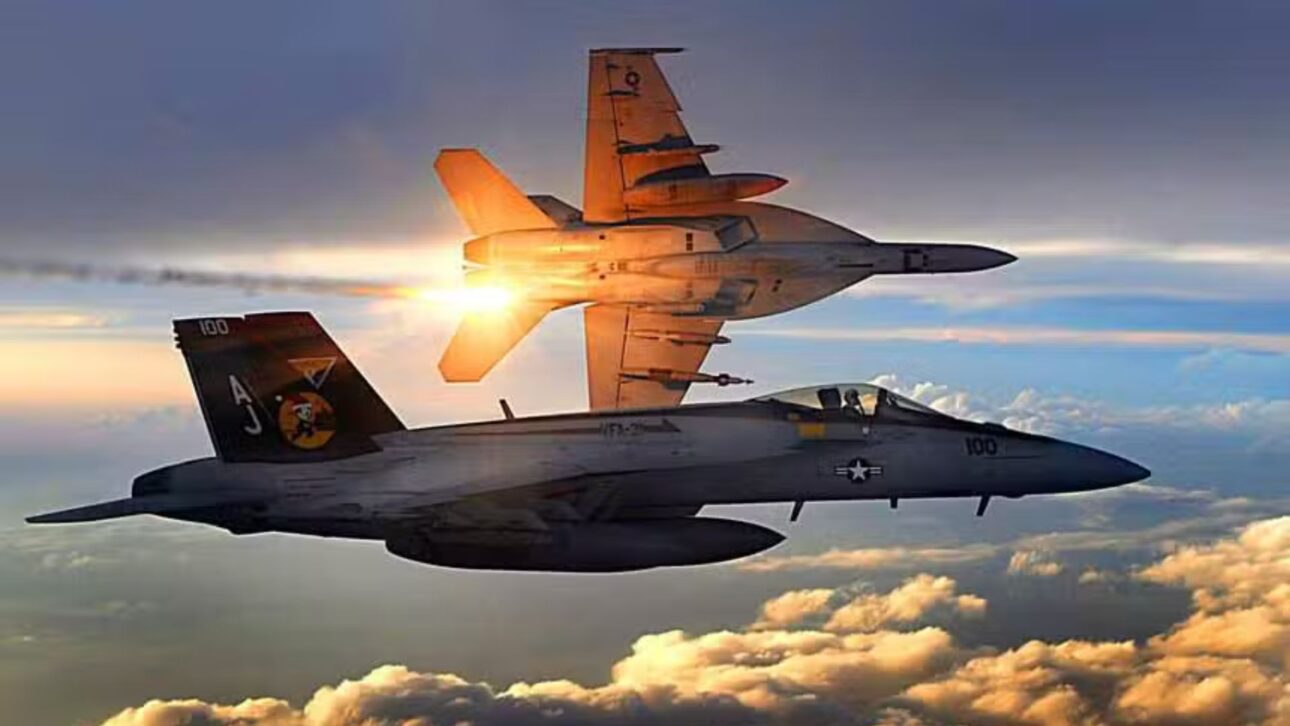
According to the Ministry of Defense, 2.1 billion reais are reserved for the acquisition project of the F-X2 fighters, the F-39 Gripen.
-
Former Marketing Agency Owner Thrives on Foraging for 250 Days, Sampling Over 170 Plants, and Says He No Longer Remembers Supermarkets

-
IKEA’s AI Handles Nearly Half of Customer Calls, Company Reassigns 8,500 Staff as Design Consultants, Boosting Revenue by €1.3 Billion
-
Owner of Havan Visits Paraguay to Discuss Lower Taxes, Local Suppliers, and International Expansion with President

-
Brazilian Construction Retail Chain Closes After 60 Years, Begins Liquidation Sale Across Five Cities




Of this total, 1.357 billion reais were already included in the Annual Budget Law of 2026, and another 739.5 million reais were foreseen in ordinance no. 184, published in May 2026 by the Ministry of Planning and Budget.
The resources have a defined destination within the program’s schedule.
According to the department, the money should enable the delivery of two aircraft and the advancement of assembly stages for units planned for the following years.
There is also a greater reinforcement on the horizon, as Congress approved Complementary Law No. 221, of 2025, which secures 30 billion reais for strategic defense projects over six years, of which the Air Force received 840 million reais in 2026, amounts that will be incorporated into the budget within the New PAC Program.
What really happened in Sweden on June 2
The event that made headlines was the official presentation of the first Gripen F, not a delivery.
Saab conducted the rollout of the aircraft at its headquarters in Linköping, Sweden, on June 2, 2026, unveiling the jet designated F-39F in Brazil, with serial number 4000, the newest of the Gripen fighters ordered by the country.
According to the manufacturer’s own schedule, the plane now moves to Saab’s Flight Test Center and will only then be delivered to the Brazilian Air Force, which is expected in the coming months.
The ceremony brought together authorities from both countries.
Present were the commander of the Air Force, Lieutenant-Brigadier Marcelo Kanitz Damasceno, the Minister of Defense, José Múcio, the Swedish Minister of Defense, Pål Jonson, and Saab’s President, Micael Johansson.
Lars Tossman, responsible for the company’s Aeronautics area, described the rollout as a shared achievement between Saab, the Brazilian industry, and the Brazilian Air Force, according to a company statement.
A twin-seat fighter designed at Brazil’s request
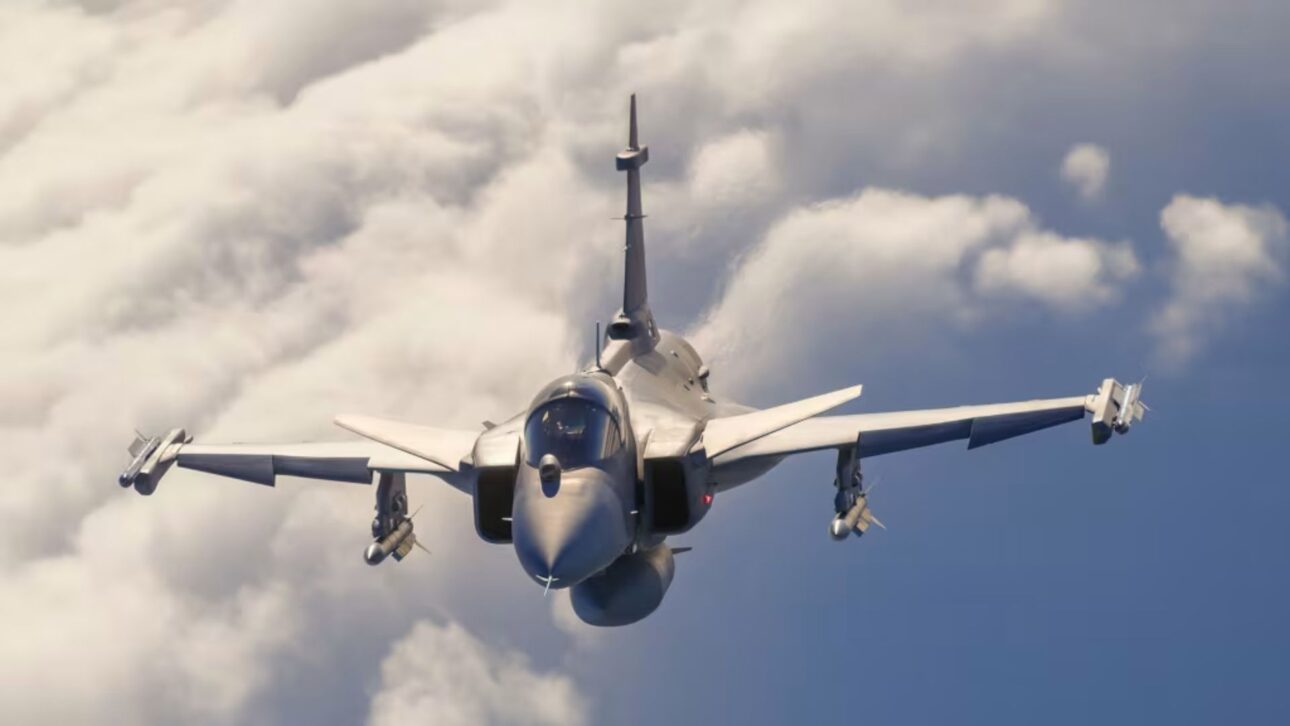
This is the twin-seat version of the Gripen E fighter line, with two seats, allowing for a pilot and an instructor or co-pilot.
Brazil was the client that launched this configuration and participated in its development, and therefore appears as the first operator of the model in the world, in an arrangement that involved technology transfer and the training of hundreds of Brazilian engineers and technicians.
Despite the second seat, the aircraft maintains combat capability.
According to Saab, the Gripen F retains the sensors, mission systems, avionics, and weapon points of the single-seat Gripen E, adding a fully independent second cockpit, useful both for accelerating pilot training and for task-sharing in higher threat situations.
The 2014 contract provides for 28 units of the Gripen E, single-seat and combat-oriented, and 8 of the Gripen F.
It is worth noting that two-seat versions have become rare among modern fighters, and the model has also been chosen by Thailand and Colombia.
Fleet in Decline, Assembly in Brazil, and the Queue of New Fighters
The investment occurs in a scenario of shrinking Brazilian air fleet.
According to data from the Brazilian Air Force itself released in September last year, the number of aircraft fell by 39.4% between 2014 and 2025, while the discretionary budget of the FAB, aimed at investments and maintenance, decreased by about 42% in the same period.
The F-X2 Project, the Gripen fighter program, is presented as one of the responses to this situation, even though its execution extends over years, with 11 of the 36 aircraft delivered so far, according to Saab.
Brazilian industrial participation and fleet expansion are ongoing.
On March 25, 2026, the first Gripen E assembled in Brazil was presented at the Embraer factory in Gavião Peixoto, although the production of the two-seater ended up being concentrated in Europe.
Based on the disbursement trajectory, Brazil invests an average of 2.26 billion Swedish crowns per year, about 1.2 billion reais, and has already spent 28.27 billion crowns, approximately 15.3 billion reais, according to CNN Brasil.
The government still wants to purchase 20 more Gripen E fighters, but this contract has not been signed, and Saab stated it is ready to negotiate.
The intersection between the 2.1 billion reais budget and the presentation of the first two-seater Gripen F shows an expensive, long, and ongoing military program.
On one hand, there is a significant technological and industrial milestone for Brazil, which helped create a new version of the fighter and trains its own workforce.
On the other hand, there is a fleet that has decreased, deadlines extending until 2032, and an announced expansion that still depends on a contract to be signed.
And you, do you consider the investment of 2.1 billion reais in Gripen fighters justified given the country’s priorities? Do you think the modernization of the Brazilian Air Force should be accelerated or that the resources would be better used in other areas? Leave your opinion in the comments, respecting different opinions, and share this article with those who follow defense and geopolitics.