Portuguese
  Spanish


Program of the new French nuclear aircraft carrier brings together defense technology, billion-dollar budget, and historical symbolism, in a project that is set to replace the Charles de Gaulle and redesign France’s naval presence until 2038.
France has advanced in the project of its future nuclear aircraft carrier, scheduled to replace the Charles de Gaulle from 2038 and preserve the country’s ability to operate embarked aviation on long-distance missions.
The program, initially known as PA-NG, received an update on March 18, 2026, when Emmanuel Macron announced that the ship will be named France Libre, during a visit to the Naval Group site in Nantes-Indret.
The construction announcement had been made by Macron in December 2025, during the traditional end-of-year celebration with French military personnel in the United Arab Emirates.
-
Pennsylvania Mine Creates Ice in Summer Heat and Melts in Winter, Turning a Mountain Crevice into a Reverse Natural Refrigerator

-
China Accelerates Global Expansion of Robotics: From Smart Vacuums to Industrial and Humanoid Machines, Millions Exported to Over 150 Markets
-
Polar Air Mass to Hit Brazil: Temperatures to Plummet in Nine States, Near Freezing in the South with Frost Risk Until Monday
-
Chinese “dark factories” produce electric cars 24/7 with minimal human intervention, as Zeekr assembles 800 units daily, raising concerns in Brazil.




At a base near Abu Dhabi, the French president justified the project in a speech focused on the country’s defense and sovereignty.
“In an era of predators, we must be strong to be feared,” he stated.
The new vessel will replace the Charles de Gaulle, the only nuclear aircraft carrier in operation in Europe.
The current ship entered service in 2001 and is expected to be retired when the successor is ready to take over operations.
The project began to be studied in 2018 and was approved for construction in the context of the French defense budget of 2025.
New French nuclear aircraft carrier will be larger than the Charles de Gaulle
The France Libre will have dimensions larger than those of the Charles de Gaulle.
Data released by the Naval Group indicate 310 meters in length, 90 meters in width, a maximum speed of 27 knots, a displacement of 78 thousand tons, and about 17 thousand square meters of flight deck.
The expected crew is approximately 2 thousand people.
These numbers explain why the program requires long-term planning.
The Charles de Gaulle is about 261 meters long and has an approximate displacement of 42 thousand tons, according to data cited by the international press.
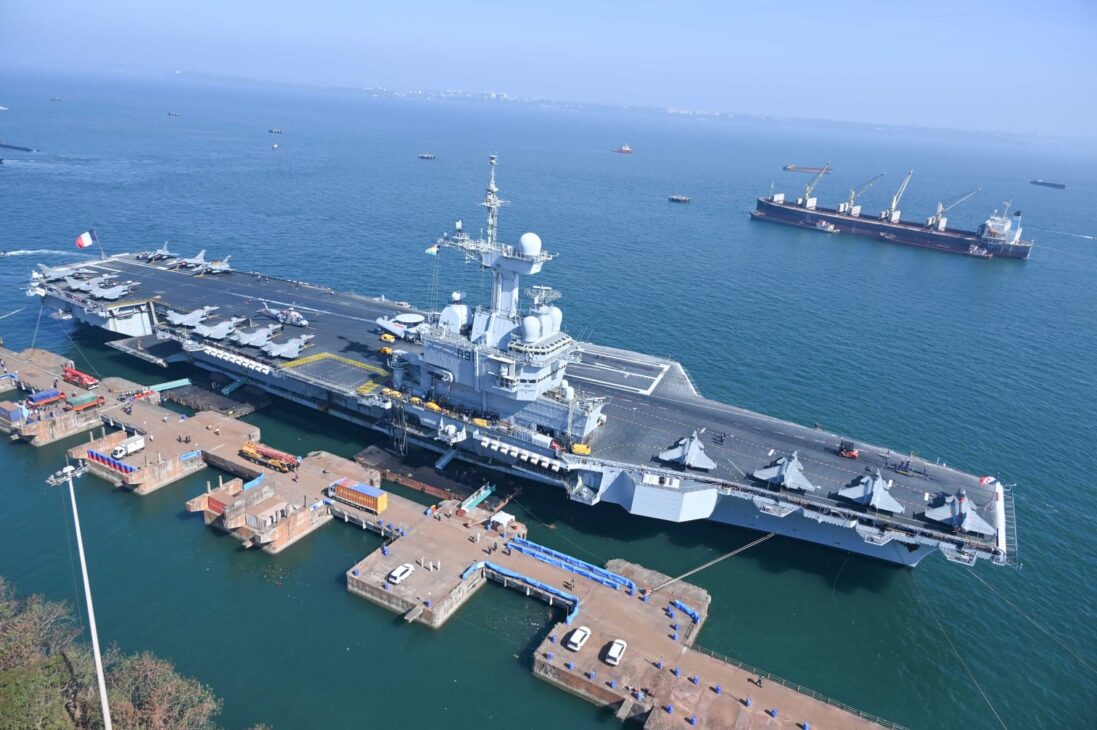
With the new configuration, the French Navy will have more area to operate aircraft, drones, and integrated electronic systems.
The forecast is that the aircraft carrier will carry about 30 fighters, in addition to surveillance aircraft, aerial drones, and electronic warfare equipment.
The ship’s design also considers systems that require high energy supply, such as radars, electronic jammers, and developing defense technologies.
Nuclear propulsion was maintained as a central element of the project.
In the operational field, this type of propulsion allows for longer missions without the need for frequent refueling for navigation.
The advantage, cited by military analysts and by official French documents in debates on strategic autonomy, is linked to the ability to maintain naval presence in areas distant from the national territory for extended periods.
Name France Libre refers to French military history
The name France Libre refers to Free France, a movement associated with the French resistance during World War II and led by General Charles de Gaulle after the Nazi occupation.
When announcing the choice in March 2026, Macron linked the future aircraft carrier to the idea of national independence and freedom of military action.
The decision also creates symbolic continuity between the current aircraft carrier and its successor.
The Charles de Gaulle directly honors the former French president and military leader; the France Libre, in turn, refers to the historical movement that marked his political and military trajectory.
In the official speech, Macron stated that the ship should support France’s ability to act in seas and oceans when the defense of national interests requires it.
The choice of the name reinforces how the French government presents the program: not just as a naval platform, but as part of the country’s defense and strategic autonomy policy.
This formulation appears in official communications and in government statements about the need to maintain its own military capability in an international environment marked by tensions between powers.
Naval Group, Chantiers de l’Atlantique, and TechnicAtome participate in the project
The program involves the Naval Group, Chantiers de l’Atlantique, and TechnicAtome, with participation from the French Directorate General of Armaments and the Atomic Energy Commission.
According to the French Presidency, more than 800 companies, including small and medium-sized enterprises, will participate in the industrial stages.
The construction encompasses areas such as nuclear propulsion, naval architecture, systems integration, embarked aviation, and defense electronics.
The Naval Group states that the project was designed for a lifespan of about 45 years, which would extend its operation until the 2080s if the schedule is maintained.
The estimated cost of the program is around €10 billion to €10.2 billion, according to information released by official sources and the international press.
The original report by Le Monde cited a forecast of €10.2 billion and reported that the construction had been approved in the French budget for 2025, with initial contracts linked to the project’s progress.
The funding is expected to be distributed over several years.
According to Le Monde, although the program has been unlocked, a significant portion of the payments is expected to occur after 2027.
This model allows the start of industrial stages before the full settlement of contracts, something common in long-duration military programs.
Electromagnetic catapults expand the operation of aircraft and drones
One of the changes compared to the Charles de Gaulle will be the use of electromagnetic catapults, known by the acronym EMALS.
The system, of American design, will replace the steam catapults used on the current aircraft carrier.
The technology allows for launching aircraft with more precise energy control, a feature considered relevant for operating equipment of different weights.
The ship was designed to accommodate Rafale Marine fighters, airborne early warning aircraft, and drones.


This combination follows changes observed in naval doctrines, where sensors, protected communications, data collection, and electronic warfare play an increasing role in operations.
Defense experts often point out that the integration between manned and unmanned aircraft tends to guide the next generation of naval air groups.
The construction of structures related to the nuclear boilers began before the revelation of the name France Libre.
According to the original report by Le Monde, the industrial approval for this phase occurred on September 25, 2025, at the Naval Group site in Cherbourg, with the welding of the first sheet of the containment structures of the two nuclear boilers.
Project strengthens debate on defense and strategic autonomy in Europe
France is the only European country operating a nuclear-powered aircraft carrier.
This feature allows the French Navy to maintain a presence in distant areas without relying on conventional fuel to move the vessel.
The operation of an aircraft carrier, however, requires a support naval group, aircraft, escorts, submarines, and maintenance infrastructure.
On the international scene, the United States remains the main operator of nuclear aircraft carriers.
France maintains a smaller capacity, but considered strategic by its government as it allows independent operations in international crises.
In March 2026, Reuters reported that the France Libre will be the largest warship ever built in Europe, with sea trials expected in 2036 and full operation in 2038.
The program also appears amid debates about the future of European defense.
The war in Ukraine, the increase in military spending on the continent, and discussions about strategic autonomy have increased the pressure for European countries to invest in their own capabilities.
In this context, the aircraft carrier is presented by the French government as a long-term piece of defense policy.
Beyond immediate military use, the project gathers numbers that help to gauge its technical complexity: 310 meters in length, 78,000 tons displacement, 2,000 people on board, dozens of aircraft, and a flight deck of 17,000 square meters.
These data indicate the size of the industrial challenge undertaken by French companies and the State over the coming decades.
The entry into service will still depend on stages of engineering, construction, system integration, sea trials, and future budgetary decisions.
By 2038, the France Libre should undergo technical adjustments and operational validations before replacing the Charles de Gaulle.