Portuguese
  Spanish


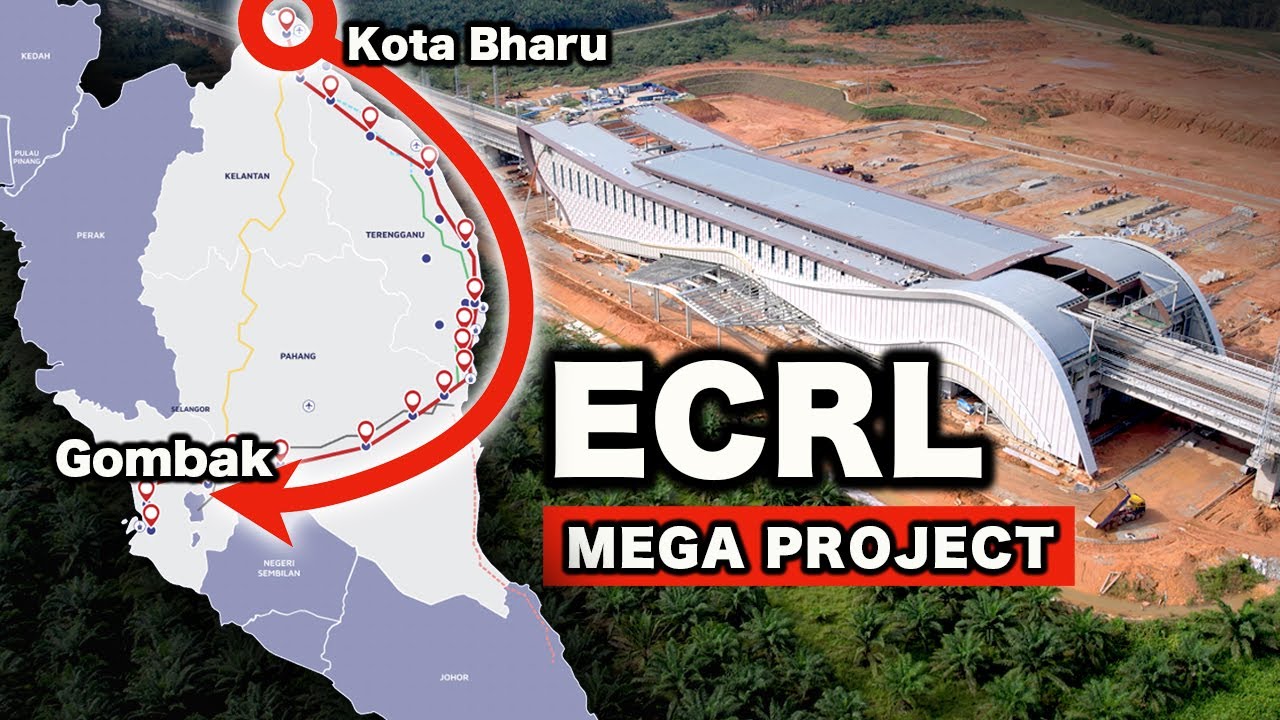

ECRL Railway in Malaysia reaches 92.62% progress, completes tracks and tunnels and enters testing phase for operation from 2027.
On March 16, 2026, the East Coast Rail Link (ECRL), a mega railway developed in Malaysia under the coordination of Malaysia Rail Link (MRL) and executed by China Communications Construction Company (CCCC), entered its final implementation phase. In February 2026, the project had achieved 92.62% physical progress, according to information released by MRL and reported by the newspaper The Star, establishing itself as one of the largest ongoing infrastructure projects in Southeast Asia.
The railway, with a length of 665 kilometers, was designed to connect the less industrialized east coast to the economic corridor of the west coast of the Malaysian peninsula, linking Kota Bharu to Port Klang. In the latest official data, the project has a total cost of RM 74.96 billion, with RM 50.27 billion for construction and RM 24.69 billion for other development costs. The proposal is to create a land logistics axis capable of integrating historically disconnected regions and reducing dependence on internal maritime routes in the country.
With the work already surpassing 90% completion and entering the operational testing phase, the project transitions from just heavy engineering to becoming a real logistics system.
-
Brazil’s First Freight Railway Built from Scratch, EF-118 Connecting Espírito Santo to Rio de Janeiro, Goes to Auction in October Attracting Chinese Giant in Multi-Billion Dollar Bid for Southeast Rail Network

-
Trans-Siberian Railway’s New Sister Line, BAM, Stretches 4,300 km Through Permafrost and Seismic Zones in Northern Russia

-
180-Year-Old Bridge Disappears from Brazilian Farm, Found 180km Away, Sparks Investigation into Illegal Sale of Historical Heritage
-
Brazil’s Defunct Railway Network Leaves Over 100,000 Properties Abandoned for Nearly 30 Years, Facing Neglect and Safety Risks as Government Struggles to Regulate Assets Amid Degraded Stations and Unlawful Use





Installation of 519 km of tracks marks the end of the heavy structural phase
One of the most significant milestones confirmed in 2026 was the completion of the track installation on the main stretch of the railway.
Recent reports indicate that approximately 519 km of tracks have already been laid, covering the main axis between Kota Bharu on the east coast and Gombak near the Kuala Lumpur area. This progress represents an important technical turning point within the project.
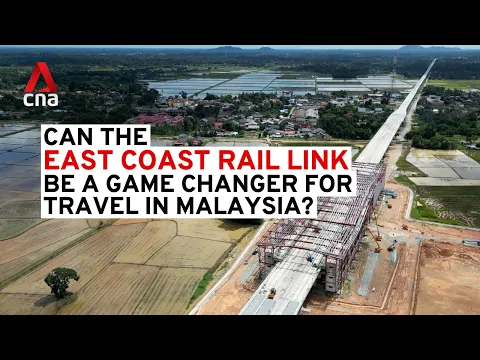

The laying of tracks is considered one of the final steps of the structural phase of a railway. Before this, it is necessary to complete earthworks, bridges, viaducts, tunnels, and the entire support base of the line.
With the tracks installed, the railway physically exists as a functional system, allowing the start of real tests for train circulation along the route.
This stage also indicates that a large part of the technical risks has already been overcome, especially those related to the complex geography of the region.
Completion of the 41 tunnels eliminates the main technical risk of the project
Another milestone confirmed in 2026 was the completion of all 41 tunnels planned in the project. The construction of tunnels in railway projects of this scale is one of the most challenging stages, both from a technical and financial perspective. In the case of the ECRL, many of these tunnels cross mountainous regions and areas of difficult access.
The completion of this stage means that:
- There are no more major geological interventions pending
- The risk of structural delays decreases drastically
- The project enters a more predictable phase
The completion of the tunnels represents the point at which heavy engineering is no longer the main challenge of the project.
From there, the focus shifts to the integration of operational systems, such as signaling, power, and railway traffic control.

Entry into the testing phase marks the transition to real operation
With tracks installed and tunnels completed, the ECRL officially entered the operational testing phase in 2026.
This stage involves a series of technical processes, including:
- Testing train circulation at different speeds
- Verification of safety systems
- Integration of railway signaling
- Simulations of operation with passengers and cargo
The tests are essential to validate the safety and efficiency of the system before opening to the public.
This phase also allows for fine adjustments, such as system calibration and identification of potential operational failures.
The start of testing is one of the clearest indicators that the railway is close to entering commercial operation.
Schedule maintains forecast for the start of operations in 2027
Despite the complexity of the project, the updated schedule in 2026 indicates that the railway is on track with the planning.
The official forecast indicates that the main section between Kota Bharu and Gombak will be completed by December 2026, with the start of commercial operations expected for January 2027.
This first section will already allow complete travel between the east coast and the central region of the Malay Peninsula.
The total extension to the port of Port Klang, on the west coast, is expected to be completed by the end of 2027, with full operation estimated for 2028.
The maintenance of the schedule reinforces the project’s execution capacity, even in the face of technical and financial challenges.
665 km Railway Creates Direct Link Between Two Coasts of Malaysia
The ECRL will have approximately 665 km of total length, directly connecting two regions with distinct economic characteristics.
The east coast of Malaysia, where states like Kelantan and Terengganu are located, is traditionally less industrialized and more dependent on primary activities.
The west coast, on the other hand, is home to:
- Kuala Lumpur
- Port Klang, the country’s main port
- Industrial and financial centers
The railway creates a direct land corridor between these two realities, reducing travel time and facilitating cargo transportation.
This integration has the potential to profoundly alter the internal economic balance of the country.
Reduction of Up to 1 Million Tons of CO2 Strengthens Environmental Argument
In addition to economic impacts, the project is also presented as an initiative with environmental benefits.
According to Malaysia Rail Link, the operation of the railway could reduce up to 1 million tons of CO2 per year, by replacing part of road transport with rail transport.
Rail transport is generally more energy-efficient, especially for large volumes of cargo.
This reduction in emissions is one of the arguments used to justify investment in large-scale rail infrastructure.
However, experts also consider the environmental impacts of construction, which involve deforestation, soil movement, and interventions in local ecosystems.
China Expands Global Presence by Leading Construction Outside Its Territory
China’s participation in the ECRL goes beyond providing financing. Chinese companies are directly involved in the execution of the project, bringing technology, equipment, and expertise in railway construction.
This type of project fits into a broader strategy of China to expand its global presence through infrastructure.
By building railways, ports, and highways in other countries, China:
- Consolidates its economic influence
- Exports technology and engineering
- Establishes long-term relationships
The ECRL is one of the clearest examples of this strategy in action in Southeast Asia.
Project can redefine logistics and supply chains in the region
With the railway coming into operation, Malaysia gains a new internal logistics axis that can alter the flow of goods within the country.
The direct link between the east coast and the Port of Port Klang allows for:
- Reduction in cargo transport time
- Less dependence on internal maritime routes
- More efficient integration with global supply chains
The railway can transform Malaysia into an even more strategic point within regional and international trade.
This type of change tends to attract investments, stimulate industrialization, and create new economic hubs along the railway corridor.
Construction technology accelerates execution and ensures millimeter precision
Technical reports indicate that the project utilized advanced technology in construction, including systems capable of laying tracks with an accuracy of about 10 millimeters, using GPS geolocation.
Furthermore, specialized equipment allowed installation speeds of up to 1.5 km of tracks per day, a high pace for projects of this magnitude.
This level of precision and efficiency was crucial to maintaining the project schedule.
The application of these technologies also reinforces China’s ability to execute complex works in international environments.