





 Portuguese
  English
  Spanish
  4 min of reading
  0 comments


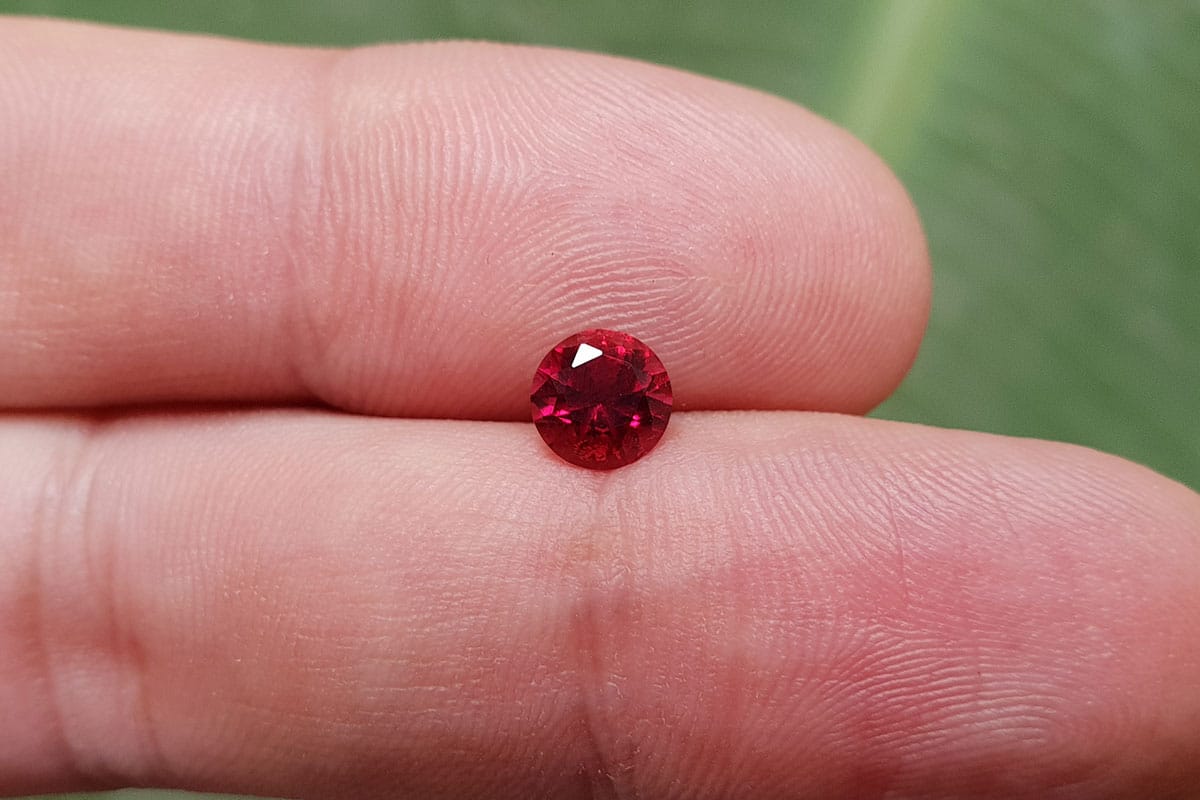
Rarer Than Diamond, Utah’s Red Beryl Can Be Worth Up to US$ 10,000 Per Carat and Is Found in Just One Place on Earth, the Remote Wah Wah Mountains.
In the arid desert of Utah, United States, among basalt mountains and volcanic formations that seem to be from another world, a geological phenomenon occurs that is so rare it challenges even the most experienced gem hunters. It is the Red Beryl, also known as bixbite, a gem with intense red coloration and vitreous luster that, according to the Utah Geological Survey, is 100,000 times rarer than diamond.
While diamonds can be found in dozens of countries, Red Beryl exists in only three known locations on the planet, and only one of them, the Wah Wah Mountains in Utah, produces specimens of gem-quality, meaning they are sufficiently perfect for cutting and use in jewelry. Because of this rarity, each carat of this stone can fetch values of up to US$ 10,000 on the international market, exceeding the average price of a diamond of the same weight.
A Discovery That Challenges World Geology
Red Beryl was first identified in 1904 by mineralogist Maynard Bixby, from whom the original name, “bixbite,” derives. He found it in the Thomas Range mountains, also in Utah, but the samples were too small for cutting. Only decades later, in the Wah Wah mountains, geologists discovered gem-quality crystals that were perfect, transparent, and ruby-colored.
-
Few remember, but a radioactive capsule smaller than a coin fell from a Rio Tinto truck in Australia, disappeared in the desert, forced authorities to search 1,400 km of road, and was only found 2 meters from the roadside.

-
24 m² house where a cleaning lady raised 3 children was loaned to shelter a pregnant young woman and returned destroyed; in 50 days, an architect changed everything, expanded the space, created ventilation, and returned to Vânia the dignified home she had waited for years.

-
Supermarkets with new hours on Sundays! Agreement provides for a fine of R$ 500 per employee, union inspection, and penalties that can reach R$ 50,000 for companies that do not comply with the rules in Goiás.

-
In one of Asia’s most modern economies, elderly people push giant cardboard carts through the streets while about 45% of those over 65 live on less than 50% of the median disposable income.


Unlike emeralds (green beryl), aquamarines (blue beryl), and morganites (pink beryl), Red Beryl is the only type in the beryl family with intense natural red coloration.
Its formation is a true geological accident: the gem forms only in locations where volcanic gases rich in manganese infiltrate cavities in rhyolitic rocks, under exact conditions of temperature and pressure.
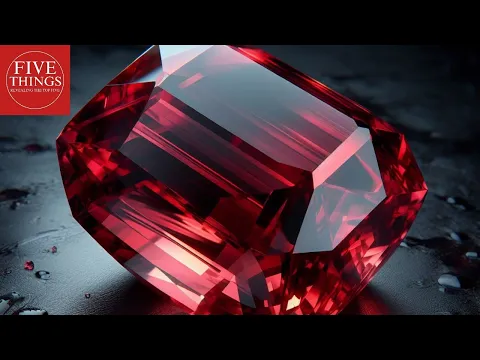

“It’s as if the planet had to align all the right factors—heat, pressure, chemical elements, and time for a single Red Beryl crystal to exist,” explained Jim Smallwood, a geologist with the Utah Department of Natural Resources. “And that happens in very few places on Earth.”
Value That Exceeds Diamonds and Rubies
For collectors and jewelers, Red Beryl is the “holy grail” of gems. A crystal of just 1 carat can be worth between US$ 8,000 and US$ 10,000, while high-purity cut specimens have already reached auctions of over US$ 100,000.
The scarcity is such that, according to the Gemological Institute of America (GIA), for every 150,000 diamonds mined, only one quality Red Beryl crystal is found. It is estimated that less than 8,000 gem-quality carats have been extracted since mining began in Utah, making the stone an absolute rarity.
The American collector John A. Burgess, owner of one of the largest specimens ever found, described the gem as “the perfect combination of fire and crystallized blood.”
The Mine That Holds the Red Treasure
The only active Red Beryl extraction site is the Red Beryl Mine, located in the heart of the Wah Wah Mountains, a remote mountain range in southwestern Utah.
Access is difficult, and mining operations are meticulous: the rhyolitic rock must be carefully broken by hand, inch by inch, so as not to destroy the fragile crystals.
Mining is done on a small scale, under licenses controlled by the Bureau of Land Management (BLM), and part of the samples goes directly to museums and gemology laboratories. The American government classifies Red Beryl as a “minerals resource of scientific and heritage importance”, due to its global scarcity.
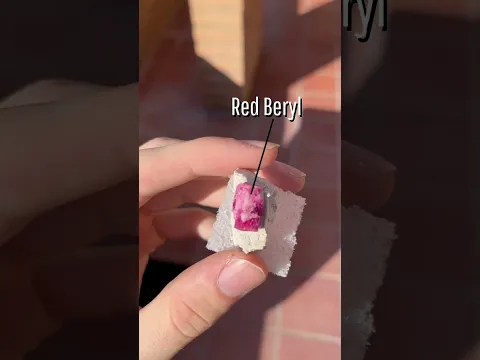
Due to high demand and extremely low supply, Red Beryl has become a target for counterfeiting, especially in the online market. The GIA warns that many ads sell red spinels, rubellites, and dyed topazes as if they were Red Beryl, which can only be verified through laboratory testing.
Symbol of Power and Exclusivity
The fascination with Red Beryl is not recent. Since jewelers began using it in exclusive collections, the stone has gained status as a symbol of extreme luxury and economic power. Major brands like Tiffany & Co. and Graff have showcased experimental pieces with authentic fragments of the gem, always accompanied by certificates of origin.
Due to its rarity, few jewelry pieces have been produced with Red Beryl worldwide. The known pieces are valued at hundreds of thousands of dollars and usually belong to private collections of royal families and investors in gemstones.
The red glow, almost hypnotic, is a result of the manganese present in the crystal structure. Under natural light, Red Beryl reflects shades that range from cherry red to deep magenta, changing in tone with the angle.
A Treasure Hidden in the Desert
What makes this gem even more special is the contrast between its value and the environment in which it is found: the dry and isolated Utah desert. The arid landscape, filled with volcanic rocks and sparse vegetation, hides one of the most expensive and rare materials on the planet, a true treasure hidden beneath American soil.
The story of Red Beryl reminds us of how nature can create improbable wonders in seemingly sterile places. Even after more than a century since its discovery, scientists believe that the Wah Wah mine may still hold undisclosed crystals, perhaps even more perfect and valuable.
As geologist George Rossman from the Caltech Institute of Mineralogy said, “Finding a Red Beryl is like winning the Earth’s lottery. The difference is that the chance is even smaller.”





-

-

-

-

-

15 people reacted to this.