Portuguese
  Spanish


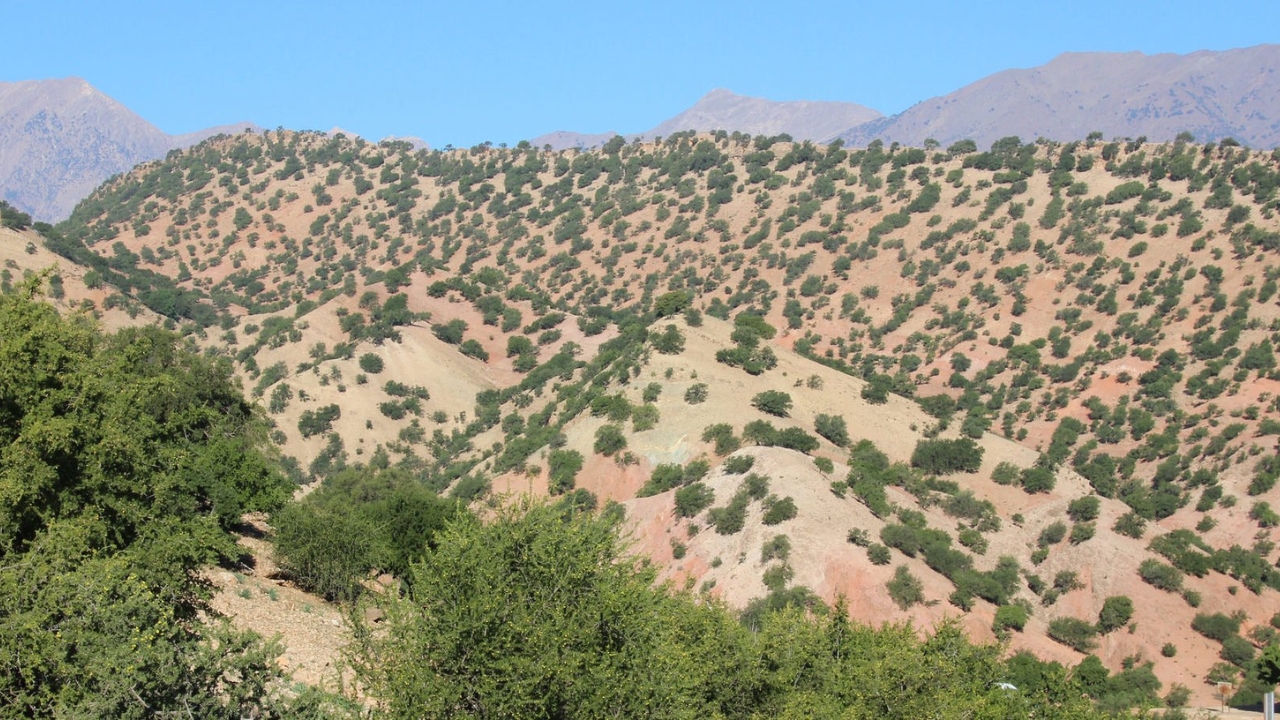


The Argan Tree, Typical of Southwestern Morocco, Is Becoming Central in the Fight Against Desertification: Its Deep Roots Hold the Soil, Help Retain Moisture Underground, and Pave the Way for Agroforestry Systems in Degraded Areas
A belt of trees in the middle of the desert may seem like a detail in the landscape. But, in southern Morocco, planting argan trees and acacias has turned into one of the main bets to save shrinking oases and recover soils that are no longer suitable for intensive agriculture.
Where the Desert Advances and the Oasis Recedes
In recent decades, the advance of desertification, lack of water, and rural exodus have weakened many Moroccan oases.
These landscapes, which for centuries provided food and shade in the semi-arid region, have started to lose palm trees, groundwater, and people.
-
Brazilian Family-Owned Notebook Brand Animativa, Known for Scented Notebooks and Turma da Mônica Licenses, Reaches $42 Million in Revenue

-
Indian Inventor, 58, Develops Steering Wheel-Free Agricultural Machine Operated by Levers, Offering Cost-Effective Alternative to Expensive Tractors

-
Brazilian Senate Approves Bill to Automate Child Support Payments Directly from Debtors’ Accounts
-
Brazilian Student in the U.S. Helps Provide Clean Water to 50 Families in São Paulo Slum, Launches Year-Long Volunteer Project with National Expansion Plans


When the oasis recedes, the soil gets exposed to wind and erosion, forming dry crusts where almost nothing grows.
Land that was once cultivated is now classified as degraded and unattractive to young farmers, who migrate to the cities.
It is in this context that argan and acacia belts come into play. Instead of trying to replicate the intensive agriculture model, the country is betting on trees adapted to the arid climate, with deep roots and multiple uses for local communities.
How Argan and Acacia Belts Work

The argan tree is a typical tree from southwestern Morocco, with deep roots that help stabilize the soil, reduce wind erosion, and retain a bit more moisture underground.
The acacia, in turn, thrives in arid conditions, provides shade, protects smaller crops, and helps improve soil structure.
In several recent projects, the trees are not planted in isolation but in strips or strategic belts.
These green corridors are installed around agricultural areas, roads, or at the edges of oases, acting as barriers against the advance of sand and desert.
The goal is twofold: to protect what still exists and, at the same time, to create conditions for recovering land considered lost.
Over time, the tree belt reduces wind, retains organic matter, enhances rainwater infiltration, and creates cooler microclimates where other plants can once again grow.
Several national programs are structured around this logic. The Morocco Green Plan and the country’s forest strategy include planting targets for argan trees in tens of thousands of hectares, precisely in degraded and desertification-prone zones.
Projects like DARED, funded by the Green Climate Fund, are designed to develop argan orchards in degraded environments, combining ecological recovery and income generation.
Recover Soils and Strengthen Communities
The recovery of the soil begins slowly. At first, the seedlings need protection, minimal watering, and careful management to survive in regions with little rainfall.
Even so, the country is setting ambitious goals, such as planting tens of thousands of hectares with agricultural argan trees by 2030, including areas previously seen as unviable.
As the tree belt establishes itself, the soil gains organic matter, becomes more fertile, and is less susceptible to sandstorms.
This opens space for agroforestry systems: between the lines of argan and acacia, small farmers can plant food or forage crops adapted to the local climate.
The project is not just environmental. The argan chain generates jobs and income, especially for women’s cooperatives that produce and process the oil.
With more trees, more orchards, and more added value, the chances for families to remain in the region increase instead of abandoning the oasis.
This combination of resilient tree belts, recovering degraded soils, multifunctional land use, and economic inclusion transforms what seemed like a dead end into a landscape in transition.
In Morocco, each strip of argan and acacia planted is a concrete attempt to hold back the desert, revitalize oases, and show that climate adaptation necessarily involves those who live on the land.