






 Portuguese
  Spanish
  3 min of reading
  0 comments


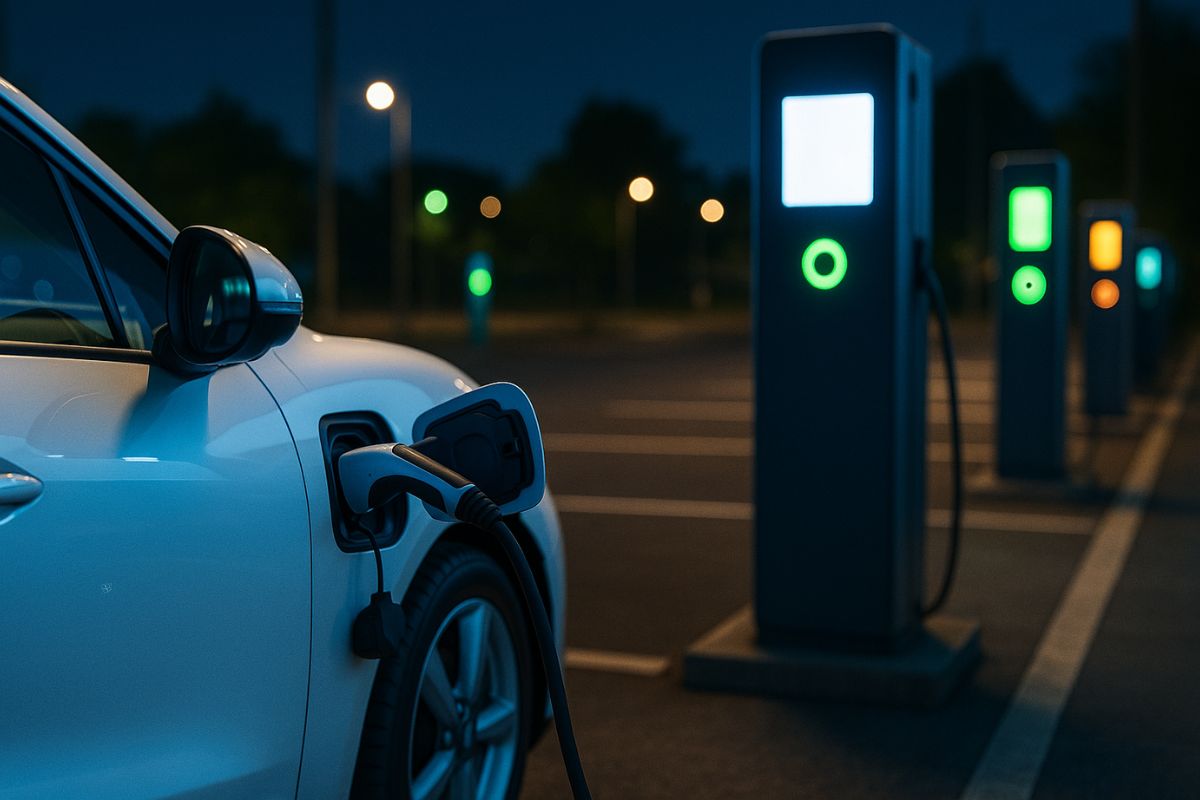
Brazil Now Has 16,880 Charging Stations for Electric Cars, But Only 23% Are Fast; Slowness and Regional Inequality Expose Infrastructure Gaps.
Brazil ended August 2025 with 16,880 public and semi-public charging stations, according to a survey by Tupi Mobilidade in partnership with the Brazilian Electric Vehicle Association (ABVE). The data shows a 14% increase in six months, but reveals a central problem: only 23% are fast chargers, while the majority still requires up to 12 hours to complete charging.
This contrast raises questions about the national infrastructure’s ability to keep up with the accelerated growth of the electric fleet, which already exceeds 302 thousand plug-in vehicles in the country. Without a more efficient network, the risk of “electric dry run” remains an obstacle to the expansion of sustainable mobility.
Growth With Limitations
Despite the historic mark of 16.8 thousand points, 13,025 of them are slow chargers, which take 5 to 12 hours to fully charge a battery.
-
The car that most Brazilians buy today may cease to exist by 2030, and automakers already know that the 1.0 aspirated engine with manual transmission is numbered in the country.

-
Cheaper than an Onix, Mobi, or Polo: with a 1.4 turbo engine and 185 hp compressor, 7-speed S-Tronic transmission, 270 liters of trunk space, and the performance of a compact sports car, this Audi hatch costs less than many new popular cars. Meet the Audi A1 Sportback 2014.
-
Two Brazilian inventors transformed a Gol into a homemade electric car: they removed the engine, installed 40 lithium batteries, and made the vehicle run 150 km for R$ 0.07 per kilometer.

-
Toyota Hilux owners should be cautious: the model has become a target for gangs that can open the vehicles without triggering the alarms, investigation reveals.


The 3,855 fast chargers allow charging in 20 minutes to 1 hour, making them essential for long trips.
Between February and August, fast chargers grew by 59%, a rate higher than the overall average.
For Davi Bertoncello, director of ABVE, this progress signals a change in priorities:
“The decrease in costs and user pressure have led operators to invest more in fast chargers.”
Regional Inequality and Concentration in the Southeast
The distribution of charging stations in Brazil is still unequal.
The Southeast concentrates almost half of the points (7.9 thousand), while the Northeast has 3.3 thousand, the South 2.9 thousand, the Central-West 1.2 thousand, and the Northern region only 437.
The city of São Paulo leads with 2.1 thousand charging stations, followed by Rio de Janeiro (963), while capitals like Fortaleza (294) and Salvador (257) lag far behind.
This concentration makes interstate travel in less served areas difficult, in addition to reinforcing inequalities in access to electric mobility.
International Comparison Exposes Brazilian Delay
The contrast with China is evident.
The Asian country already has 16.7 million charging stations, of which 56% are fast.
The ratio is one charging station for every 2.2 plug-in vehicles, while in Brazil the ratio is one for every 18 vehicles — almost nine times worse.
With 44.5% of the national fleet consisting of pure electric vehicles (BEV), which depend entirely on the network, the Brazilian limitation tends to inhibit new buyers.
Meanwhile, plug-in hybrids (PHEV), which make up 55.5% of the fleet, can coexist better with the deficient infrastructure by relying on the combustion engine.
Regulatory Gaps and Next Challenges
Another obstacle lies in legislation.
The expansion of chargers in condominiums and commercial buildings awaits updated regulations from the Ligabom (National Council of Fire Commanders).
Without clear safety rules, large-scale installation remains stalled, especially in urban centers.
Experts warn that the country needs to accelerate regulation, expand the network of fast chargers, and reduce regional inequality to sustain electrification.
Without these adjustments, the energy transition risks stagnation.
What to Expect From the Future of Electric Mobility
The progress of 2025 shows that the network is growing, but in a slow and unequal manner compared to the fleet increase.
Brazil is already showing signs of prioritizing fast chargers, but it still needs to address three central challenges: low density of points per vehicle, concentration in the Southeast, and regulatory insecurity.
And you, do you believe that the expansion of charging stations will be enough to finally boost electric cars in Brazil, or will the gaps still hold back this transition? Share your opinion in the comments — we want to hear from those who live this reality every day.





-

1 person reacted to this.