






 Portuguese
  Spanish
  5 min of reading
  0 comments


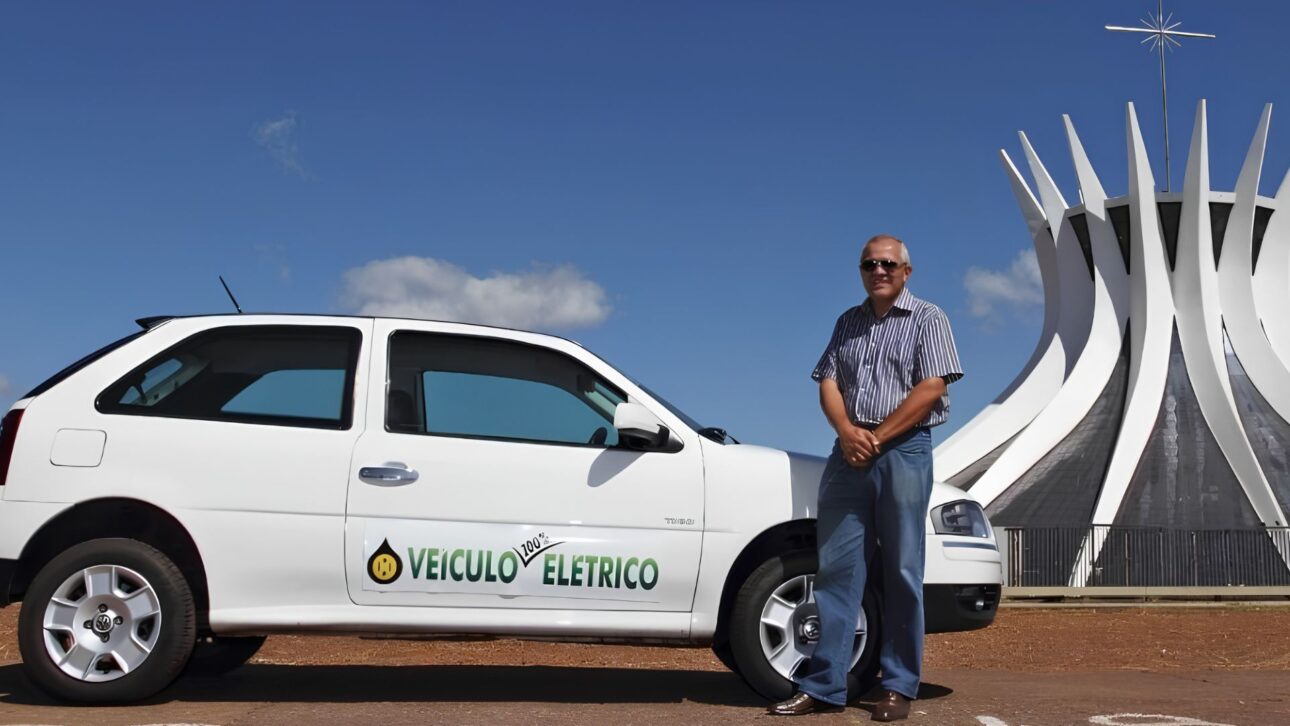
Engineer Elifas Gurgel converted a Volkswagen Gol into an electric car, achieved 150 km of range, and managed to legalize the vehicle in Brazil.
According to the Correio Braziliense, the person responsible for one of the most symbolic projects of artisanal automotive electrification in Brazil is Elifas Chaves Gurgel do Amaral, a computer engineer graduated from the Military Institute of Engineering, a retired Army colonel, and a member of the group that developed the electronic voting machine used in Brazilian elections since 1996. After also serving as president of Anatel, he decided to take on a completely different challenge: converting a Volkswagen Gol into a 100% electric car.
The result was a project that attracted attention not only for the improvised engineering but for the boldness of making the conversion work and then facing the Brazilian regulatory system to make the vehicle legally roadworthy. Instead of creating a car from scratch, Gurgel chose to take advantage of the structural base of an already existing popular car and adapt the mechanical set for electric propulsion.
Electric Gol was born from the decision to leverage the ready-made engineering of a popular car
According to the Correio Braziliense, Gurgel assessed that building an electric car from the drawing board would be much more difficult than leveraging the already consolidated engineering of a combustion car.
-
Toyota Hilux owners should be cautious: the model has become a target for gangs that can open the vehicles without triggering the alarms, investigation reveals.

-
The Celta may return without gasoline, with a plug and a Chinese soul: Chevrolet prepares a new electric hatch in Ceará to try to challenge the BYD Dolphin Mini, Geely EX2, and the compact market in Brazil.

-
The 2012 Toyota Camry became the luxury Japanese sedan that costs less than many used compact SUVs, offering a V6 engine, 504 liters of trunk space, and executive comfort for those willing to step out of the ordinary in the used car market.

-
Hilux owners are having headaches, and Toyota is betting on a R$ 2,500 solution with a detail of just 5 mm that promises to reduce vibrations to 1/10 and change the pickup’s behavior on the road.



Therefore, the project started with a Volkswagen Gol, which had the typical systems of the conventional engine removed, such as exhaust, cooling, injection, and fuel supply, mainly keeping the gearbox as an essential part of the structure utilized.
The major technical challenge became connecting the new electric motor to this transmission. For this, it was necessary to develop a specific coupling part, custom-made in a lathe shop in Taguatinga, in the Federal District.
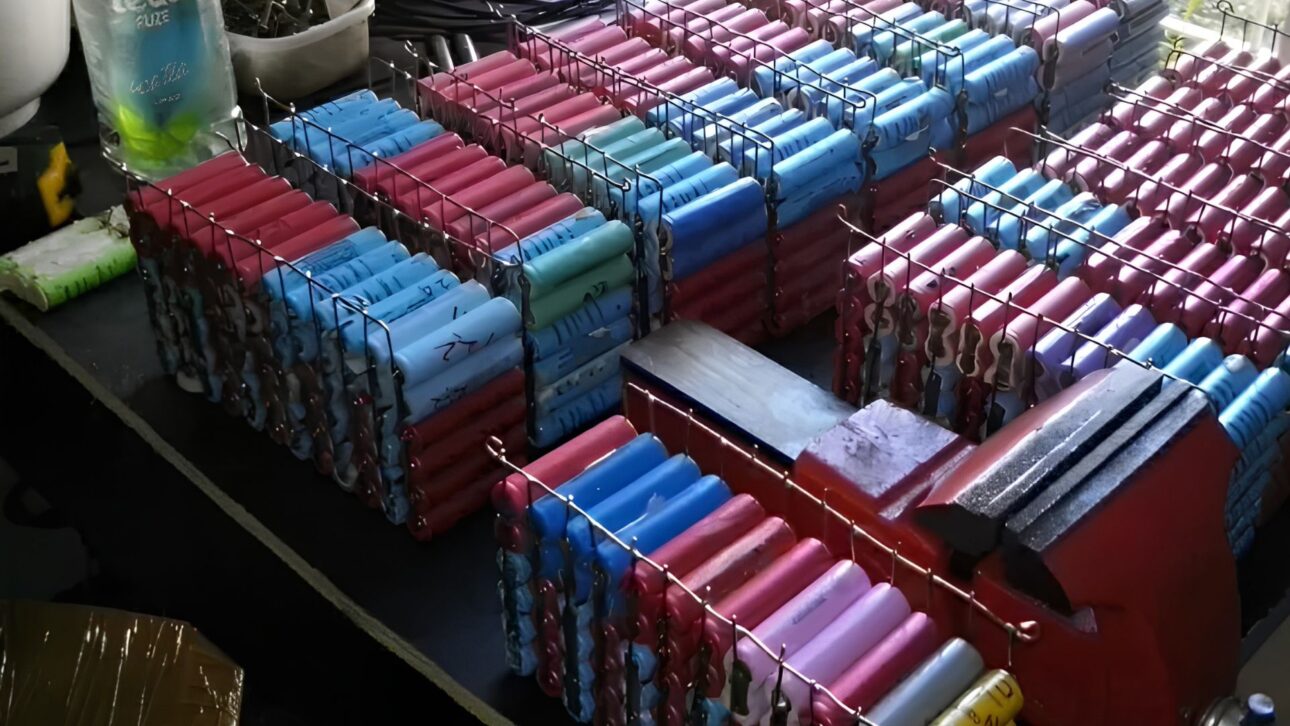
According to the Portal veiculo elétrico, the conversion used a kit imported from the United States, with an electric motor, controller, and vacuum pump, as well as a set of 40 lithium-ion batteries brought from China.
This engineering choice was decisive because it reduced the project’s complexity and allowed efforts to focus on the electrical system. Instead of reinventing the entire vehicle architecture, Gurgel adapted what already existed and transformed the Gol into an experimental platform for electric mobility.
Project was assembled in a garage, warehouse, and workshop with improvised solutions
According to Correio Braziliense, the construction of the electric Gol took place far from any industrial assembly line. Gurgel worked in donated spaces, including a warehouse in the City of the Automobile, the Automobile Museum, and his own garage, always treating the car as a “laboratory on wheels”.

The artisanal nature appeared in practically all stages. To prepare the battery box installed in the trunk, which weighs about 224 kg, the engineer resorted to improvised materials, such as gas hoses, garden jet clips, and Beetle door rubbers.
The accelerator, which was initially electromechanical, was improved until it became fully electronic.
This process shows why the project gained so much attention. It was not just about electrifying a car, but solving a set of technical problems without a ready industrial chain, adapting parts, and creating tailored solutions in a continuous prototyping environment.
Range of 150 km and cost of R$ 0.07 per km transformed the project into proof of viability
After running for quite some time, the car ceased to be just a mechanical curiosity and began to present concrete performance numbers.
According to the Electric Vehicle blog, after more than 200 recharges and over 15,000 kilometers traveled, the VW electric Gol showed a range of 150 km, an average recharge time of 8 hours, and an average cost of R$ 0.07 per kilometer traveled.
According to the data reproduced by the blog, this cost represented a savings of about 75% compared to fuel expenses, and the accumulated mileage without using gasoline also meant the non-emission of approximately 2.5 tons of CO2 into the atmosphere.


According to TecMundo, the car now has 70 hp of power, a 24 kWh battery, and a range compatible with 150 km per charge. The transformation cost around R$ 60 thousand, not including the value of the brand-new Gol used as a base, estimated at R$ 25 thousand at the time.
Elifas Gurgel’s greatest battle was not technical, but legal
The point that really sets Gurgel’s project apart from many other artisanal conversions is the regularization. According to the portal veiculoeletrico, after making the car work, the engineer faced the most difficult stage: legally fitting the vehicle into a system that did not simply foresee the conversion of a combustion car to electric.
After seeking political and technical support, his request was accepted and published in the Official Gazette of the Union in April 2010. To meet the requirements, Gurgel opened the company 4GVE and added items such as airbags and ABS, allowing the vehicle to be officially named Volkswagen Gol 4GVE electric EGA.
This detail is what makes the story especially relevant. Many homemade conversions may even work technically, but remain outside the circulation rules.
In Gurgel’s case, the car not only ran but also overcame the regulatory barrier and became a reference in a topic that Brazil is still discussing.
Elifas Gurgel’s electric Gol anticipated a debate that is now at the center of electromobility
Even being an old project, Elifas Gurgel’s electric Gol remains important because it anticipated a debate that only gained strength years later: the conversion of used cars to electric as an entry alternative into electric mobility. Instead of relying solely on the purchase of new and expensive vehicles, the logic of conversion reuses an already existing automotive structure and reduces the disposal of still usable vehicles.
The project also showed something rare for the Brazilian context of the time. Long before electromobility gained space in the market and in the news, a retired engineer managed to prove, in practice, that it was possible to electrify a popular car, drive thousands of kilometers, and still find a legal way to keep it on the streets.
In the end, the story of Elifas Gurgel is not just about an obstinate inventor. It is about a project that arrived before its time and showed, with a Volkswagen Gol converted into an electric car, that Brazilian innovation can also be born in the garage, as long as there is enough persistence to overcome both the workshop and the bureaucracy.






Be the first to react!