Portuguese
  Spanish




WC-135R Aircraft Detects Radioactive Clouds Near Strategic Installations in the Arctic Amid Tensions Over Nuclear Tests
An American military aircraft designed to track nuclear atmospheric radiation flew over strategic bases in Russian Arctic this week, including areas of Murmansk and the Novaya Zemlya archipelago, traditionally linked to Moscow’s atomic program. The operation, conducted with the WC-135R “Constant Phoenix” model, also known as a nuclear sniffer, was monitored by tracking platforms and signals an escalation in international surveillance of Russian nuclear activities.
The mission, registered by Flightradar24 and reported by the newspaper O Globo, lasted about 14 hours and traversed the Barents Sea after taking off from the airbase in Mildenhall, UK. The timing coincides with Kremlin statements regarding the end of adherence to treaties that limited nuclear missile testing, which may indicate preparations for a new round of tests with armaments like the SSC-X-9 Skyfall — a nuclear-powered cruise missile.
What Is the WC-135R Nuclear Sniffer?
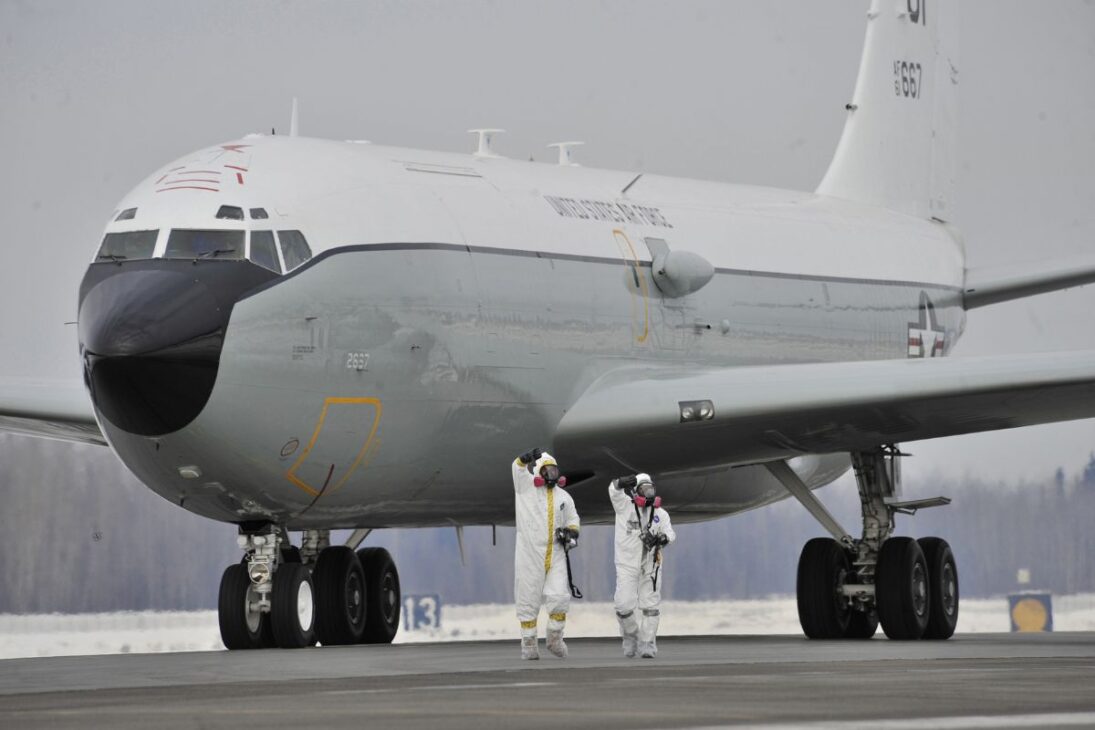
The WC-135R is an aircraft of the U.S. Air Force modified from the Boeing C-135. Its main feature is the ability to collect radioactive particles from the atmosphere, allowing verification of possible violations of the Partial Nuclear Test Ban Treaty, signed in 1963. The aircraft has highly sensitive sensors and filters that detect traces of nuclear detonations in the air.
-
Brazilian Students Repurpose Clay Tea Cups to Create Cooler That Lowers Room Temperature by Up to 10°C Without Air Conditioning or Fans

-
353-Year-Old Mystery Deepens as Archaeologist Arrested with Teeth and Bone Fragment Possibly Linked to d’Artagnan, the Real Musketeer Behind Alexandre Dumas’ Inspiration

-
16-Year-Old Invents CoolTowel, a Fitness Towel That Stays Cold for Up to 2 Hours, Wins Global Alibaba Competition with Over 15,000 Participants, Earning $1 Million

-
Brazil to Install First Operational Quantum Computers in the Northeast and Establish New Center to Boost Technological Sovereignty




Nicknamed “Constant Phoenix”, the model has historically been used to confirm nuclear explosions in North Korea and other suspicious regions. Its presence near Russia, in this context, represents a clear message of direct monitoring, even without crossing Russian airspace.
Why Did the Mission Happen Now?
In recent months, the government of Vladimir Putin has intensified nuclear rhetoric, stating that Russia no longer considers itself bound by treaties like the INF, which restricted intermediate and short-range missiles. The Novaya Zemlya region, overflown by the WC-135R, is known as a testing site since the Soviet era, including the detonation of the Tsar Bomba, the largest nuclear bomb ever tested.
Moreover, there is growing international expectation that Russia is close to resuming tests with the Burevestnik (SSC-X-9 Skyfall) — a missile with virtually unlimited range, powered by a nuclear reactor and designed to evade any Western missile defense system. The movement of the “sniffer” suggests that the U.S. is on alert to capture any atmospheric signal from these tests.
What Does This Mean for Global Balance?
The operation with the nuclear sniffer occurs in a context of fragility of nuclear arms control agreements. Since the suspension of New START and the collapse of the INF, nuclear powers have resumed testing strategic limits, with exchanges of accusations and development of new offensive technologies.
According to the Arms Control Association, over 500 atmospheric nuclear tests were conducted before 1963. The last Russian atmospheric test was in 1990, but the resumption of this practice would be a dangerous milestone in global military escalation.
The presence of the WC-135R also serves a symbolic role, showing that the U.S. continues to strictly monitor any violation attempts, even in remote areas like the Arctic.
Do you think that the use of surveillance aircraft increases global security or exacerbates tensions between powers? Do you believe we are entering a new nuclear race? Share your thoughts in the comments — we want to hear your perspective on this scenario.