





 Portuguese
  English
  Spanish
  5 min of reading
  0 comments


O Star of the Seas, sister ship of the world’s largest cruise, begins operation in 2026 as yet another floating city of gigantic proportions, with about 250 thousand tons and space for thousands of passengers on board.
There is a category of ship that has ceased to be just a means of transportation to become a destination in itself, the megacruises. And Royal Caribbean has just added another colossus to this list. The Star of the Seas, sister ship of the world’s largest cruise, begins operation in 2026 as yet another true floating city of unimaginable proportions.
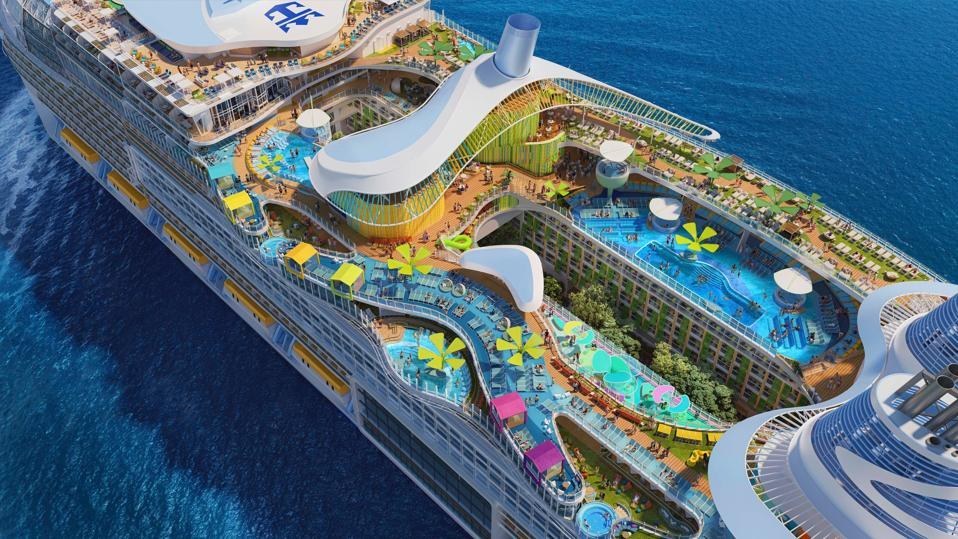
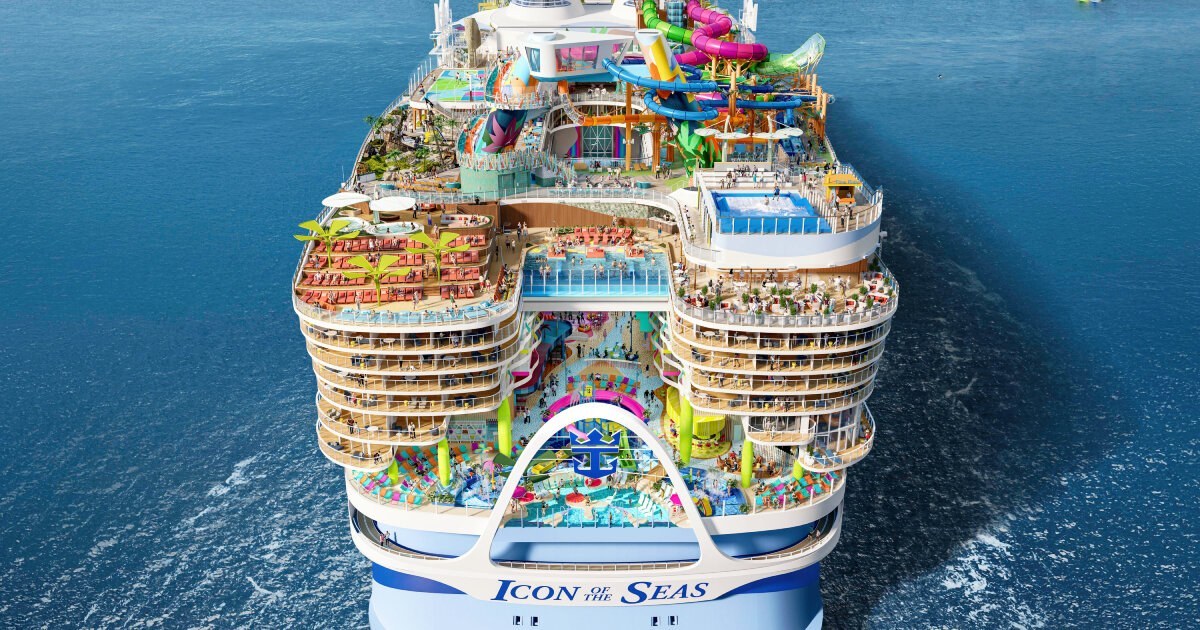
The numbers give a sense of the exaggeration. The ship is of the same Icon class, with about 250 thousand tons of gross tonnage and capacity for thousands of passengers. We are not talking about a boat, but something that is much closer to a city that sails, with parks, theaters, restaurants, and themed neighborhoods spread across its many decks.
A city that floats
Calling such a ship a floating city is not an exaggeration. Vessels of this size carry thousands of people, including passengers and crew, and need to offer everything a small city has. There are water parks, shops, gyms, theaters, and a huge variety of restaurants, all functioning simultaneously while the Star of the Seas glides across the ocean in a stable and safe manner.
-
China is sucking tungsten scrap from the U.S. and paying up to 5 times more: strategic metal soared 500%, triggered military alert, and exposed Western dependence on a vital material for chips, energy, defense, and modern ammunition.

-
Madrid and Barcelona could be less than 2 hours apart by high-speed train: Spain invests €112 million in aerodynamic sleepers to reach 350 km/h, but vibrations, stones thrown by the tracks, and delays still challenge the country’s most strategic line.
-
What is NAND and why did the artificial intelligence boom lead the market to earn US$ 46 billion in 2026, creating a global memory shortage and accelerating a new technological race among industry giants?

-
While water remains limited outside of Earth, scientists are betting on plasma rays to sanitize astronauts’ clothes in future lunar and Martian missions, a technology that could revolutionize the infrastructure needed to colonize other worlds.



I confess that the engineering behind this fascinates me more than the luxury. Keeping a horizontal building hundreds of meters long floating, balanced, and comfortable even with the waves requires an impressive mastery of physics and naval design. Everything needs to function as a small self-sufficient society in the middle of the sea, generating energy, treating water, and dealing with the waste of thousands of people on board.
Why these ships keep growing
There is an economic logic behind the gigantism of these cruises. The larger the ship, the more passengers it carries and the more attractions it can offer, diluting costs and increasing revenue per trip. For companies, building ever-larger colossi is a way to gain scale and offer experiences that smaller ships cannot accommodate, making the vessel itself the main attraction of the vacation.
This race for size has turned cruises from mere transportation into floating amusement parks. The Star of the Seas and its Icon class siblings are the most advanced point of this escalation, bringing together in a single hull everything a tourist city offers. Each new colossus pushes the limit of what is possible to build and make float a little further, in a race for the crown of the largest that seems endless.
These megacruises carry, however, a considerable environmental weight, and the industry is aware of this. Moving an entire city across the ocean consumes a lot of energy, and ships of this size leave a large mark wherever they go, both in pollution and in the impact on tourist destinations that receive thousands of visitors at once. Therefore, companies like Royal Caribbean strive to make their colossi pollute less by adopting cleaner fuels and more efficient systems on board. It is a difficult balance between the desire to impress with ever-larger ships and the responsibility to reduce the environmental footprint of vessels that, by their sheer size, consume and discard like small cities. The Star of the Seas is born precisely in this tension between the gigantism that enchants tourists and the growing pressure for more sustainable tourism.
The challenge of moving a city across the sea
Making a ship the size of a neighborhood sail safely is one of the greatest feats of naval engineering. It is necessary to calculate the weight, balance, and hull resistance so that the colossus does not tip over or sway too much, even when facing rough seas. Every additional meter in length or height requires recalculating all these factors, in a puzzle that becomes more challenging with each record broken.
Therefore, launching a ship like the Star of the Seas is not just about wanting the largest, but proving that it is still possible to grow without compromising the safety of thousands of people on board. It is this balance between ambition and caution that separates a successful project from an idea that remained on paper. Each megacruise that enters operation is, deep down, a victory of engineering over the limits of what was imagined possible.
The record that floats on the sea
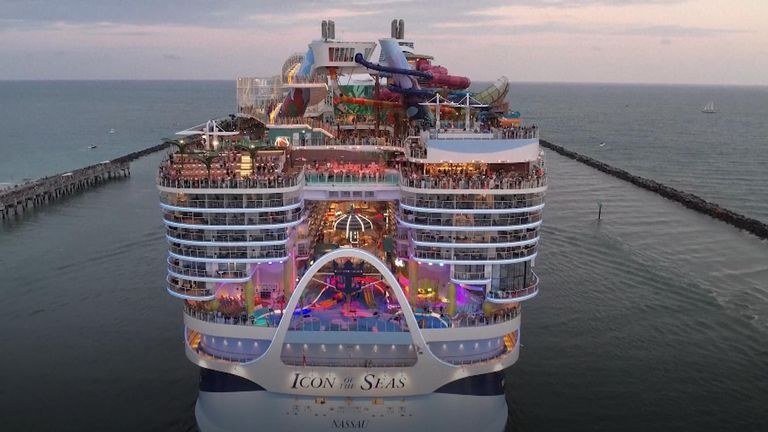
I imagine the feeling of seeing, for the first time, a ship the size of an entire neighborhood gliding across the horizon, with its hundreds of meters and dozens of decks shining over the water. It is one of those images that mix admiration and a certain awe at what human engineering is capable of building and making float.
The Star of the Seas enters history as one of the largest floating cities ever built, alongside its Icon class siblings. How long this position will last, no one knows, because in the cruise industry there is always someone designing something even larger. But for now, it reigns as a colossus that has turned vacations at sea into an experience the size of a metropolis, reminding us with each trip how daring human engineering can be.
Would you spend a vacation on a ship the size of a city, or do you prefer something much smaller and more tranquil?




Be the first to react!