Portuguese
  Spanish


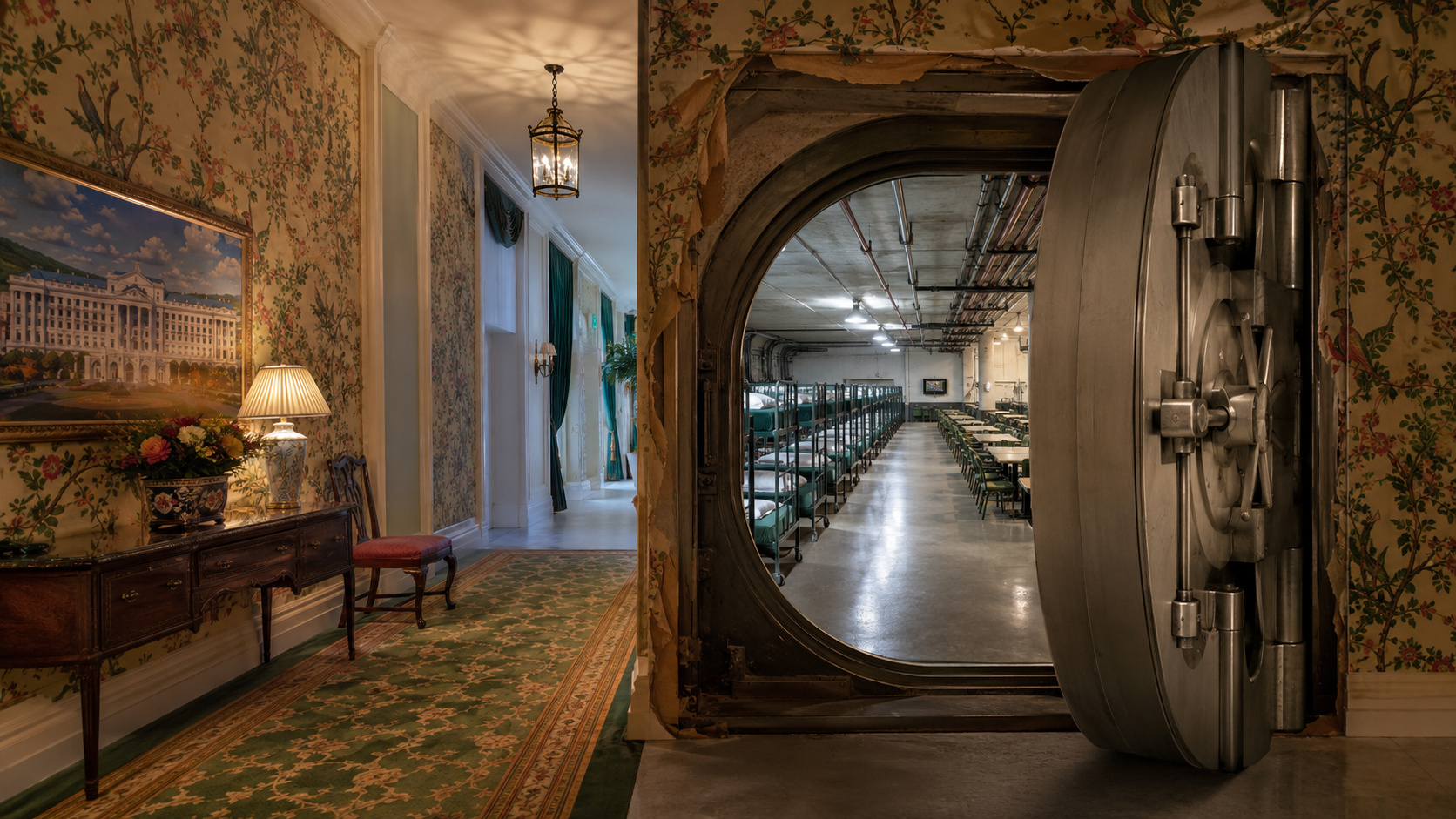

The secret bunker under a luxury hotel in the United States was created during the Cold War to shelter Congress in case of nuclear war. The hidden structure had a 25-ton door, over a thousand bunks, a dining hall for 400 people, stored water, and separate rooms for the House and Senate.
For almost 35 years, guests at a luxury hotel in the United States walked through elegant corridors without imagining there was a secret bunker hidden behind a wall with floral decoration. The entrance led to a structure created to accommodate the entire United States Congress during a nuclear war.
The information was published by Smithsonian Magazine, a magazine of the Smithsonian Institution focused on history and science. The construction was completed in 1962, was named Project Greek Island, and was hidden in The Greenbrier resort in West Virginia.
The shelter was not made to serve the hotel guests. Its purpose was to maintain the continuity of Congress in an extreme situation, with spaces prepared for senators and representatives to continue working away from the area affected by a possible attack.
-
China Invested 17 Billion Yuan to Build a Desert City with Museums and Theaters for 1 Million, but Only 28,000 Moved to Kangbashi Initially

-
Mother and Daughter Convert Small Garage into Full Apartment to Save Money and Stay United

-
Woman Leaves Restaurant Job to Become a Builder in Brazil, Launches Her Own Construction Brand “Construcida”

-
Mother and Daughter Turn Abandoned Warehouse Find into Million-Dollar Business in the U.S., Uncovering 25,000 Caps, 10,000 Sneakers, and Rare Apparel from Nike, Adidas, and Puma


Project Greek Island was born amid the fear of a nuclear war
Project Greek Island was the secret name used to identify the bunker. The choice of code helped conceal the real purpose of the construction, linked to a period when the United States lived under the fear of a nuclear war.


The project was completed in 1962, during the Cold War. This was a period of high tension between the United States and the Soviet Union, when governments began creating plans to protect authorities and keep services running in case of an attack.
In the case of the secret bunker, the plan was to shelter the members of the House of Representatives and the Senate. The two houses form the United States Congress and participate in the creation of the country’s laws.
Luxury hotel concealed a structure created for Congress
The construction was hidden under a new wing of the hotel. To guests, the place seemed just another part of the resort, with rooms, corridors, and areas aimed at visitors.
The elegant facade helped to hide the secret bunker. The access door was camouflaged by ordinary decoration, with floral wallpaper, and did not attract the attention of passersby.
The luxury hotel continued to receive visitors while the structure operated in secrecy. The choice of the resort helped keep the project out of public view for many years.
The common appearance of the building was part of the protection. Those who saw the wing from outside had no reason to imagine that there was a shelter prepared for a nuclear crisis just below.
25-ton door protected more than a thousand bunks and dining hall
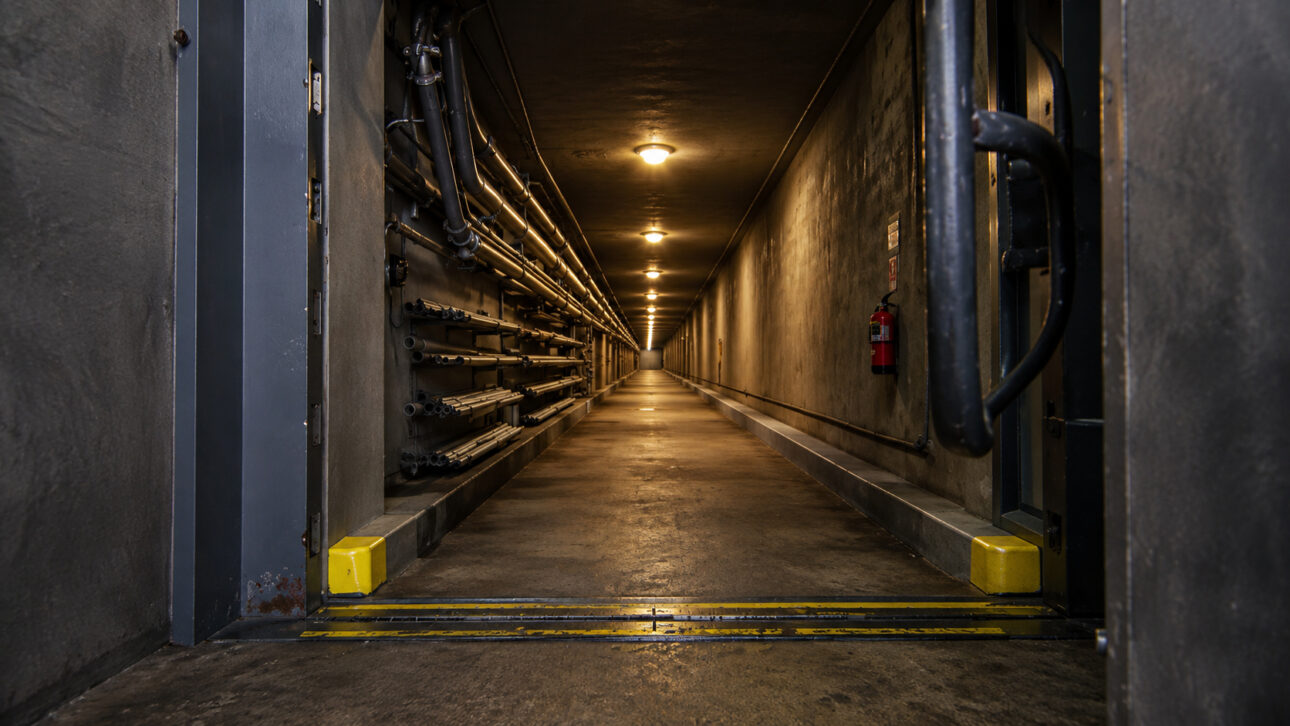
After the camouflaged entrance, there was a 25-ton door made to protect access to the bunker. It was a blast door, created to withstand the pressure caused by an attack.
Smithsonian Magazine, a magazine of the Smithsonian institution focused on history and science, detailed that the location had more than a thousand bunks, a dining hall for 400 people, stored water, and separate areas for the House and Senate.
The bunks were beds organized in two levels, used to accommodate many people in a small space. The number shows that the bunker was not just a protection room, but a structure prepared to host a large group for some time.
The space also had areas designated for the work of parliamentarians. The idea was to allow Congress to continue functioning even in a national emergency situation.
Front company kept the bunker ready without revealing the secret
The bunker needed constant maintenance to continue functioning. This task was carried out by employees linked to a front company, created to hide the true activity carried out within the hotel.
The company appeared as a service provider for the resort’s television equipment. In practice, the workers also took care of the maintenance of the bunker and helped maintain the secrecy of the structure.
This model avoided questions from guests and local residents. People passing through the hotel saw employees working, but did not know that part of that service was related to a shelter created for Congress.
The secret depended on a discreet routine. The facility needed to be ready, but its existence could not be revealed to the public.
Revelation in 1992 ended the luxury hotel’s secret
In 1992, a journalistic report revealed the existence of the secret bunker. The news showed that the hotel hid a structure planned to accommodate the United States Congress in a nuclear war.
The revelation ended the secrecy of almost 35 years. The location ceased to be an unknown facility and came to be remembered as one of the most curious constructions of the Cold War.
The case shows how the fear of a nuclear war influenced security decisions, works, and hidden structures in the United States. A hotel known for hosting guests simultaneously maintained a plan to preserve the functioning of Congress.
The construction brought together elements difficult to imagine at the same address: a luxury hotel, a hidden door, more than a thousand bunk beds, and rooms prepared for parliamentarians. Everything was designed for a situation that never happened, but was treated as a real risk.
Do you believe that a bunker of this size could remain hidden for almost 35 years in a hotel full of guests? Leave your opinion in the comments and share this story.