Portuguese
  Spanish


The 112-meter steel railway bridge was built next to the Digbeth canal and moved over Lawley Middleway over four nights. Teams from HS2, Balfour Beatty VINCI, and Mammoet combined modular transporters and a sliding system to reduce traffic impacts and expedite the operation’s completion.
A 1,631-ton railway bridge was rotated 90 degrees and moved over one of Birmingham’s ring road avenues in the UK during an operation conducted mainly at night. The structure advanced between 18 and 24 meters per session until reaching its final position over Lawley Middleway.
The completion was announced by High Speed Two, HS2, on August 21, 2025, after the movement began on August 15. According to the public company responsible for the high-speed railway, the operation finished four days ahead of schedule and allowed for the early full reopening of the avenue.
Steel structure weighs 1,631 tons and measures 112 meters
The bridge was assembled with 112 meters in length and a total weight of 1,631 tons. It is part of the railway access to the future Birmingham Curzon Street station, one of the main terminals planned in the HS2 project.
-
São Paulo plans the largest road tunnel in Brazil, over 6 km in the Serra do Mar, as part of an R$ 8 billion project that promises to increase the capacity for trucks and buses between the plateau, the coast, and the Port of Santos by 145%.

-
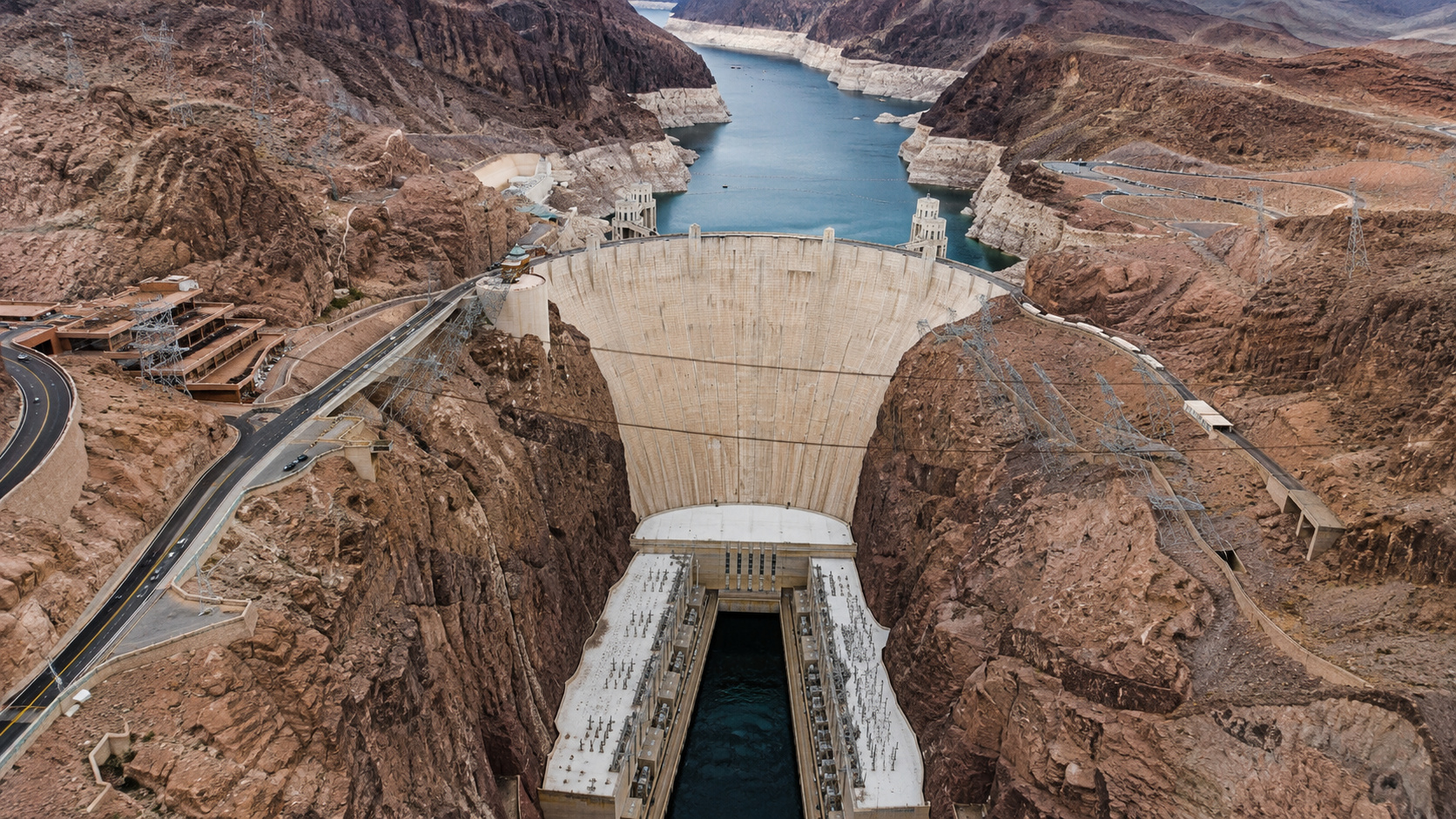
Few people know, but a dam in the USA required 5 million barrels of cement, 4.44 million cubic yards of concrete, and even an ice plant capable of producing 2 million pounds per day to prevent cracking during curing; discover the engineering behind the Hoover Dam.

-
They seemed sturdy enough to support a 222-meter tower, but three giant bolts broke because invisible hydrogen atoms had weakened the steel.
-
It seemed like just a futuristic metal facade, but curved panels turned into reflectors, heated sidewalks to around 60°C, hit apartments, and needed to be given a matte finish.



The size of the structure prevented conventional movement with common cranes or road transport. The solution required a combination of equipment capable of supporting, rotating, and pushing the metal deck with millimetric control.
The railway bridge became the first steel structure placed in the approximately one-mile section formed by five connected viaducts approaching the station. This set will receive trains coming from the Bromford tunnel.
Construction took place next to the avenue for two years
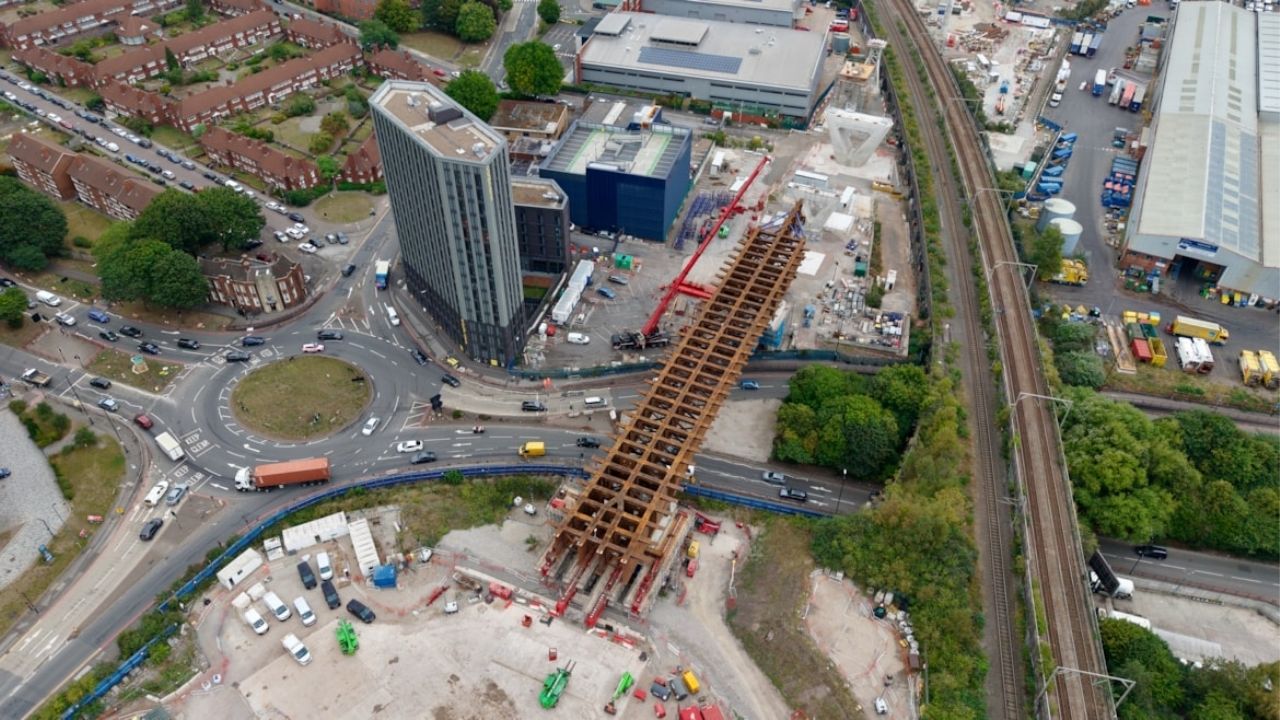
Instead of assembling the bridge directly over the Lawley Middleway, the teams built the metal span on solid ground, near the Digbeth canal. The fabrication and preparation of the structure took approximately two years.
The strategy avoided keeping the avenue closed during the entire assembly period. Building next to the road transferred most of the work to an area separate from the daily vehicle flow.
Only after the structure was completed did the team begin the moving phase. This decision reduced the necessary time for blocking the avenue and concentrated traffic interference during nighttime periods.
Two transporters rotated the railway bridge by 90 degrees
On August 15, 2025, specialists from Mammoet lifted the structure onto two self-propelled modular transporters, known by the acronym SPMT.
These pieces of equipment consist of platforms with multiple individually controlled axles. The ability to change direction and distribute weight allowed the railway bridge to be rotated by 90 degrees without dismantling any part of the deck.
After the rotation, the structure was aligned with the prepared path over the Lawley Middleway. The maneuver opened space for the start of the horizontal movement carried out over the following four nights.
Sliding system pushed 24 meters per night
After the rotation, the bridge began to be moved with a sliding system associated with the modular transporters. The equipment used a hydraulic push and pull mechanism to gradually move the 1,631 tons.
The initial forecast released on August 8 indicated progress of approximately 12 meters per night. During execution, however, the structure moved between 18 and 24 meters in each night stage.
The pace faster than planned was one of the factors that allowed the operation to be completed four days earlier. Favorable weather conditions also helped the teams gain an advantage over the schedule.
Avenue remained open during the day

The closures were scheduled to occur at night, a period of lower vehicle circulation. During the day, Lawley Middleway remained open, reducing impacts on residents, businesses, and drivers.
The operation involved the stretch between Garrison Circus and Curzon Circus. Detour routes were signposted during the closures, with planning to avoid mandatory entry into Birmingham’s clean air zone.
Moving the railway bridge in nighttime stages allowed for a large-scale project to be reconciled with the city’s daily functioning. A conventional assembly over the avenue itself could require longer interruptions.
Combined technique was used for the first time in the project
The association between SPMT carriers and the sliding system with hydraulic jacks is not common in operations of this type. According to HS2, the combination was used for the first time by Balfour Beatty VINCI within the railway project.
Balfour Beatty VINCI, known as BBV, acts as the main contractor for HS2 works in the Midlands. Mammoet was responsible for the specialized engineering of the bridge’s movement.
The operation required detailed planning for different systems to work simultaneously. The carriers supported and guided the structure, while the sliding mechanism controlled its advancement over the avenue.
Early completion released the road four days earlier
The schedule predicted that the restrictions would continue until Monday, August 25, 2025. With progress above expectations, HS2 reported that the avenue would return to normal operation at 6 a.m. on Friday, August 22.
Greg Sugden, responsible for executing the approaches to Curzon Street at HS2, stated that the result concluded approximately two years of project, planning, construction, and preparation for the launch.
Georgios Markakis, project manager at Balfour Beatty VINCI, attributed the anticipation to planning and specialized support from the supply chain. The reduction in time benefited both the project and the road users.
Bridge integrates sequence of five viaducts
The structure over Lawley Middleway is just a part of the elevated corridor that will bring trains to Birmingham Curzon Street. The stretch will have five connected viaducts: Duddeston Junction, Curzon 1, Curzon 2, Lawley Middleway, and Curzon 3.
The high-speed trains will exit the west portal of the Bromford tunnel, in Washwood Heath, and travel for approximately one mile over these viaducts until reaching the station platforms.
The railway bridge functions as a link within a larger structural sequence. Its positioning allows the next phases to advance towards the continuous formation of rail access to the center of Birmingham.
Work is part of HS2’s arrival in Birmingham
HS2 is a high-speed railway under construction in the United Kingdom. In the Birmingham section, the works involve tunnels, bridges, viaducts, and adaptations in urban areas occupied by avenues, canals, and existing railway lines.
The approach to Curzon Street is considered one of the most complex parts as it crosses this urban environment. More than 250 professionals were involved in the work in the sector, including welders, ironworkers, carpenters, and engineering apprentices.
In the 12 months following the announcement, new milestones were planned, such as the movement of the Curzon 2 viaduct, the first displacement at Duddeston Junction, and the start of construction of the Saltley viaduct.
Can heavy engineering reduce urban impacts?
The movement of the railway bridge showed an alternative to integral construction over a busy avenue. By manufacturing the structure next to the road, rotating it with transporters, and pushing it during the night, the teams reduced closure periods and anticipated delivery.
Do you think building large structures off-site and then transporting them should be more common in urban works? Tell us in the comments if the reduction of blockages compensates for the technical complexity of moving a bridge of over 1,600 tons.