Portuguese
  Spanish


The River Love tiny house in Connecticut started as a garage and became a compact 700-square-foot accommodation with a sauna, fireplace, river access, and hidden furniture. The property accommodates up to four people and combines a 2.5-acre lot, fire pit, trails, and built-in solutions to make use of every available corner.
The tiny house The River Love, located in Connecticut, USA, started as a garage and ended up as a compact 700-square-foot accommodation. The property, featured in a property tour video, accommodates up to four people and includes a sauna, fireplace, river access, and hidden furniture in planned walls.
In a video released on the Carlos Kinq channel on YouTube, the tiny house The River Love, located in Connecticut, USA, started as a garage and ended up as a compact 700-square-foot accommodation. The property, presented in a video published on June 7, 2026, accommodates up to four people and includes a sauna, fireplace, river access, and hidden furniture in planned walls.
Project started as a garage and changed function
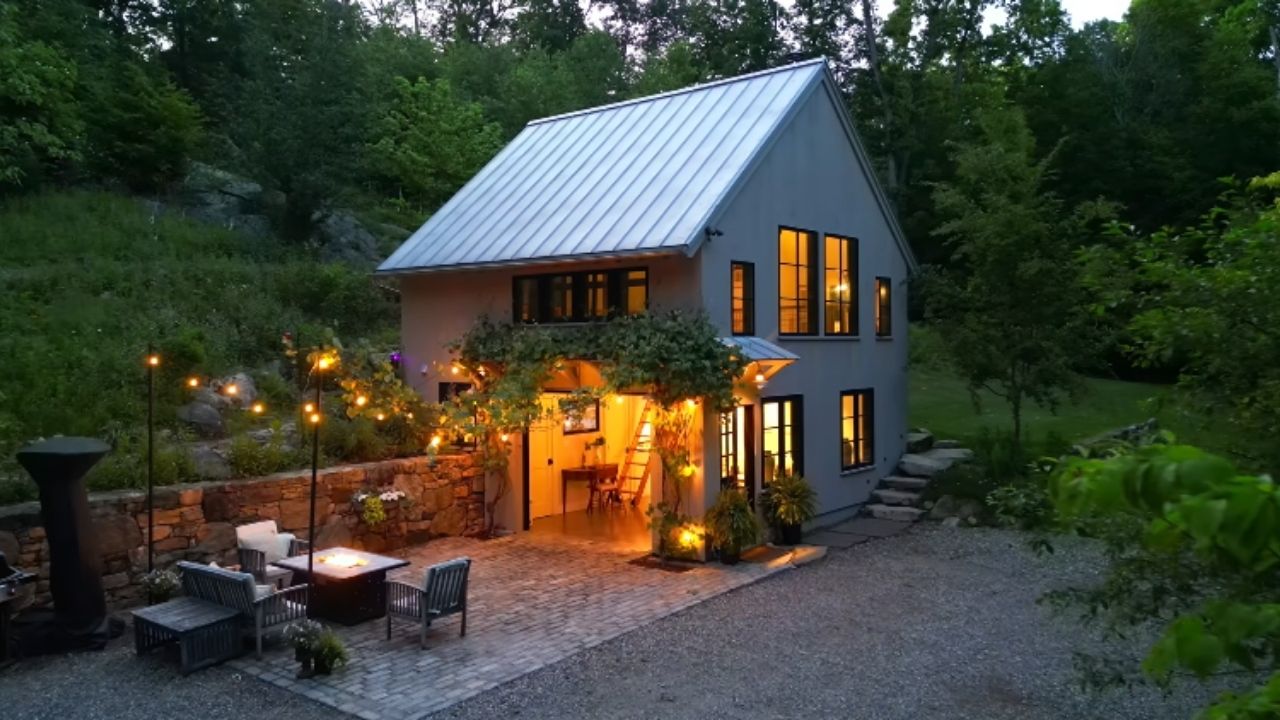
The story of the property draws attention because the initial garage was not intended to be a complete residence. The architect was planning to build this space while deciding where to place the main house on the lot, but the project evolved with new ideas.
-
Brazil to Convert 80 Public Properties into 11,000 Affordable Homes Across 44 Cities to Address Housing Shortage

-
Brazilian Company Develops Wall Panels from Recycled Refrigerator Foam with Comparable Thermal and Acoustic Performance

-
Brazil’s São Paulo Region Unveils Latin America’s Largest Timber Shopping Mall, Built in 7 Months, Capturing Carbon and Preventing 900 Tons of Emissions
-
Danish Island Uses Seaweed for Durable, Centuries-Old Roofing Solution


As the project evolved, the tiny house began to incorporate housing, leisure, and accommodation features. In Connecticut, the result was a compact property that retained part of its garage origin but took on a much broader function.
2.5-acre lot enhances the experience outside the house
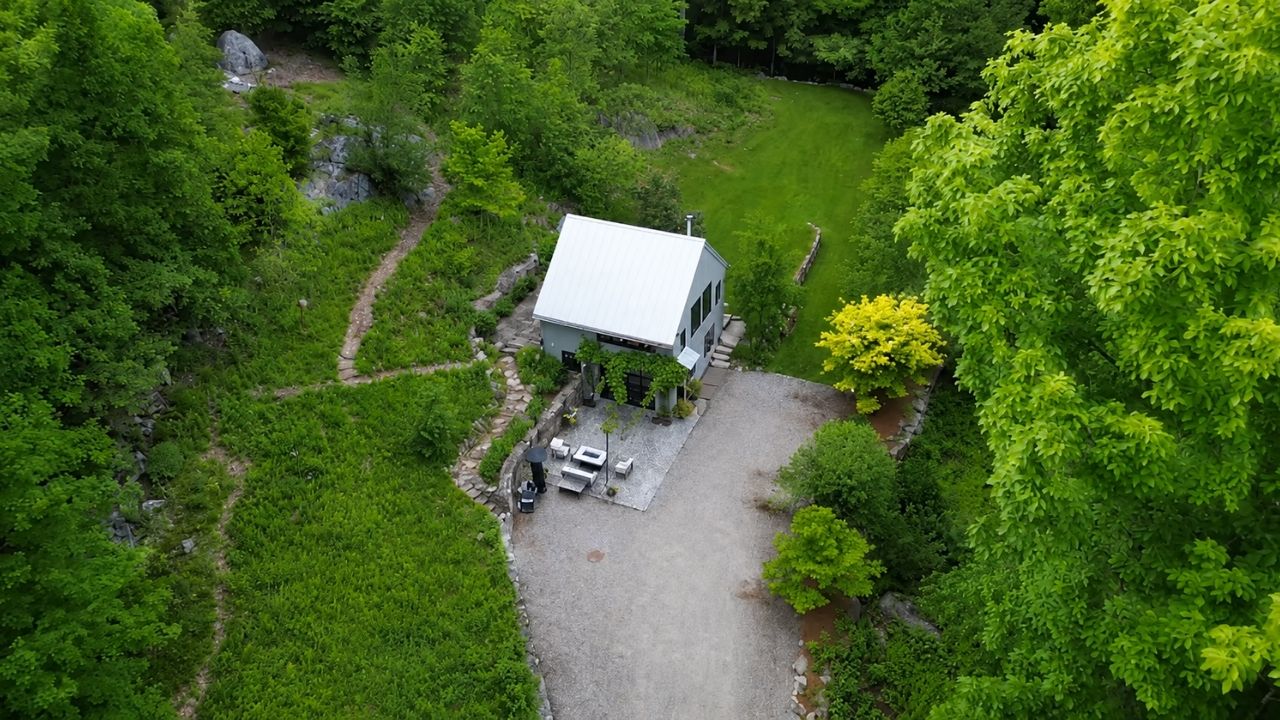
The property is located on a 2.5-acre plot surrounded by nature, with its own parking, recreation area, bonfire, seating, natural stone wall, and barbecue. The outdoor environment helps explain why the mini house does not rely solely on indoor space.
The surroundings include gardens, trees, trails, and fruit-bearing plants like grapes, pears, and apples. In Connecticut, this setting transforms the land into part of the lodging, with paths, resting areas, and constant contact with the sound of water.
Compact interior uses fireplace and hidden furniture
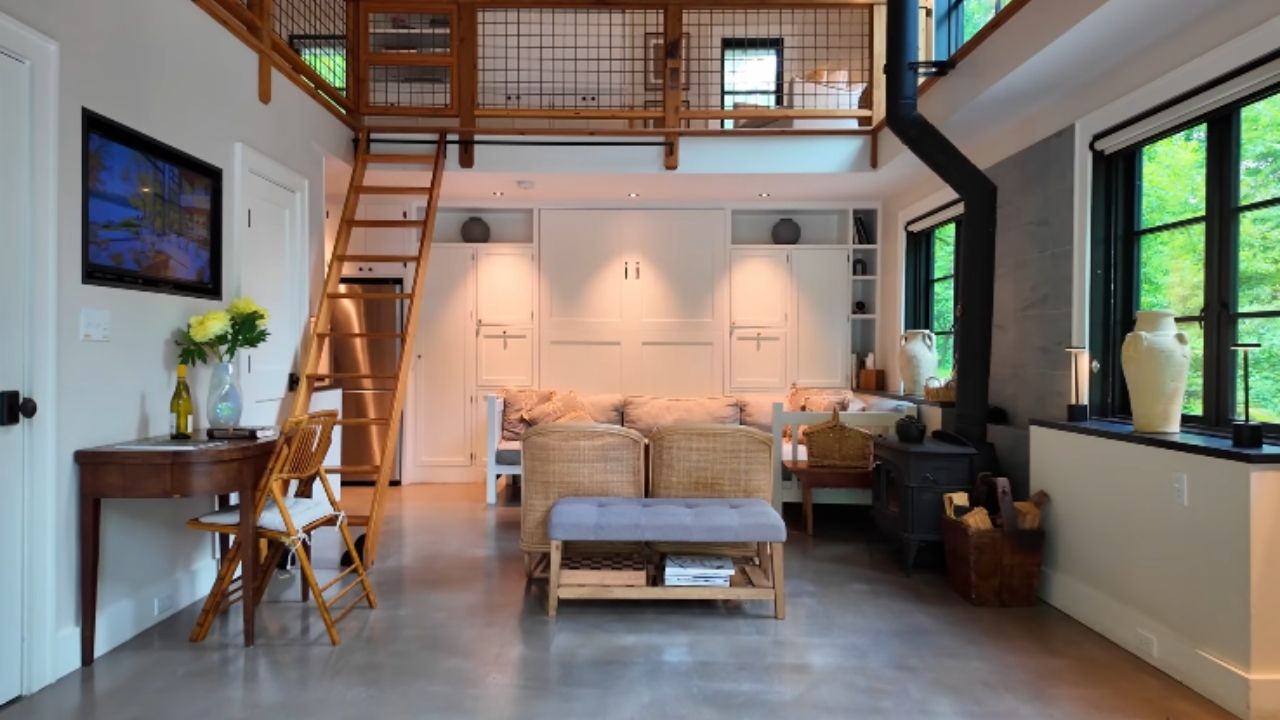
Inside, the living room revolves around a functional fireplace and large windows, which enhance the sense of openness. The mini house also features a sofa, adjustable television, and a basket prepared for picnics and outdoor moments.
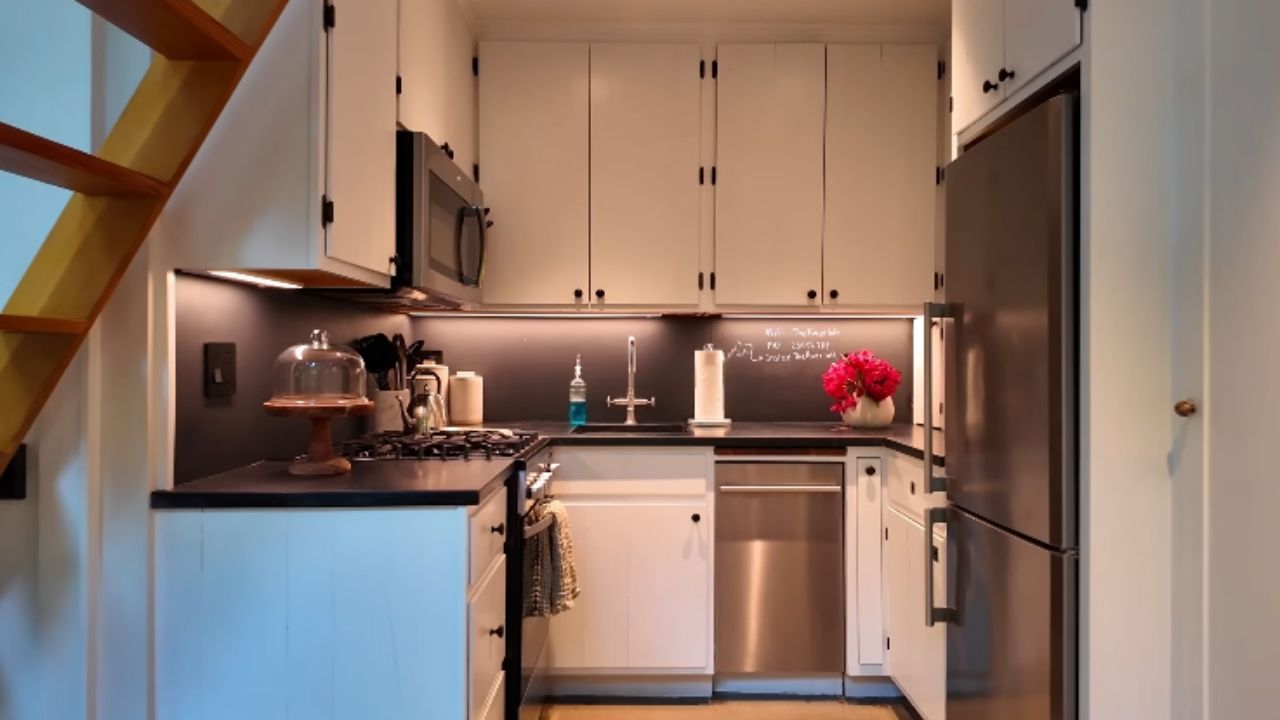
The kitchen was designed to make use of every corner without leaving objects in view. Cabinets, utensils, hidden coffee maker, and other compartments reinforce the logic of hidden furniture, which helps maintain a clean look without losing functionality.
Hidden furniture allows hosting up to four people
The hidden furniture is one of the most striking features of the construction, as part of the wall reveals an extra bed, storage areas, and support surfaces. This solution allows accommodating up to four people without creating conventional bedrooms.
On the second floor, the tiny house includes a bed for two people, a wardrobe, air conditioning, controllable lights, and a view of the lower part. The absence of rigid divisions makes the environment more open, while built-in elements solve the lack of square footage.
Sauna, river, and private area reinforce the retreat atmosphere
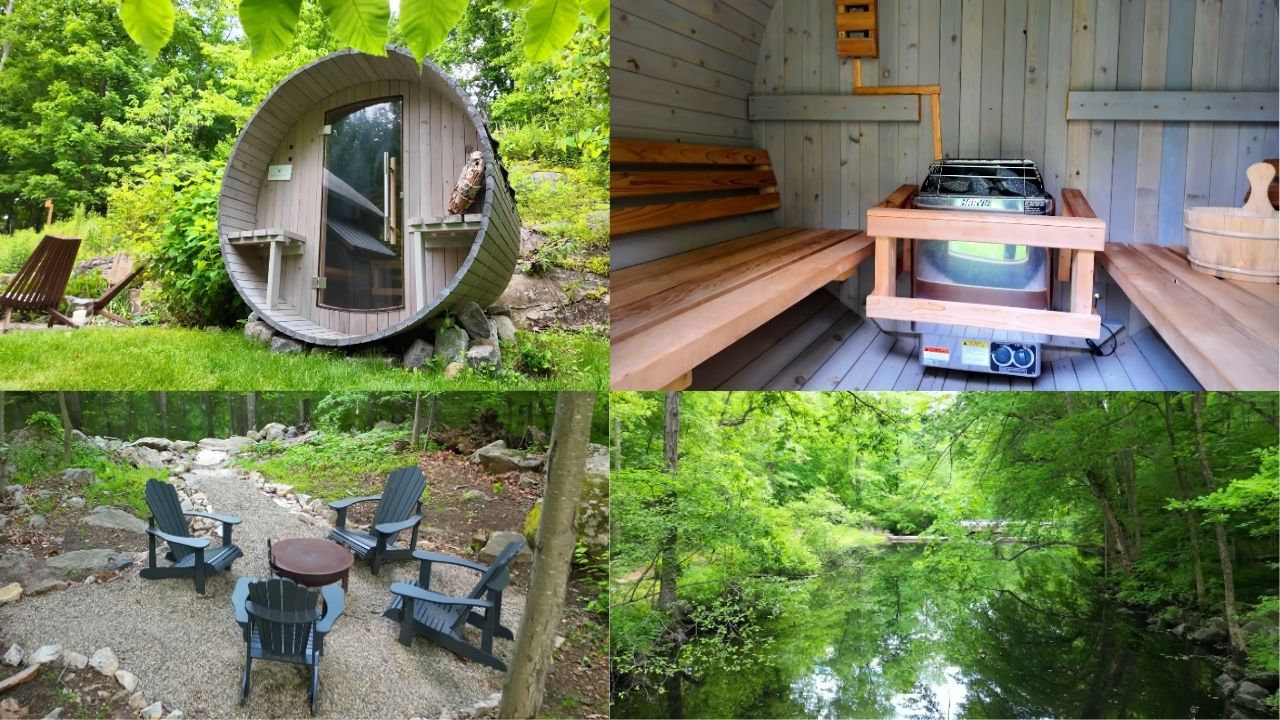
The outdoor area features a barrel-type sauna, an outdoor shower, and stone paths leading to more secluded spots. The sauna is integrated into the natural environment, with space for relaxation after a day of using the property.
Access to the river is another highlight of the property in Connecticut. According to the presentation, it is possible to swim, use floaters, and rest in a hammock under the shade of the trees, even with restaurants and shops just a few minutes away.
Garage door preserves the memory of the original project


The bathroom was also designed to multiply functions, with a shower that can transform into a bathtub, a concrete sink, privacy windows, and ceramic finishes. The proposal follows the same compact logic as the rest of the property.
Even after the transformation, the garage door was kept to connect the interior and exterior. This detail preserves the origin of the construction and shows how a tiny house can take advantage of references from the initial project without seeming improvised.
Would you spend a few days in a tiny house with a sauna, river, fireplace, and hidden furniture in the walls, or do you think small spaces still limit the routine too much? Leave your opinion in the comments.