






 Portuguese
  Spanish
  2 min of reading
  1 comment


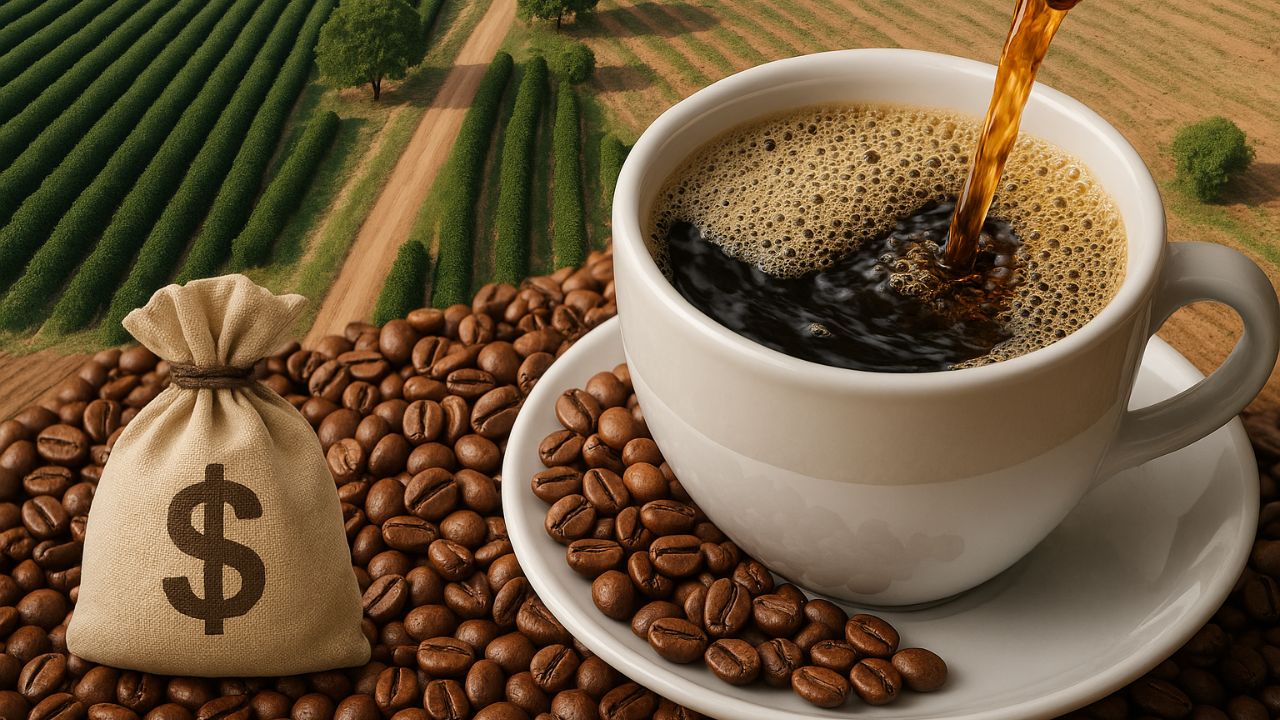


A “Perfect Storm” of Climate Crisis, Brazilian Production Break, and New Trade Barriers in the US Creates a Scenario of Uncertainty and Volatility for the Grain Market.
The global coffee market is facing a period of sharp price increases, and your daily coffee might get more expensive. The combination of a tariff spike in Brazil and other producing countries, climate change, and a Brazilian crop smaller than expected are the main reasons. The warning was issued by Vanúsia Nogueira, executive director of the International Coffee Organization (ICO).
Combined Factors Pressure the Global Coffee Market
Vanúsia Nogueira highlighted that the market is dealing with volatility and uncertainty. This occurs at a critical moment when global coffee consumption is rising while global stocks are decreasing. According to her, the situation is a result of multiple factors: the crop break in Brazil, extreme weather events, and new import tariffs.
The Impact of the “Tariff Spike” on the Coffee Sector
Experts point out that the imposition of tariffs by the United States creates significant uncertainty. Former President Donald Trump imposed rates that range from 10% to 50%. These measures directly affect the coffee exports from producing countries to the crucial North American market, placing the product at a “clear competitive disadvantage.”
-
Brazilian Joins Homeownership Consortium, Faces Decade of Dual Payments Totaling $141,000, Surpassing Traditional Mortgage

-
Land Rover to Halt Production in July, Putting 371 Jobs at Risk, as Chinese Automaker Negotiates to Convert Factory to 100,000 Vehicles Annually by 2027

-
Mexican Pest Threatens U.S. Cattle Herds at Historic Lows, Potentially Boosting Brazilian Beef Exports as Burger Prices Soar

-
Brazilian Freight Bill Progresses in Congress with $5,000 Minimum Wage, 70% Advance Payment, and Fines Up to $1 Million, as Agriculture and Industry Warn of Rising Costs and Legal Uncertainty


Break in Brazilian Crop and Climate Uncertainty
Brazil, as the world’s largest producer and exporter of coffee, is a key player in this scenario. However, the current harvest has been smaller than expected. Climate issues have caused the beans to weigh less, directly impacting the volume available in the market. This situation exacerbates the global scarcity, caused by several years of production deficits.
Low Stocks and High Consumption: Who Pays the Bill?
The director of the ICO was straightforward in stating that despite the increase, consumption continues to grow. “The consumer will pay, the consumer wants coffee,” said Nogueira. The strong demand, in the face of reduced supply, inevitably results in higher prices on the shelves.
Future of Production in Brazil Is Uncertain, Says Expert
The recovery of Brazilian production is still a major unknown, adding more pressure to the market. It is difficult to predict a return to normality. “We don’t know when Brazil’s harvest will return to normal; we are facing very strong climate events every year,” the expert observed. This climate instability is currently the biggest challenge to stabilizing the supply and prices of coffee.





É muita mentira numa matéria só que vergonha. O café está aumentando por que a produção está nas mãos de poucos e o consumo aumentando no mundo o resto é conversa pra **** dormir.