Portuguese
  Spanish


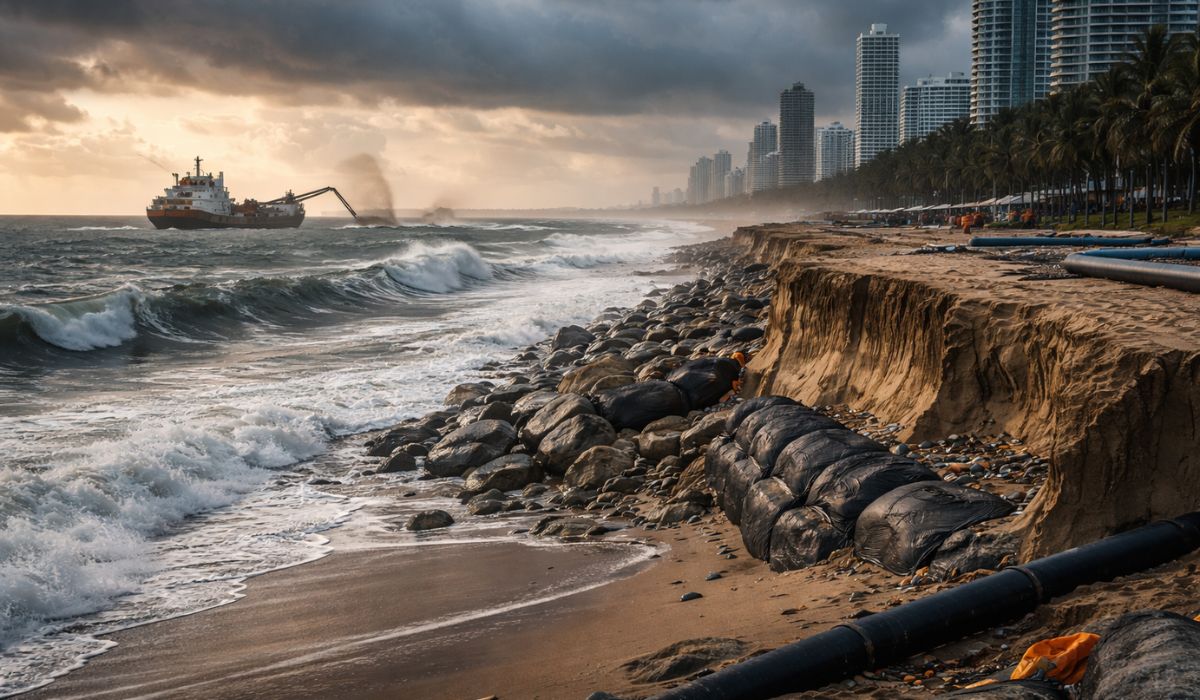

A strip of sand that looks natural, but depends on works, monitoring, and technical decisions to continue existing, reveals how the relationship between city and ocean can change quickly after an extreme event.
Three months after the passage of Cyclone Alfred, parts of the beaches of the Gold Coast, on the east coast of Australia, still displayed stone retaining walls that are normally covered by sand.
According to the city hall, the event removed about 4 million cubic meters of sand from the coast and complete recovery may take up to three years, although emergency interventions have accelerated this process in some areas.
Coastal erosion and sand displacement
According to coastal dynamics experts, the sand removed by storms does not necessarily disappear from the system.
-
How to Prevent Brown Recluse Spider Bites: Common Hiding Spots and Free Tips to Reduce Risks

-
Natto: The Unusual Japanese Superfood Gaining Popularity on Social Media and Driving Record Exports
-
Brazilian Mayor Goes Undercover as Homeless for 24 Hours to Assess Public Services

-
15-Year-Old Entrepreneur Malu Lira Publishes 20 Children’s Books on Financial Education, Earns $500,000, and Expands Her Project to the Amazon Rainforest




In areas like the Gold Coast, this material often migrates to submerged banks and gradually returns to the beach strip under the action of waves and currents.
Still, while it remains away from the coast, the strip of sand becomes narrower and the shoreline becomes more exposed to high tides, storm surges, and new storms.
In the sections north of Surfers Paradise, such as Narrowneck and Main Beach, erosion has made parts of the so-called A-Line visible, a rocky structure used to protect properties and urban roads close to the sea.
In periods of greater stability, the strip of sand usually functions as a natural barrier and keeps this system covered.

Gold Coast and engineering to protect urban beaches
The exposure of this infrastructure has reinforced the debate about the degree of human intervention on the city’s coastline.
According to the city hall, the Gold Coast has one of the most managed coastlines in Australia.
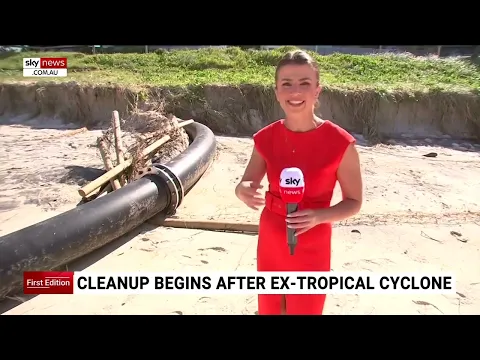
After the cyclone, the response included dredging, hydraulic transport of sand, replenishment in areas considered critical, fencing of dunes, and reinforcement of access points.
One of the main measures adopted was dredging with specialized equipment to remove sand from banks at sea and redistribute it along the coast.
The procedure, known as beach nourishment, is used in several countries to restore urban beaches and reduce the effects of erosion in populated areas.

According to the city hall, 1.55 million cubic meters of sand had already been returned to the beaches using dredging and the backpass system, a 7.8-kilometer underground pipeline that transports sand between The Spit and Surfers Paradise.
The strategy aims to accelerate a natural sediment movement that, without intervention, could take longer to occur.
Recovery of the beaches after Cyclone Alfred
The ABC reported that more than 30 million dollars had already been spent on the sand pumping barge.
The same report stated that successive swells and high tides have been hindering the visual recovery of the beaches, even after part of the works were completed.
According to technicians interviewed by the Australian broadcaster, this type of intervention does not produce immediate results in the landscape.
In many cases, the dredged sand is deposited in an area close to the coast and later depends on the behavior of the waves to migrate to the dry beach.
Therefore, the recomposition of the shoreline profile may take longer to be noticed by residents and tourists.
Narrowneck has attracted attention due to its geographical configuration.
The very name of the place refers to the narrow strip of land between the Nerang River and the Pacific Ocean.
When the width of the beach decreases, concern grows about the effects of a new storm on urban infrastructure and coastal protection systems.

Narrowneck, artificial reefs, and coastal protection
In this context, Mayor Tom Tate stated that the city’s priority was to protect the most vulnerable points after the cyclone’s passage.
Gold Coast has been using artificial solutions for decades to reduce this type of risk.
Narrowneck and Palm Beach feature artificial reefs designed to help dissipate wave energy during extreme events.
Among the proposals discussed after the cyclone, one mentioned by coastal engineer Angus Jackson was the construction of a submerged marginal reef off Surfers Paradise.
According to him, the structure could break some of the energy from large swells before they reached the upper beach area.
The proposal follows a line already studied in coastal engineering projects: using submerged structures to interfere with wave behavior without significantly altering the beach landscape.
Experts, however, treat this type of work as part of a set of measures, and not as an isolated solution for erosion.
How works and monitoring support the sand strip
In addition to the implementation of fixed structures, the replenishment of the sand strip continues to be pointed out as a central step in coastal protection.
Without continuous sediment replenishment, monitoring, and maintenance, the trend is that urbanized areas remain more vulnerable after severe events.
The case of the Gold Coast also illustrates a common characteristic of several urban tourist beaches: the natural appearance of the shoreline often depends on recurring engineering works.
The city council acknowledges that its beaches are highly managed and reported that, after Cyclone Alfred, the management included not only sand replenishment but also works on access points, dune fencing, temporary containment with geobags, and actions aimed at coastal resilience.
In February 2026, the Queensland Reconstruction Authority reported that a package of 57 million Australian dollars supported the recovery of beaches in southeastern Queensland affected by the cyclone, from the Livingstone region to the Gold Coast.

The announcement indicated that the damages caused by the event became part of a broader agenda for coastal reconstruction and recovery in the state.
From a technical standpoint, the situation also shows how the sand strip functions as part of the defense of coastal cities.
When this layer decreases, the mechanisms used to contain the advance of the sea in urbanized areas become more evident.
In this scenario, the Australian case has been observed as an example of how works, monitoring, and natural processes combine in an attempt to restore beaches affected by extreme events.