Portuguese
  Spanish


Preliminary data from a Fiocruz study show that, among Munduruku pregnant women in the indigenous land in Médio Tapajós, Pará, 97% have mercury above the safe limit. About 9 out of 10 babies are already born contaminated, in a situation linked to gold mining that poisons the Amazon rivers.
The numbers are alarming and concern the beginning of life. According to preliminary data from a Fiocruz study, almost all pregnant women of the Munduruku people monitored in Médio Tapajós, Pará, have mercury in their bodies above the considered safe limit. Worse: most babies are already born contaminated. The contamination is linked to gold mining that has been operating in the Amazon region for decades. The information was released by Agência Brasil.
It is always important to note: these are preliminary data, presented by Fiocruz researchers, and not a final figure. But the magnitude of the problem is already frightening. When 97% of pregnant women in a community have mercury above the limit, and 9 out of 10 newborns are born contaminated, what is at stake is the health of an entire generation of Munduruku, poisoned before even taking a breath.
What the Fiocruz study found
The research has a name and method. It is the Longitudinal Study of Pregnant Women and Indigenous Newborns Exposed to Mercury in the Amazon, conducted by researchers from the Sergio Arouca National School of Public Health, ENSP, linked to Fiocruz.
-
China could reduce iron ore imports from 80% to 50% of consumption by 2030, while its share in global steel production falls from 52% to 46%, in a shift that could reshape the global market, says CMRG.

-
Brazil is sitting on one of the largest lithium reserves in the world, in the Jequitinhonha Valley, but national mining has almost become an appendage of China: 97% of the metal’s export goes to a single country, which also dominates refining.
-
Iron ore falls to 762 yuan in China as real estate sales decline and steel production hits lowest level since 2018
-
Brazil has minerals, clean energy, and a waiting market, but it could miss a billion-dollar opportunity if it doesn’t speed up the race for green minerals, while the steel industry seeks to reduce emissions.


The preliminary data were presented on June 3, 2026, by the research coordinator, Paulo Basta, during an event on nature and climate in Rio de Janeiro.
The selection is specific and careful. The researchers monitored 195 pregnant women from the Munduruku indigenous land, in the Middle Tapajós, measuring the level of mercury in their bodies and in the babies.
It is a longitudinal study, meaning it follows the same people over time, which gives more weight to the conclusions even at this initial stage.
As they are preliminary, the numbers can still be refined, and the study continues. But the picture that emerges is already strong enough to serve as a warning.
Fiocruz, one of the most respected research institutions in Brazil, shed light on a silent tragedy unfolding far from the major centers, in the heart of the Amazon.
97% of pregnant women with mercury above the limit
The data on the mothers is the starting point. Of the 195 monitored Munduruku pregnant women, 97% had mercury above the safe level defined by the World Health Organization.
It is not a small excess: the average found was 9.1 micrograms of mercury per gram of hair, about four and a half times the tolerable limit of 2 micrograms.
This accumulation is not harmless. Mercury is a toxic heavy metal that settles in the body and primarily affects the nervous system.
In a pregnant woman, the concern doubles because what is in the mother’s body can cross the placenta and reach the developing baby, precisely at the most sensitive phase of development.
That is why the number 97% is so shocking. It is not an isolated case, but practically an entire community of pregnant women carrying, without choice, a poison that came from outside.
For the Munduruku pregnant women, mercury has ceased to be a distant risk and has become a constant presence in their own blood.
9 out of 10 babies are already born contaminated
The most painful chapter is that of the newborns. According to the Fiocruz study, about 90% of the babies, or 9 out of 10, are already born with mercury in their bodies.
In some cases, levels reached 30.8 micrograms per gram, equivalent to 15 times the safe limit, an extremely high value for a child who has just been born.
The possible consequences worry researchers. The study points to a growing number of children being born with rare neurological diseases, syndromes, and congenital anomalies still without a definitive diagnosis, cases that scientists suspect are related to mercury contamination.
It is important to emphasize that this link is still under investigation, but the pattern raises a red flag.
Inheriting contamination in the womb is an injustice difficult to measure. The Munduruku babies did not choose to live near poisoned rivers, yet they come into the world carrying the metal.
That’s why the data of 9 out of 10 is more than just statistics: it is the portrait of a problem that is transmitted from one generation to the next in the Amazon.
The origin: gold mining and contaminated fish
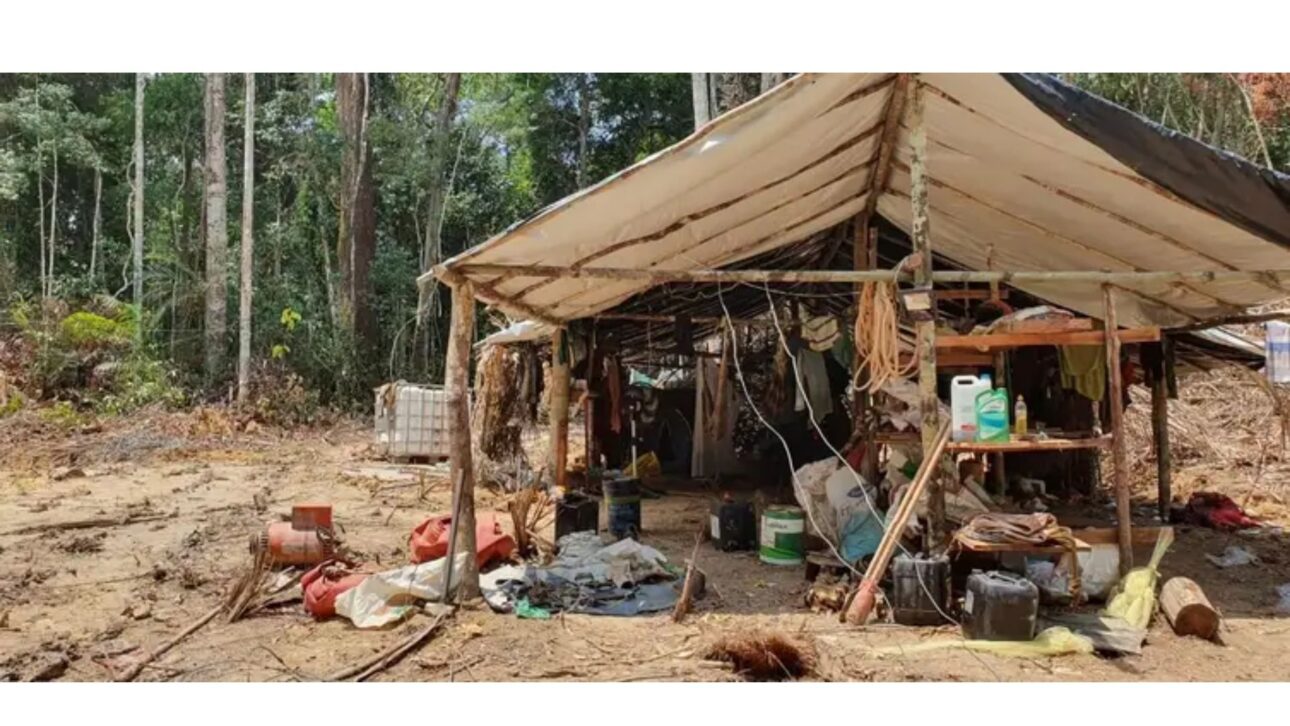
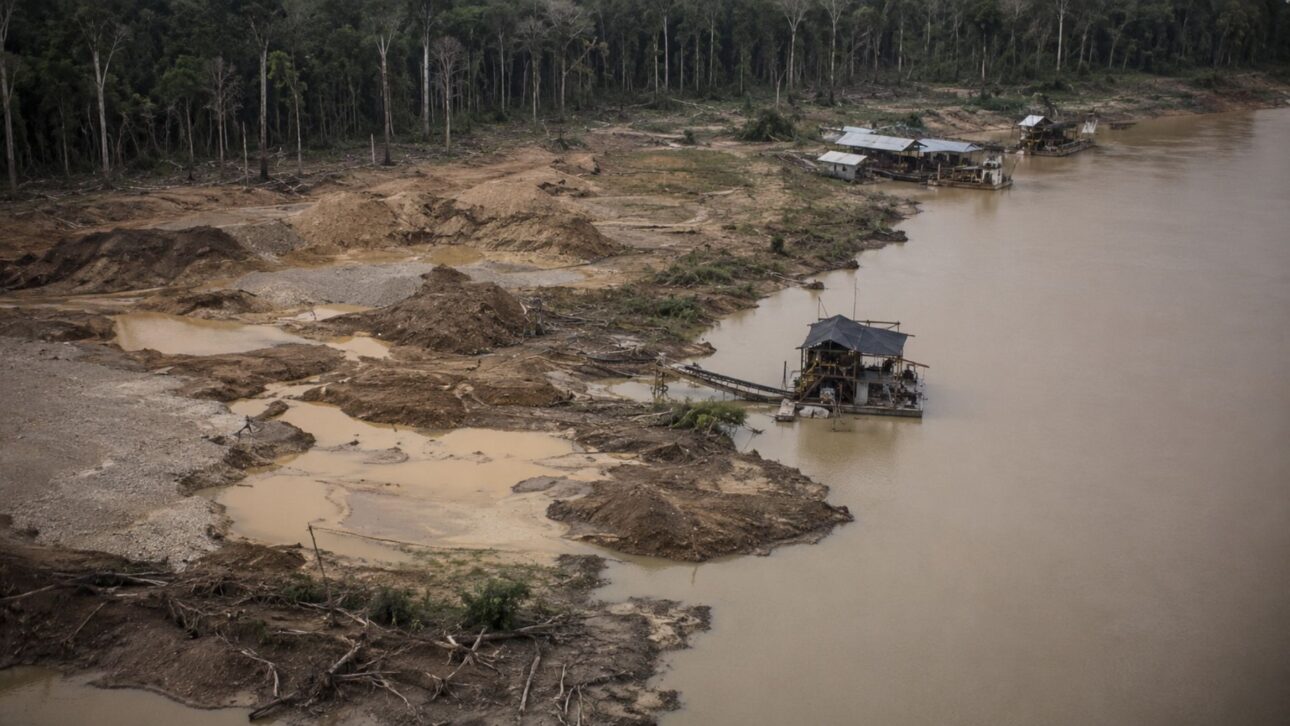
The cause has a well-known name. The region where the Munduruku live has been plagued for decades by gold mining, much of it illegal.
To separate gold from soil and gravel, miners use mercury, and this metal ends up flowing into the rivers, contaminating the water and everything that lives in it.
The path to the human body goes through the plate. The mercury dumped in the rivers accumulates in the fish, which are the staple food of the Munduruku people.
By eating the contaminated fish, day after day, families ingest the metal without realizing it, and that’s how the contamination reaches pregnant women and, through them, the babies.
This is the link that connects mining and health. Gold mining is not confined to the open pit in the forest: it spreads through the food chain and ends up in the blood of a newborn child.
Understanding this route is essential to combat the problem at its source, and not just treat the symptoms after the damage is done.
Why this is a warning for Brazil
The Munduruku case is the visible tip of a national problem. Illegal gold mining is advancing over the Amazon, leaving a trail of deforestation, rivers polluted by mercury, and entire communities falling ill.
Fiocruz data gives a face and number to a human cost that usually remains hidden behind the shine of the metal.
There is a public health urgency embedded in these results. If confirmed, they indicate that an entire indigenous generation is being compromised at the cradle, which requires a response on two fronts: taking care of those already contaminated and stopping the source by monitoring and combating illegal mining that poisons the Amazon rivers.
In the end, the story of the Munduruku is an uncomfortable mirror. Behind every gram of gold extracted illegally, there may be mercury accumulating in the body of a pregnant woman and her baby.
The preliminary data from Fiocruz is a call for Brazil to face the real, human cost of gold mining in the Amazon.
And you, what do you think needs to change?
The Fiocruz study exposes a drama that combines environment and health: 97% of Munduruku pregnant women with mercury above the limit and 9 out of 10 babies already contaminated, all linked to gold mining in the Amazon. These are preliminary data, but already enough to raise the alarm.
And you, do you think Brazil is doing enough to combat illegal mining and protect the Amazon peoples from mercury contamination? Share here in the comments what, in your opinion, should be a priority to tackle this issue.