Portuguese
  Spanish


Named Selena, a raw emerald weighing 142 kg and the size of a suitcase was extracted in Serra da Carnaíba, a mining hub between Pindobaçu and Campo Formoso, in Bahia. The precious stone, one of the largest in the country, went to auction with an initial bid of almost R$ 80 million.
Imagine a green stone so large that it needs to be carried like checked luggage. That’s roughly the size of Selena, a massive 142-kilogram block of emerald extracted from the Bahian soil, which has made it onto the list of the largest gems ever found in Brazil and ended up in a multi-million dollar auction. The combination of size, weight, and price has turned the stone into a curiosity phenomenon far beyond the mining world.
According to Revista Oeste, the numbers of the piece are as impressive as its origin.The Selena emerald was extracted in Serra da Carnaíba, in northern Bahia, and went to auction with an initial bid of R$ 79.8 million, a value that serves only as a starting point for those interested in this giant precious stone.
An emerald the size of a suitcase
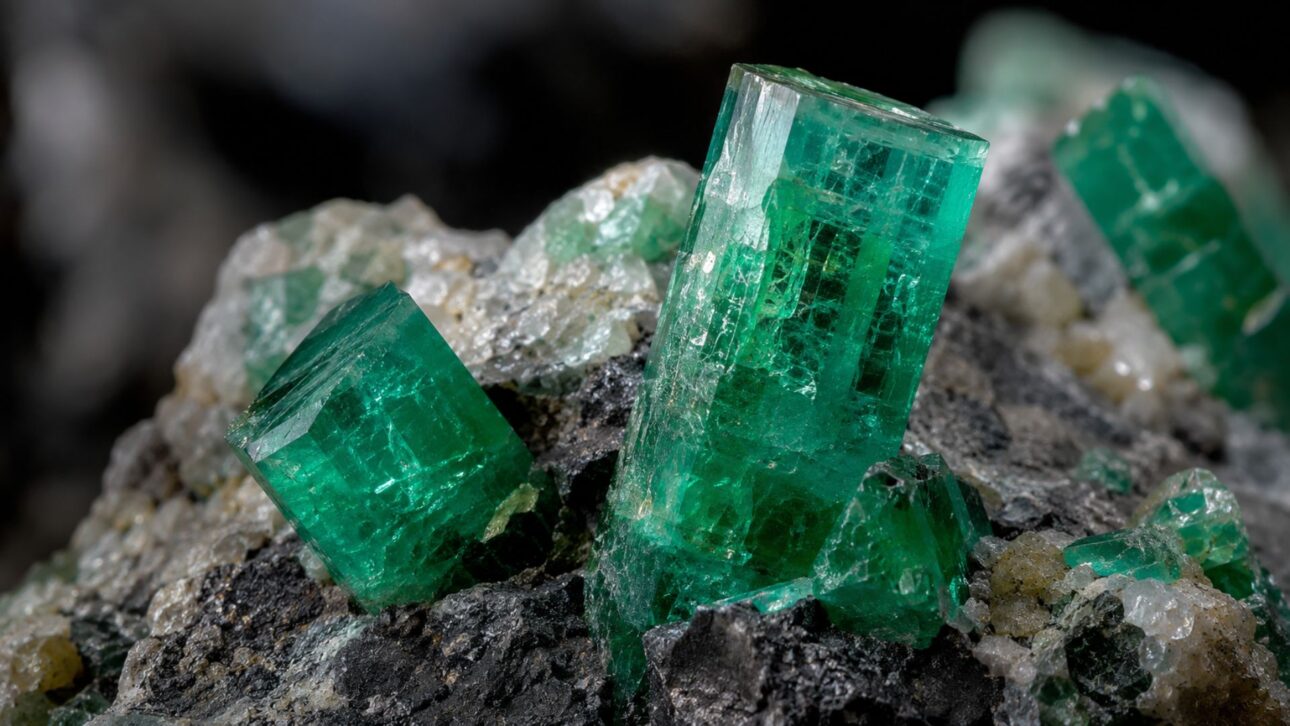
The stone measures about 94 centimeters in width, 67 in height, and 28 in depth, dimensions that indeed resemble a good-sized travel suitcase, only made of green crystal. Weighing 142 kilograms, this emerald weighs more than two adults combined, an exaggeration of proportions that helps explain why it made headlines across the country.
-
Study Reveals 97% of Pregnant Munduruku Women in the Brazilian Amazon Have Mercury Levels Above Safe Limits, 90% of Newborns Contaminated by Gold Mining

-
China could reduce iron ore imports from 80% to 50% of consumption by 2030, while its share in global steel production falls from 52% to 46%, in a shift that could reshape the global market, says CMRG.
-
Brazil is sitting on one of the largest lithium reserves in the world, in the Jequitinhonha Valley, but national mining has almost become an appendage of China: 97% of the metal’s export goes to a single country, which also dominates refining.
-
Iron ore falls to 762 yuan in China as real estate sales decline and steel production hits lowest level since 2018


More than just voluminous, the piece is considered one of the largest ever found in Brazilian territory. It is not a cut jewel, but rather a natural cluster of crystals still in their raw state, preserving the shape with which it came out of the earth. It is precisely this monumental and raw character that sets Selena apart from a common showcase emerald, placing it in a category of its own, closer to a museum rarity than a ring.
Where Selena Was Extracted: the Serra da Carnaíba
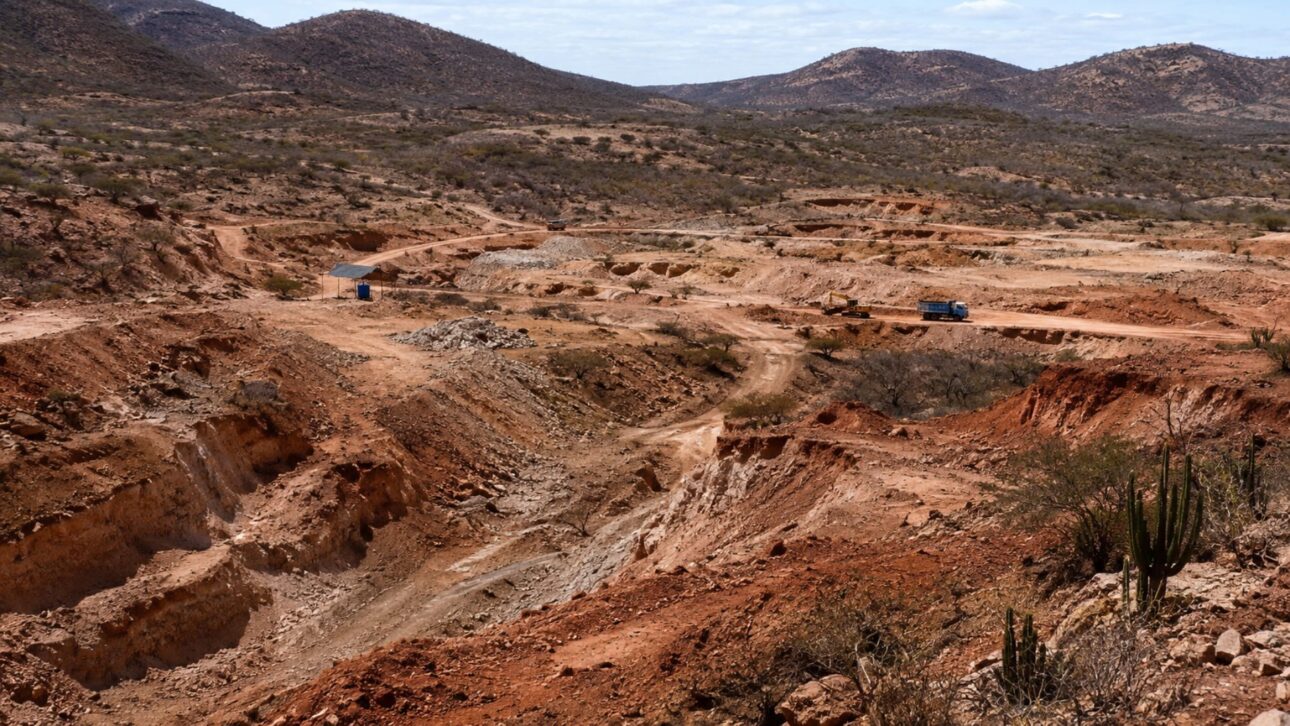
The origin of the stone is as relevant as its size. Selena was extracted in the Serra da Carnaíba, a region located between the municipalities of Pindobaçu and Campo Formoso, in the north of Bahia, an area historically linked to the extraction of green gems. The city of Pindobaçu itself grew in the shadow of this stone trade. It is no coincidence that a stone of this size emerged there: the Serra da Carnaíba is considered one of the most important emerald hubs in the world, and mining is part of the local economic identity.
This mineral vocation comes from afar and drives the life of the region. Around Pindobaçu and the Serra da Carnaíba itself, generations have dedicated themselves to the search for emeralds, sustaining a chain that goes from mining to stone trading. Therefore, Selena is also a symbol of the geological potential of the Brazilian Northeast, an involuntary showcase of the wealth that mining in Bahia can reveal when luck and geology meet.
142 kg of Green Beryl: What Makes the Stone Rare
To understand why so many people are interested, one must look at the composition of the piece. Selena is formed by crystals of green beryl, which is emerald in its natural state, grouped in a single block that preserved its original formation. This integrity is rare because stones of this size usually fragment during extraction, and keeping the entire mass intact is what elevates the symbolic and scientific value of the emerald.
Experts treat the piece less as merchandise and more as a document of nature. Gemologist Cesar Augusto Maia, who evaluated the stone for the auction house, described Selena as a unique “geological testimony,” whose rarity would make it an almost incalculable asset. It is worth noting, however, that this type of evaluation comes from those offering the precious stone and describes the rarity of the whole, not the amount of cuttable and high-purity emerald that would exist within that raw block.
The Auction of Almost R$ 80 Million
The chapter that gave national projection to Selena was indeed the auction. The stone was offered by the company Bid Leilão with an initial bid of R$ 79.8 million, an amount that rounds up to the almost R$ 80 million repeated in the headlines. It is important to emphasize that this number is the starting point of the dispute, not a confirmed sale value, a distinction that is often lost when the figure becomes a news headline.
The rules of the auction also help to gauge the seriousness of the operation. The auction was scheduled for the end of May, with a requirement for payment in cash and a 5% commission for the auctioneer, typical conditions of high-value transactions. The expectation announced was to attract collectors and investors, an audience that sees in a precious stone like Selena both an object of desire and a bet on appreciation over time.
Why it’s worth so much: the value of an “incalculable” stone
The answer lies less in the weight and more in the rarity: natural gems of this size, integrity, and known provenance are extremely uncommon, and exclusivity is the main driver of price in the collectible stone market. The more unique and impossible to replicate a piece is, the more it deviates from normal evaluation parameters, and it was in this realm that the Selena emerald was positioned.
Even so, it is wise to view the figure with some healthy skepticism. A high starting bid reflects the seller’s strategy and the bet on the buyer’s fascination, but it does not guarantee that the stone will actually reach that level nor reveal how much of it would be usable as jewelry. In the precious stone market, the asking price and the paid price can be quite different, and a giant raw emerald is valued mainly as a rarity and trophy, not necessarily as raw material for rings and necklaces.
Bahia as an emerald territory
Selena is not an isolated case, but rather the newest chapter in a long tradition. Bahia is one of Brazil’s major emerald hubs, and mining in Bahia has yielded, over the years, other gigantic stones that have made headlines both inside and outside the country. This history helps explain why the state is taken seriously in the global gem market, and why Serra da Carnaíba always appears when talking about great emerald finds.
Behind the shine of the headlines, there is a concrete and rooted economic activity. Gem extraction around Pindobaçu and Serra da Carnaíba involves companies, cooperatives, and workers who live off the sector, driving the economy of municipalities in the interior of Bahia. Each standout stone like Selena serves as a business card for mining in Bahia, attracting attention, investment, and curiosity to a region that has breathed emeralds for decades.
What the case of the Selena emerald shows
Selena’s story has all the ingredients to enchant: colossal size, intense color, and a breathtaking figure. It shows the power of Brazilian soil to produce rarities like a 142-kilogram emerald, extracted from Serra da Carnaíba, capable of going to auction with an initial bid of almost R$ 80 million and capturing the country’s attention. Still, it’s worth keeping your feet on the ground because the number that went viral is the opening bid, defined by the seller, and not a proven sale value, an essential distinction to avoid turning expectation into a done deal.
The balance between wonder and prudence is the most honest reading of the case. The rarity of the piece is real and the geological feat undeniable, but the price of a raw gemstone like this is driven as much by scarcity and marketing as by the usable gem it actually contains. Even so, few cases summarize the mineral wealth of the Northeast so well: it took just one suitcase-sized emerald to emerge from Serra da Carnaíba to put mining in Bahia, once again, at the center of the global gem market’s attention.
And you, did you ever imagine that a suitcase-sized emerald could come out of the ground in the interior of Bahia and be worth a fortune? Comment here if you think giant stones like the Selena emerald are really worth the millions asked or if the price is more marketing than raw material.