






 Portuguese
  Spanish


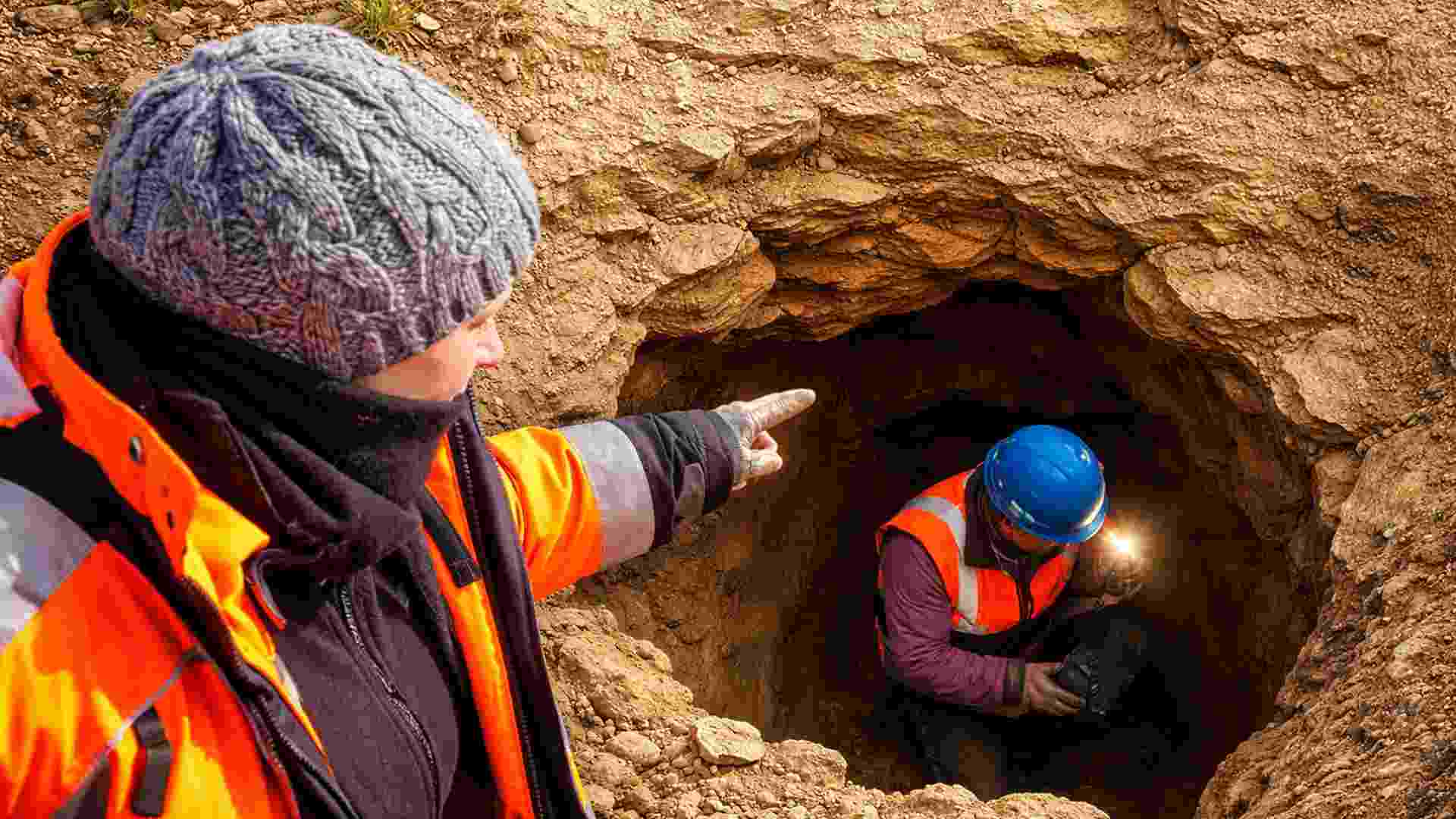
A hole in the road between Plovan and Ty Broc’h, in Finistère, revealed a subterranean cavity dated from 500 to 100 BC, with interconnected chambers, tool marks on the walls, and even medieval pottery, opening a new front for archaeological excavation in Brittany
A hole in the road in Plovan, France, led to the discovery of a subterranean archaeological site attributed to the Gallic period. The case began on a small road between Plovan and Ty Broc’h, where municipal workers noticed that the ground was giving way and identified a much larger cavity beneath the surface.
From this finding, archaeologists were called in to assess the area and concluded that the site could hide an ancient structure. Since March 16, a team has been working on excavations to investigate what was covered by the ground.
The hole in the road revealed a subterranean passage
By enlarging the initial opening, archaeologists found a subterranean passage dated from 500 to 100 BC. The structure fits into a type of cavity already known in Brittany, where more than 400 similar examples have been identified.
-
Ancient 4,000-Year-Old City in Brazil Grew Wealthier and Reduced Inequality, Study Finds

-
Lost Page from Archimedes Palimpsest Resurfaces in French Museum After Decades, May Reveal Hidden Mathematical Calculations with X-ray and Multispectral Imaging
-
Brazilian Education Ministry Announces Tech Benefits for Teachers, Providing Smartphones, Notebooks, and Tablets to Enhance Digital Learning and Professional Development
-
Woman Stranded for Six Months in Brazilian Airport After Losing Passport and Ticket, Faces Agonizing Wait to Reunite with 15-Year-Old Son at Age 56.



Even so, each discovery presents its own characteristics. Archaeologist Muriel Fily, from the Finistère department, emphasized that these cavities are often found by chance, often after episodes of heavy rain.
The structure has interconnected chambers
The site discovered after the hole in the road consists of several chambers connected by smaller spaces. For archaeologists, these environments may have been used by the Gauls to store food.
In one of the chambers, several vertical lines were identified on the walls. These marks may be traces left by the tools used in the excavation of the subterranean structure.
Ancient marks and medieval pottery
Muriel Fily stated that the tool marks found in this chamber were the element that moved her the most during the excavation. The detail reinforces the uniqueness of the site, even within a type of cavity already known in the region.
Another important discovery in the space revealed by the hole in the road was the presence of pottery dated from the Middle Ages. The assessment by the archaeologists indicates that the cavity was likely filled around the 10th or 11th centuries, long after its Gallic origin.


Be the first to react!