Portuguese
  Spanish


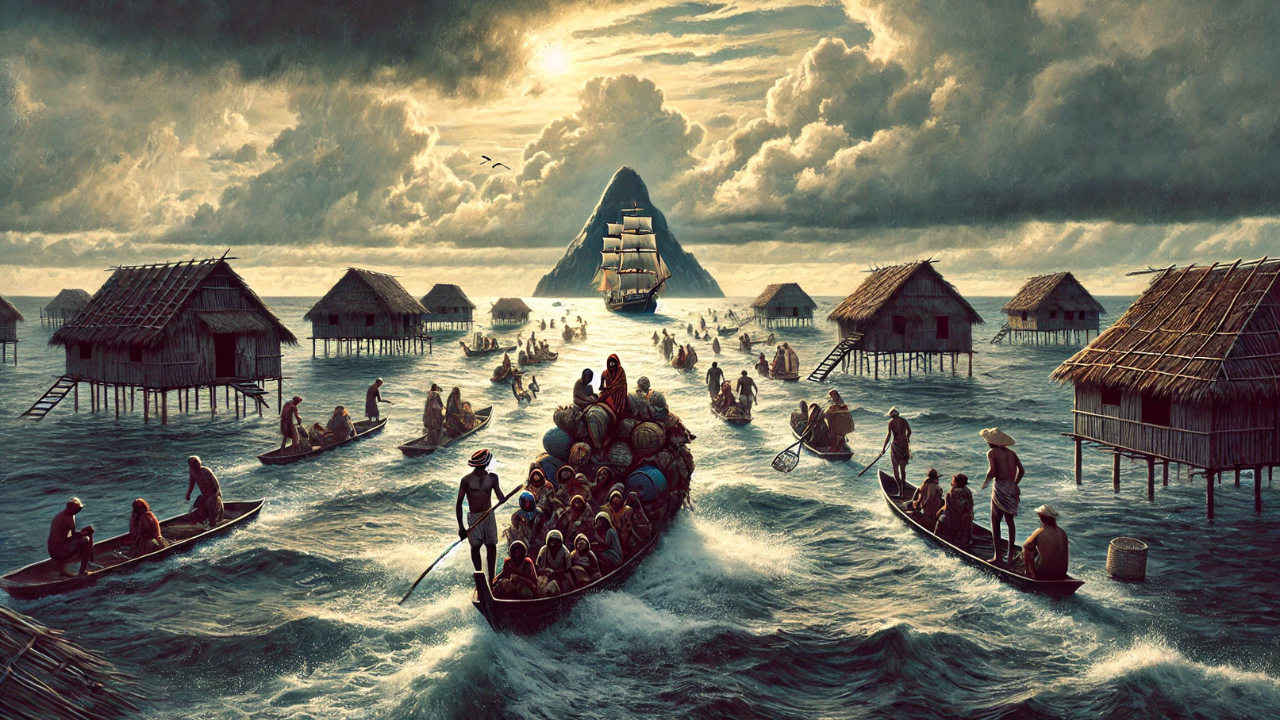

Discover The Struggle Story Of The Guna Community On Gardi Sugdub Island In Panama, Which Is Being Swallowed By The Sea Due To Climate Change
The small island of Gardi Sugdub, located in Panama, is facing an imminent threat due to climate change. The rising sea level, accelerated by global warming, puts at risk the lives of the local residents, who belong to the Guna community.
Regarded as one of the most resilient indigenous groups in the country, the Guna have lived on this island since the 19th century. However, the future of Gardi Sugdub seems increasingly uncertain.
In a move that has gained international attention, the community is being relocated to the mainland, seeking to preserve its culture while facing deep challenges.
-
Former Atacadão Employee Turns Online Cake-Baking Lessons into a Confectionery Brand with Factory, Store, Delivery, and Nearly $400,000 in Revenue

-
Brazilian Startup Sells Nearly 9 Million Surprise Bags of Near-Expiry Food, Prevents Thousands of Tons of Waste, Aiming for $42 Million Revenue by 2026
-
How to Prevent Brown Recluse Spider Bites: Common Hiding Spots and Free Tips to Reduce Risks

-
Natto: The Unusual Japanese Superfood Gaining Popularity on Social Media and Driving Record Exports




From Gardi Sugdub Island To Isberyala: A New Beginning In Panama
Amid the transformation, Delfino Davies, one of the leaders of the Guna community, stands firm in stating: “If the island sinks, I will sink with it.” The phrase reflects the deep bond that he and many other residents have with the land, which for them is much more than a physical place; it is a symbol of identity and tradition.
Looking at the emptiness that has taken over Gardi Sugdub, Delfino remembers what was once a vibrant place: “Before, you could hear children screaming… music everywhere, neighbors discussing. But now all the sounds have disappeared.”
The relocation of Gardi Sugdub, which began to be discussed over a decade ago, is primarily motivated by rising sea levels that are already affecting living conditions on the island.
According to scientists from the Smithsonian Tropical Research Institute in Panama, current sea level rise rates suggest that Gardi Sugdub will be uninhabitable by 2050.
Additionally, the waves during the rainy season invade the houses, further compromising the safety and quality of life for the inhabitants.
The move to a new settlement, Isberyala, has led many community members to leave their wooden and metal homes behind and embark on boats toward new living arrangements.
The new community, located about 15 minutes by boat from the old home, offers prefabricated houses and modern infrastructure. However, the transition has been painful.
“It’s very sad to leave a place where you have been for so long. You miss your friends, the streets where you lived, being so close to the sea,” says Magdalena Martínez, one of the residents who made the move.
Although the new housing brings more comfort, with constant electricity and more space for cultivation, as expressed by Magdalena herself, the changes are not easy for everyone.
The feeling of loss is palpable among those who remained in Gardi Sugdub. The transition is not only physical but also cultural. “People who lose their tradition lose their soul. The essence of our culture is in the islands,” reflects Delfino Davies.
The Cultural Impact And Challenges Of Relocation Amidst Climate Change
The impact of moving from Gardi Sugdub to Isberyala goes beyond adapting to a new home. The Guna have a strong connection to the sea, which is an essential part of their identity.
Fishing is a vital traditional practice for this community, and proximity to the ocean is fundamental for preserving their cultural practices.
However, the new reality requires them to adapt to a more urban life, where Guna traditional culture may be challenged.
Tito López, a community leader, states that while the houses have changed, Guna identity and culture will remain alive. “As long as the net maintains its place in Guna culture, the heart of the Guna people will be alive,” he says, referring to the tradition of using nets as part of daily life.
Still, the infrastructure in Isberyala is not perfect. Although the new community was built with a significant investment of about US$ 15 million from the Panamanian government and support from the Inter-American Development Bank, challenges remain.
Drinking water is provided only for a few hours a day, and there is no medical assistance available.
The construction of a local hospital was halted due to a lack of funding, which poses a significant concern for families who now rely on transportation to the mainland seeking medical care.
The Future Of The Guna And Lessons For The World
The case of Gardi Sugdub and the relocation of the Guna serves as an example of the impact of climate change on vulnerable communities.
Experts state that changes in sea level can affect millions of people in coastal areas around the world, forcing entire communities to relocate.
“We need to learn from these early cases to understand what success looks like,” said Erica Bower, a researcher at Human Rights Watch, emphasizing the importance of analyzing the adaptation of groups like the Guna.
Adapting to the new settlement has brought new opportunities for some, like eight-year-old Jerson, who has already gotten used to playing in sports fields and larger spaces.
For adults, however, nostalgia and attachment to the land remain strong. Magdalena, who now teaches her granddaughter how to sew mola, the traditional colorful garment of the Guna, sees this as an effort to ensure that their cultural roots are not lost. “Our unique ways cannot be lost,” she says.
Amid the challenges of relocation, the Guna community strives to preserve its culture and identity, adapting to the new environment but not forgetting their origins.
The story of Gardi Sugdub in Panama is a reflection of the struggles faced by many other communities around the world that are also being forced to leave their lands in the name of survival.
The issue is not just about adapting to new living conditions but also a struggle to maintain the essence of who they are, even in the face of adversity.