






 Portuguese
  Spanish
 5 min of reading
  2 comments


Binational Giant Altered The Course Of The Parana River And Created A Lake Of 1,350 km², Moving Thousands Of Workers And Transforming The Region Into One Of The Largest Energy And Tourism Hubs On The Continent.
The Itaipu Hydroelectric Plant, on the border between Brazil and Paraguay, is considered one of the largest engineering works of the 20th century.
The project temporarily diverted the Parana River to allow the construction of the dam and formed an artificial reservoir of 1,350 km², equivalent to almost a city the size of Rio de Janeiro.
At the peak of construction, more than 40,000 workers were involved in the project, which began operating in 1984.
-
Coal mine purchased for $2 million in Wyoming, the Brook Mine holds rare earth elements and critical minerals estimated at up to $37 billion, in an asset that the US is competing for with China.

-
In the year Brazil won the World Cup, gasoline cost R$ 1.77, the cheapest car was worth R$ 13,000, there were no flex-fuel cars, SUVs were rare, and no Chinese brand sold a single vehicle in the country.
-
Neighboring Balneário Camboriú will receive a R$ 1 billion airport with 225 hangars, an area of 2.2 million m², a technology park, and an export zone that promises to transform the economy and generate thousands of jobs.
-
After investing R$ 5,000 in fried chicken in his backyard, a Brazilian transformed two fryers and a freezer into a network with 115 sales points, presence in up to 17 states, and revenue exceeding R$ 115 million per year.



Diverting The River And Creating The Artificial Lake
The most complex stage of construction occurred in 1978, when engineers performed the temporary diversion of the Parana River.
The operation, which utilized explosives and containment dikes, was considered a technical milestone in the energy sector, according to historical records from Itaipu Binational.
With the river temporarily contained, it was possible to raise the powerhouse and the main dam.
The reservoir, formed years later, extends from Foz do Iguaçu and Ciudad del Este to Guaíra and Salto del Guairá.
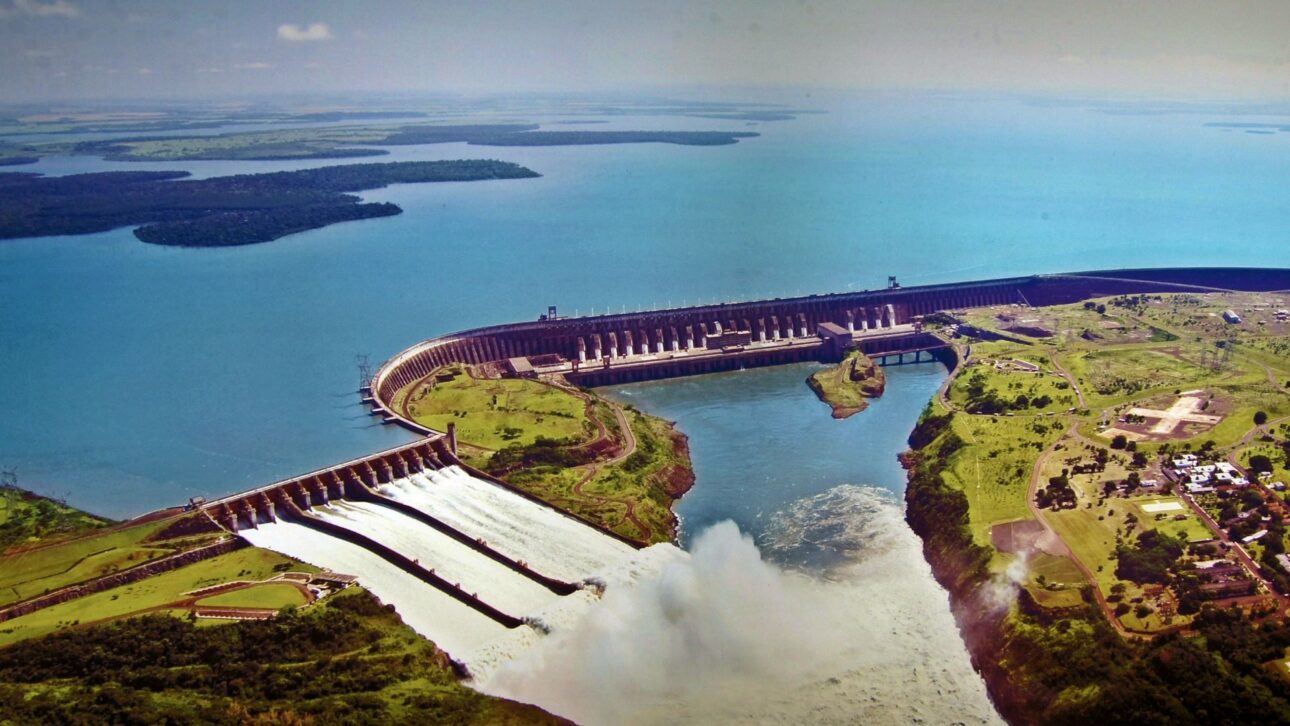
According to official data, filling began in October 1982 and finished in just 14 days.
The new lake ensured a continuous water supply for the turbines and transformed the landscape of the region.
In addition to its energy relevance, the area around the plant began to see a rise in tourism and the service sector, driven by technical visits and educational programs maintained by the binational company.
Generation Capacity And Position In The Global Scenario
The plant has 20 generating units of 700 megawatts (MW), totaling 14,000 MW of installed capacity.
This volume places it among the largest in the world, although it is below the Chinese hydroelectric plants of Three Gorges (22,500 MW) and Baihetan (16,000 MW), according to data from the International Energy Agency (IEA).
The average annual production of Itaipu exceeds 70 million MWh, varying according to the rainfall regime in the Parana Basin.
In 2016, the plant recorded its historical record, with more than 100 million MWh generated, a number that kept it among the world’s largest producers of renewable energy for years.
Energy Division Between Brazil And Paraguay
Itaipu is managed on a binational basis and operates under a treaty signed in 1973.
According to the agreement, energy is divided equally between the two countries.
Since Paraguay’s consumption is lower, the surplus is sold to Brazil, a transaction that represents a significant source of revenue for the neighboring country.
According to Itaipu Binational, this model guarantees energy stability and cooperation between the two nations.
Experts in regional integration note that the project has become one of the most successful examples of shared management of water resources in South America.
Structure And Technical Operation
The Itaipu dam has a height of 196 meters and a length of 7,235 meters.
The spillway — structure that releases excess water — has a capacity of 62,200 m³ per second, a volume greater than that of the Niagara Falls, according to technical information from the plant.
The energy produced is transmitted through a high voltage network that extends for hundreds of kilometers.
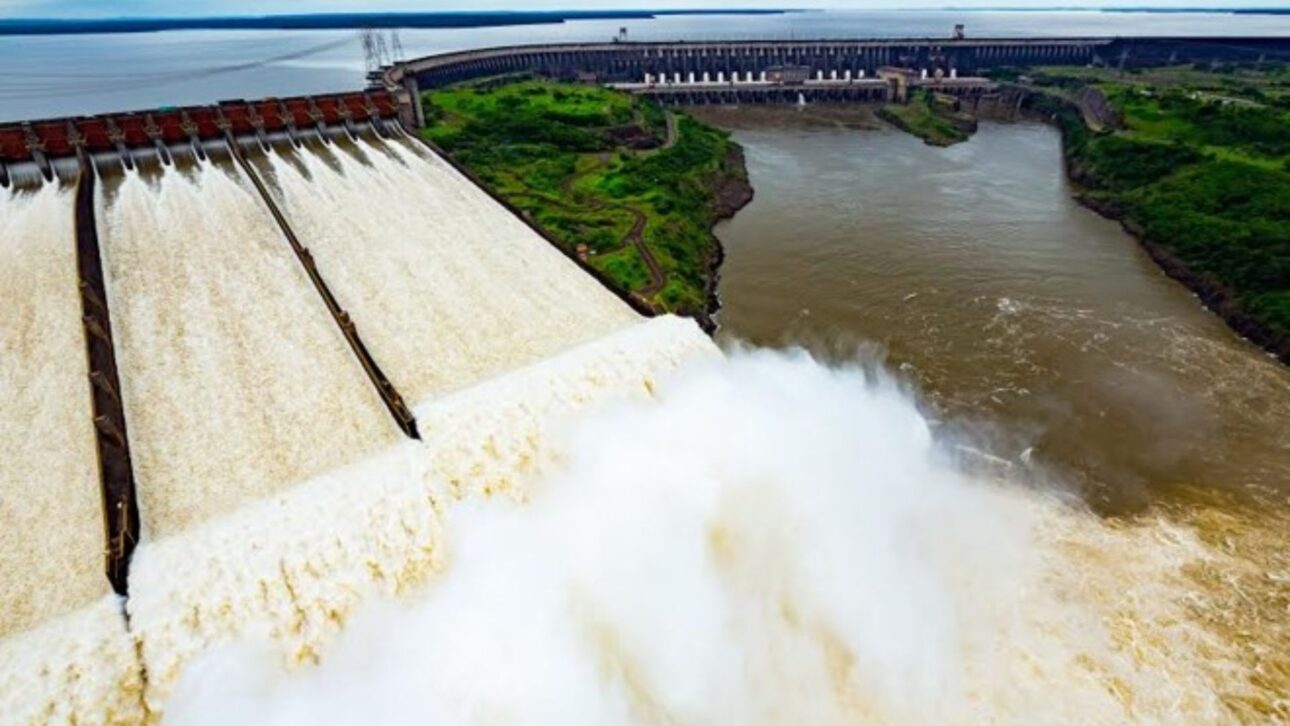
The system supplies a large part of the South and Southeast regions of Brazil and the entirety of Paraguay, functioning under the joint supervision of the two national operators.
Itaipu Binational states that the plant undergoes a permanent technological modernization program, with updates in control, automation, and safety systems.
These measures, according to the company, aim to prolong the life of the structure and maintain efficiency and reliability standards.
Environmental And Social Impacts
The creation of the artificial lake caused significant changes to the territory, with relocation of families, alteration of ecosystems, and submersion of agricultural and forested areas.
Itaipu Binational reports having implemented reforestation and environmental monitoring programs since the beginning of operations, as well as initiatives to restore the affected fauna and flora.
Environmental studies indicate that the reforested area around the reservoir exceeds 100,000 hectares, creating ecological corridors and areas of permanent preservation.
The actions include watershed management and environmental education projects aimed at the local population.
Technical Tourism And International Interest
The plant receives an average of almost 1 million visitors per year, according to data from the Itaipu Tourism Division.
The complex offers guided tours, viewpoints, information centers, and a technical circuit that showcases the operation of the turbines and the functioning of the dam.
According to the company, tourism is today one of the main sources of indirect income for the region, alongside commerce and the service sector.
Aside from economic interest, Itaipu has become an international reference in technical and scientific cooperation, hosting delegations of engineers and students from various countries.
The project is also cited in UN reports as an example of binational partnership in clean energy generation.
Costs And Financing
The total investment in the construction of the plant is estimated at US$ 27 billion, according to historical data from Eletrobras and Itaipu itself.
The amount was financed mainly through international loans and the sale of energy over the following decades.
In adjusted values, the cost exceeds R$ 90 billion, according to infrastructure specialists.
The financial model adopted was based on sovrerain guarantees from both countries, which allowed to make the project feasible without direct involvement of private capital.
Economists consulted by specialized outlets point to Itaipu as one of the largest energy investments ever made in Latin America.
Modernization And Perspectives
Itaipu Binational has maintained a technology upgrade program since 2019 to renew electrical, hydraulic, and automation systems.
According to the company, the objective is to ensure operational efficiency and comply with international dams safety standards.
According to analysts in the electric sector, modernization is necessary to guarantee the competitiveness of the hydropower matrix and sustain energy integration between Brazil and Paraguay in the coming decades.
The same studies indicate that Itaipu’s role will continue to be central, especially in light of the expansion of renewable sources and the global effort to reduce carbon emissions.
The complex, which has completed over 40 years of operation, remains one of the main sources of clean energy in South America.
What stands out most about Itaipu, according to engineers and researchers, is the combination of scale, efficiency, and shared management.


Fui diagnosticada com doença de Parkinson há quatro anos. Por mais de dois anos, dependi da levodopa e de vários outros medicamentos, mas, infelizmente, os sintomas continuaram piorando. Os tremores se tornaram mais perceptíveis e meu equilíbrio e mobilidade começaram a declinar rapidamente. No ano passado, por desespero e esperança, decidi experimentar um programa de tratamento à base de ervas da NaturePath Herbal Clinic.
Sinceramente, eu estava cética no início, mas, poucos meses após o início do tratamento, comecei a notar mudanças reais. Meus movimentos ficaram mais suaves, os tremores diminuíram e me senti mais firme ao caminhar. Incrivelmente, também recuperei grande parte da minha energia e confiança. Tem sido uma experiência transformadora. Me sinto mais eu mesma novamente, melhor do que me sentia há anos. Se você ou um ente querido está lutando contra a doença de Parkinson, recomendo muito que você considere a abordagem natural deles. Você pode visitar o site deles em www. naturepathherbalclinic .com
Tempos bom que se construía e não tinha desvio de recursos,hoje se for fazer uma obra dessa os politicos **** acabam com o brasil,que ja esta acabado