Portuguese
  Spanish


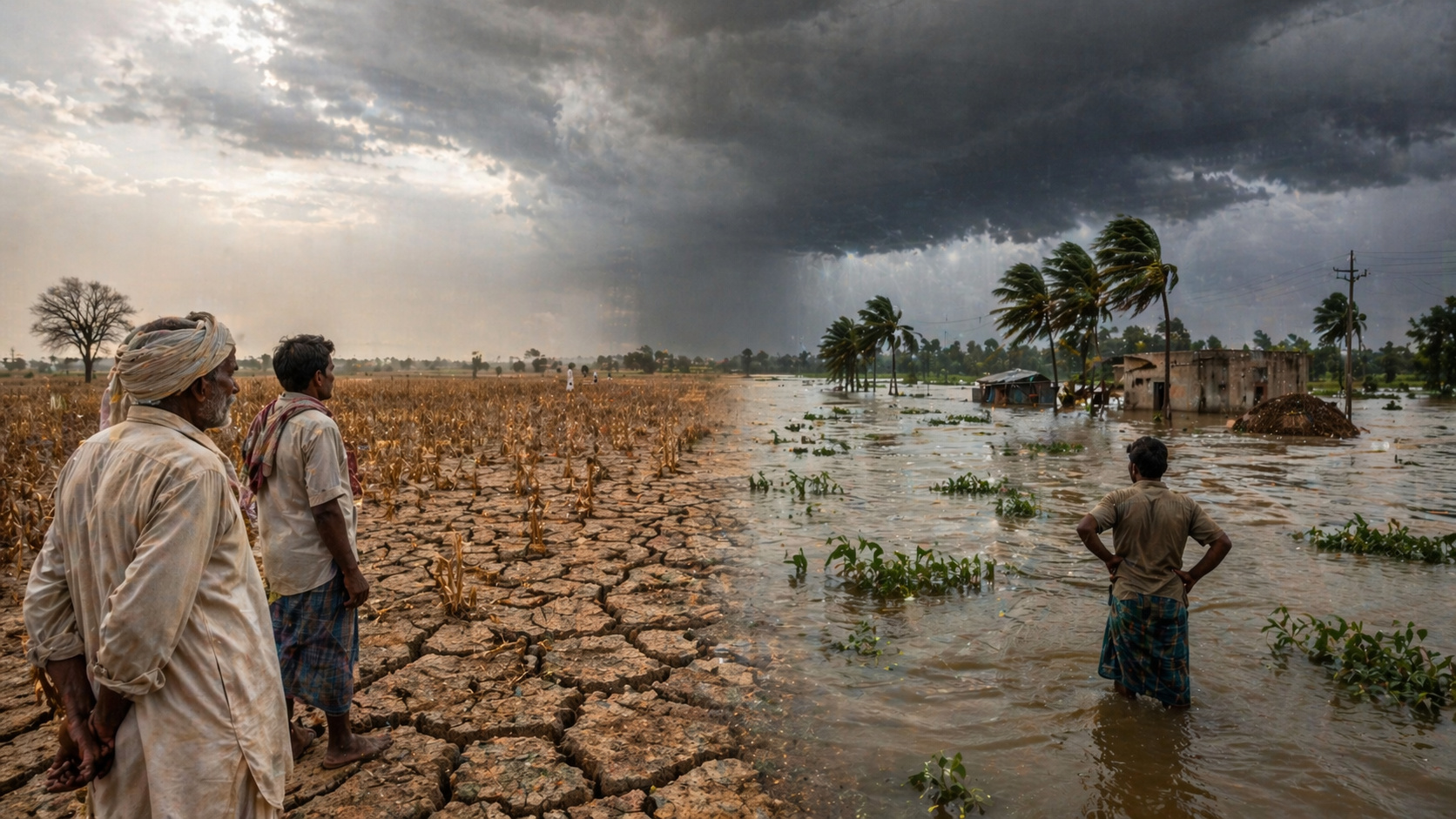


Scientists warn that the Asian monsoon may enter abrupt breakdown and affect billions with droughts, floods, and impacts on food production.
In 2025, researchers from international institutions published analyses in scientific journals pointing to concerning signs of instability in the Asian monsoon, one of the planet’s most important climate systems. Studies released in scientific journals linked to The Innovation Geo and widely cited by climate research centers indicate that this system may be approaching a point of abrupt change, with consequences that extend far beyond Asia. The Asian monsoon regulates the rainfall regime in countries such as India, China, Bangladesh, Pakistan, Thailand, and Vietnam. It is estimated that more than 2 billion people depend directly or indirectly on this system, whether for agriculture, water supply, energy generation, or ecosystem maintenance.
The central warning from researchers is that the system already shows signs of weakening and increasing variability, which may indicate proximity to a critical breaking point.
What is the Asian monsoon and why does it function as a “climate engine” of the planet
The Asian monsoon is a seasonal atmospheric circulation system that occurs due to the temperature difference between the Asian continent and the surrounding oceans.
-
In Rural Brazil, José Sirval Operates a Water-Powered Mill Grinding 125 Kilograms of Corn Daily Using His Great-Grandfather’s Century-Old Monjolo

-
From Market Stall to Agribusiness: Patagonian Fruit Grower Owns 550 Hectares and Processes 18 Million Kilos of Pears and Apples Annually, Exporting Directly to Brazil
-
At 93, Brazilian Farmer Restores 56 Hectares of Forest and Revives Spring in the Amazon, Installs First Climate Tower in the Region
-
Brazilian Cheesemaker Wins European Award for Ant-Infused Cheese with Nutty Flavor Inspired by Indigenous Tradition


During the summer, the continent heats up more quickly, creating a low-pressure area that attracts moist winds from the ocean. These winds carry large volumes of water vapor, which condense and generate intense rainfall.
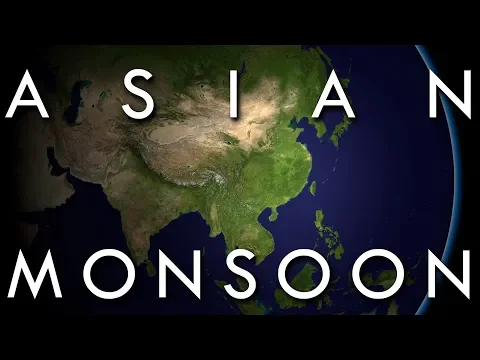

In winter, the process reverses, with dry winds blowing from the continent to the ocean. This annual cycle sustains one of the largest climate engines on Earth, being essential for:
- Large-scale agriculture
- Reservoir replenishment
- Food production
- Balance of ecosystems
Any alteration in this system can generate immediate and broad impacts.
Warning signs include more extreme variations and irregular rainfall behavior
Recent studies highlight that the Asian monsoon is not simply becoming weaker or stronger, but rather more unstable. This means that the system is starting to present:
- Longer dry periods
- More intense and concentrated rainfall episodes
- Changes in the start and end of the rainy season
This variability increases the difficulty of forecasting and reduces the adaptability of populations, especially in agricultural regions.
Research based on historical data and climate simulations shows that extreme events have become more frequent in recent decades, which reinforces the scientific warning.
Climate change and global warming are altering the behavior of the monsoon
The main factor pointed out by researchers to explain these changes is global warming. The increase in temperature directly affects the dynamics of the atmosphere and oceans, altering circulation patterns and moisture distribution.
The warming of the Indian Ocean, for example, can modify the amount of vapor available for rainfall formation, while the warming of the continent alters pressure gradients that sustain the system.
Additionally, the melting of ice in the Himalayas and changes in snow cover also influence the behavior of the monsoon. These combined factors create a more sensitive system prone to abrupt changes, raising the risk of collapse.
Possible breaking point could trigger collapse in agricultural and water chains
Scientists warn that if the monsoon crosses a critical point, the impact could be rapid and profound. A significant weakening of the system could result in severe droughts in regions that rely on rain for agricultural production.
On the other hand, uncontrolled intensification could cause devastating floods. This imbalance could compromise food production on a continental scale, affecting global markets and food security. Countries highly dependent on the monsoon, such as India and Bangladesh, are especially vulnerable.
Impacts could spread beyond Asia and affect global climate
Although the Asian monsoon is a regional phenomenon, its effects are not limited to Asia. Global atmospheric circulation is interconnected, and changes in large systems can reverberate in other parts of the planet.

Changes in the monsoon can influence climate patterns in distant regions, including:
- Africa
- Middle East
- Europe
- South America
This occurs because the system is part of a complex network of interactions between oceans and the atmosphere.
Studies indicate that early warning signs may already be present
One of the focuses of recent research is the identification of early signs of collapse. Scientists analyze patterns of variability, changes in rainfall intensity, and long-term behavior to identify possible transitions.
These signs include increased irregularity, loss of stability, and greater sensitivity to external disturbances, typical characteristics of systems close to critical points.
Although there are still uncertainties about the exact timing of a possible rupture, data indicate that the system may be approaching a limit.
Social and economic consequences could affect billions of people
The potential impact of monsoon instability goes beyond climate science. It directly involves issues such as:
- Food security
- Access to water
- Urban infrastructure
- Economic stability
Densely populated regions may face simultaneous crises of supply, agricultural production, and natural disasters, amplifying social risks. Additionally, changes in the monsoon may affect global production and trade chains, given Asia’s economic importance.
Do you believe that the world is prepared for an abrupt change in a system that sustains billions
The warning about the Asian monsoon highlights the complexity of the global climate system. When a mechanism that sustains billions of people begins to show signs of instability, the impact is not only regional but global.
The possibility of a sudden rupture raises questions about the adaptability of entire societies in the face of rapid changes. The challenge involves not only understanding the phenomenon but also anticipating its effects and preparing responses on an adequate scale.
The central question remains: to what extent can essential natural systems change before their impacts exceed human response capacity.