Portuguese
  Spanish


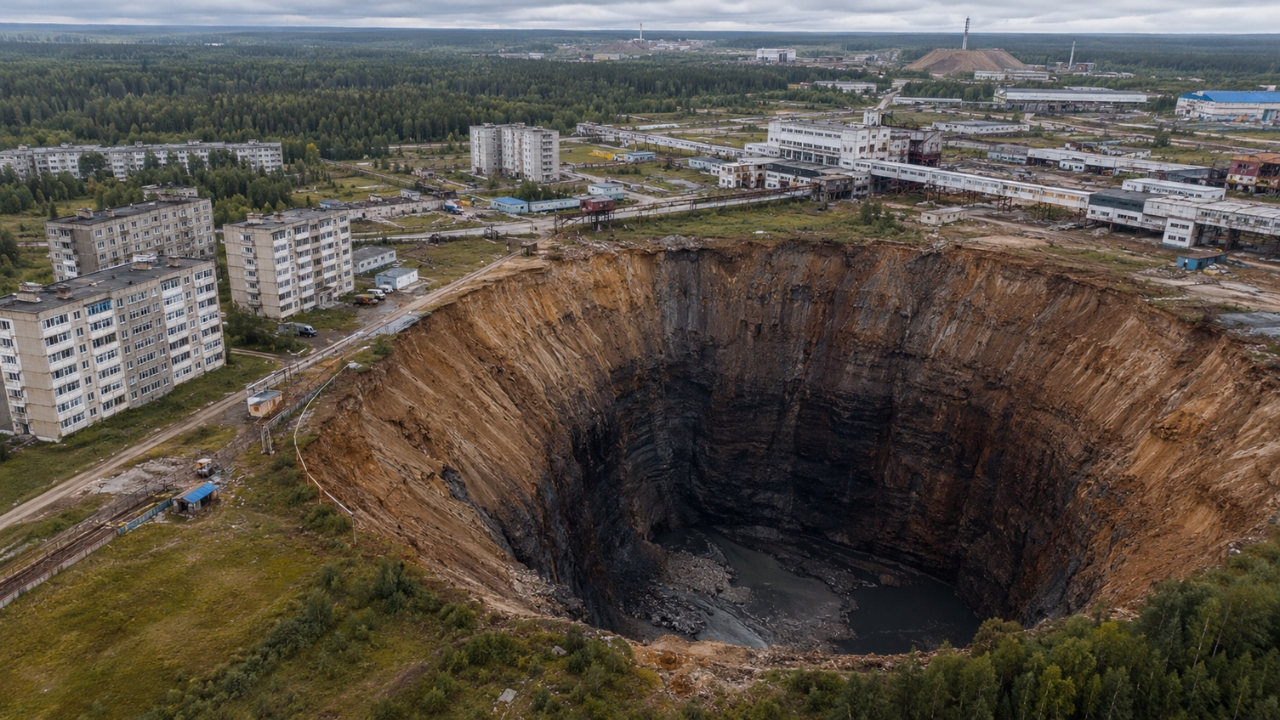

The population of Berezniki fell by 30% in four decades, 12,000 residents will still be relocated, and the ground continues to sink, but Brazil buys 40% of its potassium chloride from this region without having a consolidated alternative plan.
Underneath Berezniki, in the Ural Mountains, there is a skeleton. There are 390 square kilometers of tunnels and caves excavated between 220 and 450 meters deep, the legacy of decades of potash mining that turned the city into the world capital of fertilizer. The problem: this skeleton is sinking, and the city is being swallowed by its own ground.
A city built on a Soviet trap
The story of Berezniki begins with a decision that seems absurd today. The Soviet policy dictated that labor camps be installed next to the mines, without any geotechnical risk analysis. The city grew, gained factories, buildings, and families, all built directly over one of the largest potash reserves on the planet.
For decades, the mines brought prosperity. Uralkali, a Russian giant in the sector, operates five mines and seven plants in the cities of Berezniki and Solikamsk. After merging with Silvinit in 2011, the company came to account for 20% of the world’s potash production. The mineral extracted there fed crops on all continents, including and especially Brazilian agribusiness.
-
Coastal City in Rio de Janeiro Faces Slow Destruction as Sea Claims 500 Homes and Businesses

-
48-Year-Old Woman Wins Million-Dollar Prize, Gifts Neighbor First International Trip as Thanks for Years of Support

-
Women Once Mocked for Collecting Trash Form Group to Turn Organic Waste into Compost, Generate Daily Income, and Improve Market Cleanliness in One of the World’s Lowest GDP per Capita Countries
-
Archaeologists Uncover 40,000 Roman Bronze and Copper Coins from the 3rd Century in Fire-Destroyed French Neighborhood


The collapse that no one predicted until it happened
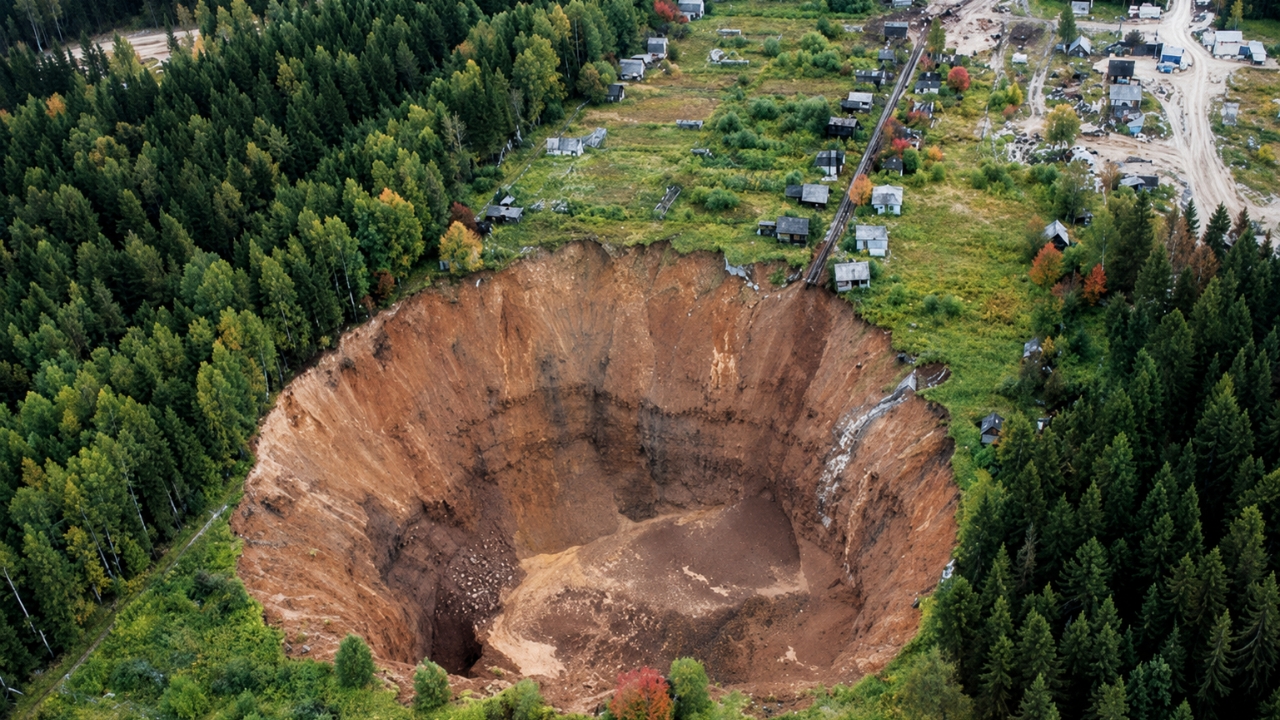
In October 2006, small tremors began to shake Berezniki. The water from the Kama River had silently infiltrated an abandoned mine, dissolving the salt pillars that supported the ceiling of the caves 400 meters deep. The subsoil simply imploded.
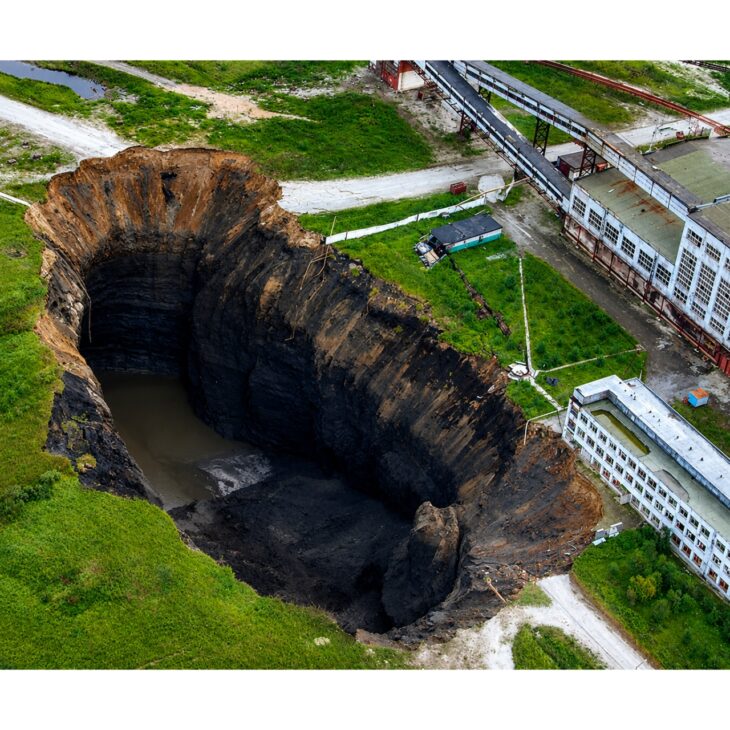
The immediate result was a crater the size of 17 football fields, deep enough to swallow a 50-story building. By 2008, this sinkhole already measured 423 meters in length, 310 in width, and 100 meters in depth. In November 2010, a second hole appeared, nicknamed “The Young One,” which destroyed a section of the railway and swallowed a parked passenger car.
A city monitored 24 hours without a response to the inevitable
Today, Berezniki lives under permanent surveillance. 24-hour cameras, seismic sensors, and satellite monitoring track every millimeter of ground movement. Cracks run through entire walls of residential buildings. In the non-flooded caverns, pockets of explosive gas accumulate, capable of causing sudden collapses.
By 2018, the city already had 10 active sinkholes. About 60 apartment blocks were classified as uninhabitable, and industry estimates indicate that 12,000 residents will still need to be relocated soon. The population, which reached 185,000 people in the 1980s, shrank to 132,841 inhabitants in 2025, a decrease of nearly 30% in four decades.
Closing the mines is not an option
Despite the progressive collapse, Berezniki still accounts for about 10% of the world’s potash production. The mines continue to operate because they represent the only economic support for the entire region. Closing everything would mean an immediate social collapse. The city literally lives by extracting the mineral that is destroying its own ground.
Brazil is at the center of this equation and depends heavily on it
Here comes the data that changes everything for the Brazilian reader. Brazil is the 4th largest consumer of fertilizers in the world, accounting for 8% of the global total. And 97% of the potash consumed in the country is imported. Of this total, 40% comes directly from Russia, a dependency that Alberto Pfeifer, a researcher at Insper Agro Global, defines as the “Achilles’ heel of Brazilian sovereignty”.
In 2024, Brazil spent US$ 3.7 billion on Russian fertilizers, equivalent to 27% of the entire national import of the input. The potassium chloride, the same extracted from the mines under Berezniki, represented 43% of everything the country imported in fertilizers. Without this mineral, the production of soy, corn, and sugarcane collapses.


What happens to food prices when the city sinks for good
In 2022, when the war in Ukraine threatened Russian supply, international fertilizer prices rose 129% in a few months. According to research by Insper Agro Global, in the short and medium term, Russia will continue to be a central and hardly replaceable supplier for Brazil. Alternatives like Canada and Morocco exist, but it would take years to make up for the Russian volume.
Brazil competes with the USA as the world’s largest soybean exporter, and this dispute is fought with Russian potash, extracted from a city that is being swallowed by the underground. The geological risk of Berezniki is not just a local drama. It is a strategic vulnerability of the national agribusiness that rarely appears in public debate.
The soil of Berezniki will continue to give way. The question that Brazil has not yet answered is: what happens to our crops when it gives way for good?