Portuguese
  Spanish


In Senon, in northeastern France, a 1,500 m² excavation revealed three jars with Roman coins from the 3rd century, an estimated deposit of up to 40,000 pieces, houses with hypocaust, paved streets, and fire marks that ended the neighborhood’s occupation
A jar buried under the floor of ancient houses in Senon, in northeastern France, revealed one of the region’s most impressive archaeological discoveries: thousands of Roman coins stored in ceramic containers, in a neighborhood that spanned centuries of occupation, fires, and abandonment.
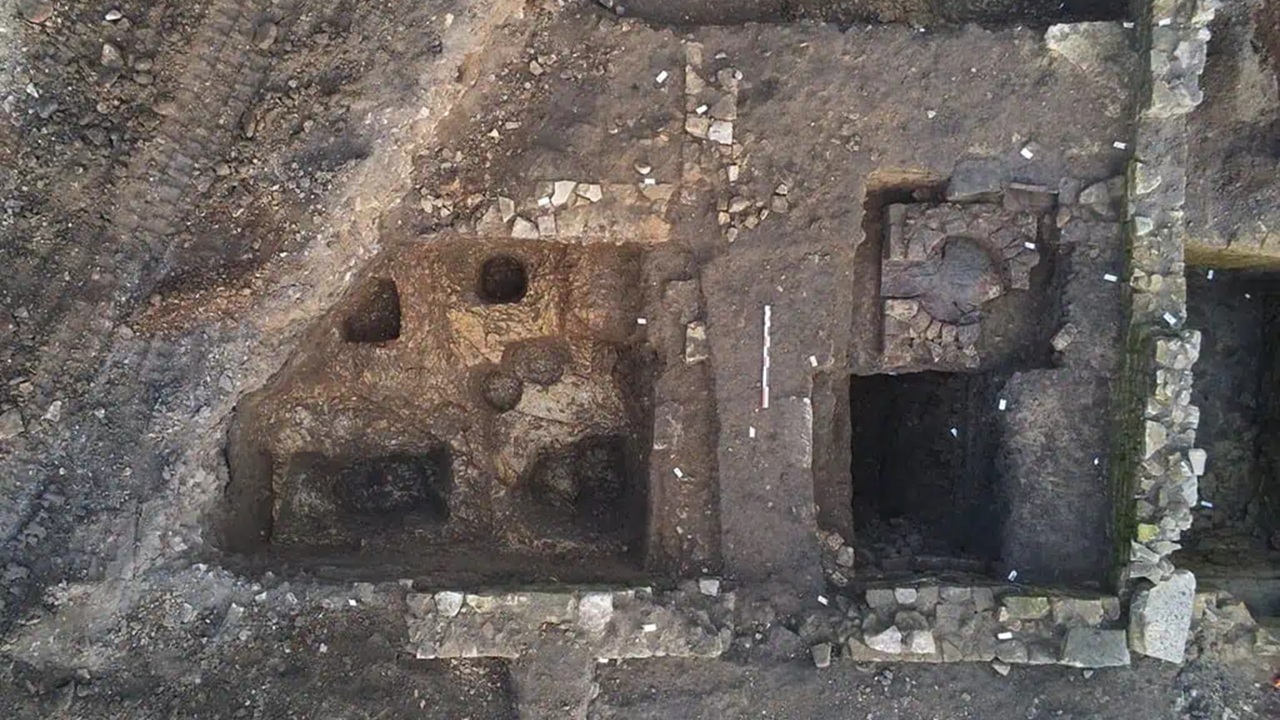
The discovery occurred during a preventive excavation conducted by the National Institute for Preventive Archaeological Research of France, the Inrap. The investigated area is 1,500 square meters and lies beneath the current city of Senon, where modern works led archaeologists to examine the subsoil.
The work revealed an ancient neighborhood that began as a Gallic settlement, underwent intense Roman transformation, and ended buried after successive fires. Among the remains, three large ceramic containers drew attention for containing bronze and copper coins from the 3rd century.
-
From Collecting Trash in Brazil to Becoming a Doctor: Cícero’s Journey with a Full Scholarship

-
Henry Ford’s Abandoned Amazon Town Faces Daily Fines as Brazil Seeks to Preserve Fordlândia Ruins

-
Brazilian Scientist Wins $100,000 for Decoding Bird Songs That Convey Identity and Social Information
-
Brazilian National Team Traveled by Ship to First World Cup, Boarding Conte Verde to Reach Uruguay





Jar with coins reveals financial routine at the end of the Roman Empire
The containers were sunk into the ground, with the necks aligned with the floor level. The arrangement suggests that they remained accessible within the houses, allowing coins to be removed or added over time.
In one of the deposits, the initial estimate points to 38 kilos of coins, something between 23,000 and 24,000 pieces. Another container may have held up to 19,000 coins. Combined, the sets could exceed 40,000 pieces.
The coins feature images of rulers such as Victorinus, Tetricus I, and Tetricus II, linked to the so-called Gallic Empire, a political structure that separated from Rome during part of the 3rd century.
The quantity is impressive, but archaeologists avoid treating the find merely as a treasure hidden in an emergency. The highlighted hypothesis is that the containers functioned as a sort of domestic bank, used to store valuables within the residence.
This interpretation gained strength because coins were found stuck to the outside of two containers. The detail indicates that new pieces may have been added after the vessels were already buried, before the cavities were closed.
Ancient neighborhood shows how Senon grew before and after Rome
In the deepest layers, the excavation found pits, ditches, and post holes that supported ancient wooden and clay constructions. These remains show that Senon was already densely occupied before the Roman conquest.
The earliest phase dates back to the period between the mid-2nd century BC and the time when the region was occupied by the Mediomatrici, a Celtic people whose capital was in Divodurum Mediomatricorum, present-day Metz.
With the arrival of Roman rule after Julius Caesar’s campaigns in Gaul, the settlement entered a new stage. Archaeologists identified more than a dozen small limestone quarries, some almost three meters deep.
These extraction areas were located behind the houses and were later repurposed for storage or domestic uses. The limestone helped sustain a cycle of constructions that changed the urban landscape for several centuries.
By the end of the 1st century, the neighborhood already had paved streets, rows of stone houses, lime floors, ovens, cellars, and hypocaust heating systems. The findings indicate residents with some prosperity, possibly artisans or merchants.
Fires ended the occupation and hid the deposits
Layers of ash show that the neighborhood suffered significant fires. One of them, at the beginning of the 4th century, marked a decisive change. It was in this context, possibly between 280 and 310, that the containers with coins were left under the floor.
Even after the destruction, the population rebuilt part of the houses. Old cellars were repurposed, and broken columns or temple stones were incorporated into new walls, indicating that public buildings were already abandoned.
Life continued for about half a century until another fire hit the area around the mid-4th century. This time, the inhabitants did not return. The houses collapsed, the courtyards were covered with debris, and the deposits disappeared.
Over the centuries, orchards grew over the site. By the 18th century, the area was already used as agricultural land. The rediscovery only occurred now, during the expansion of a private property.
After the coins were removed, the collection underwent cleaning and numismatic analysis. Since the discovery occurred during a preventive excavation, the site was digitally recorded in 3D, then refilled and returned to the owner.
Why ancient coins help to understand a city
Ancient coins do not only reveal values or faces of rulers. In an excavation, they help to date layers, identify periods of economic circulation, and understand how people dealt with money in daily life. When they appear inside houses, workshops, or commercial areas, they can indicate practices of payment, savings, and domestic organization. In the case of Senon, the buried jars also show how simple objects, like ceramic containers, could gain a financial function. This type of find links archaeology to practical life: it not only shows major events but also common decisions made by the residents of a city in transformation.