






 Portuguese
  Spanish


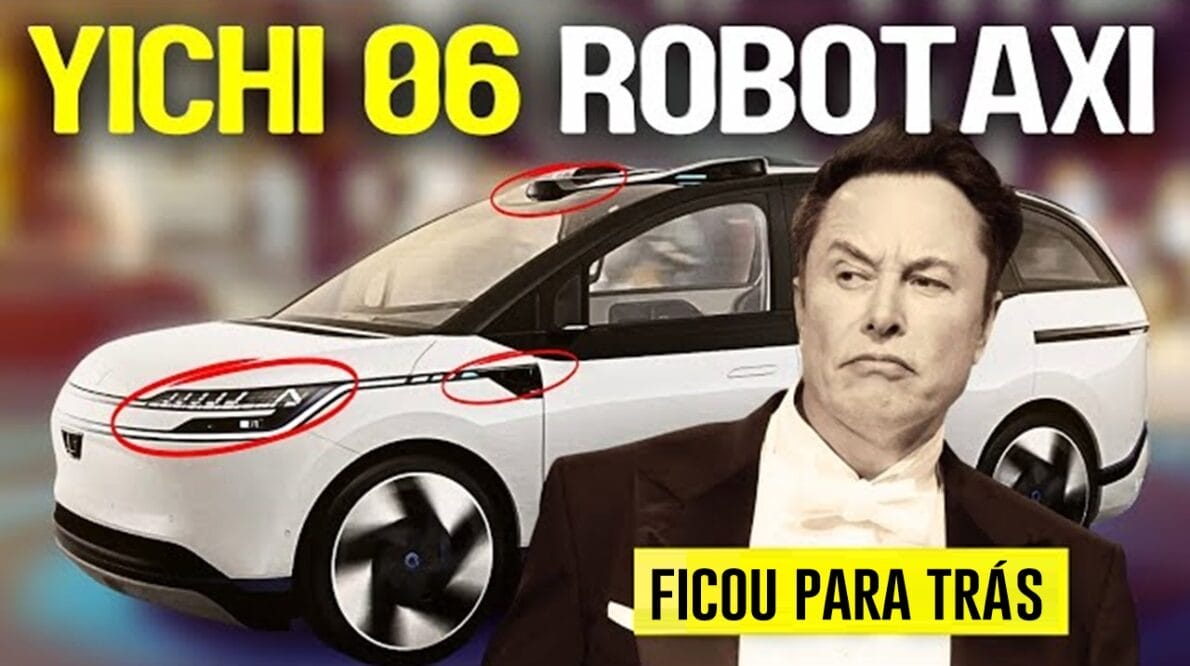

Tesla Announces The Cybercab For 2027, But A Chinese Brand Has Already Surpassed This Innovation With A More Advanced Robocab, Without A Steering Wheel, With Millions Of Trips Made And At A Much Lower Cost.
The advancement of autonomous driving technologies is creating a real race in the automotive sector, with major companies, such as Tesla Cybercab, seeking to create the next big innovation. Among the main participants in this scenario is the giant Chinese Baidu, often referred to as “Chinese Google“. Recently, Baidu launched its latest robocab model, the Yichi 06, which is redefining the concept of autonomous transport by combining cutting-edge technologies, financial accessibility, and large-scale operation.
The Launch Of The Robocab Yichi 06: Challenger Of The Cybercab
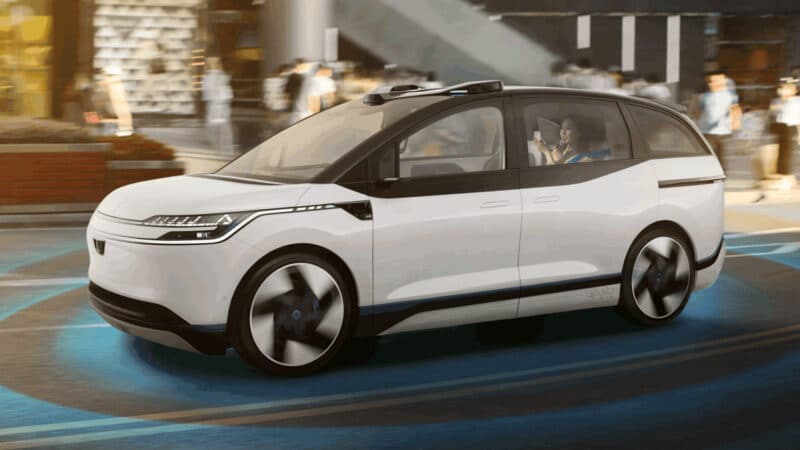
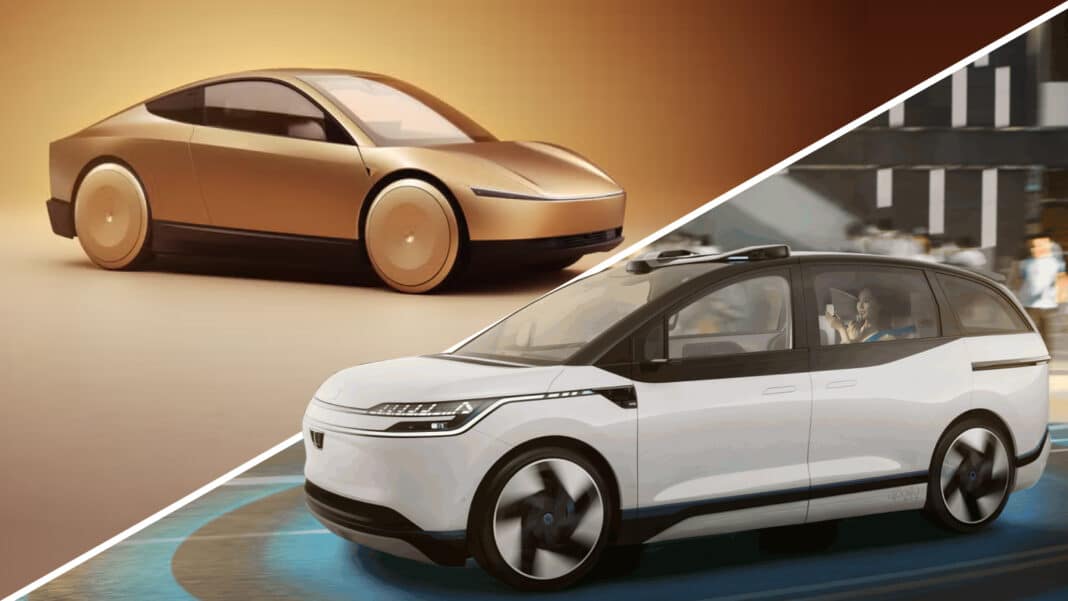
At a time when Tesla CEO Elon Musk unveiled the highly anticipated Tesla Cybercab, an autonomous taxi with promises of hitting the market before 2027, Baidu is already operating its own robocab on the streets of China.
The Tesla Cybercab, with an estimated price of under $30,000, promises to be an innovation for transport, but Baidu’s Yichi 06 is already a step ahead, with a competitive price of around $29,000.
-
Electric and Hybrid Cars Set to Transform Brazilian Streets: A New Era Begins

-
Chinese Giant Invests $1.3 Billion in Brazil to Produce 50,000 Cars Annually, Create Jobs, Develop Local Suppliers, and Manufacture Electric, Hybrid, and Combustion Models by 2027

-
Unprecedented achievement in India: a colossal 650-ton, nearly 3,000 hp excavator is transformed into 100% electric, marking a new phase in heavy mining.
-
Frightened by the speed of Chinese manufacturers, Renault decided to mimic the pace, made the new electric Twingo in just 21 months, wants to repeat the feat with 36 models by 2030, and along the way, will cut up to 2,400 engineering positions.

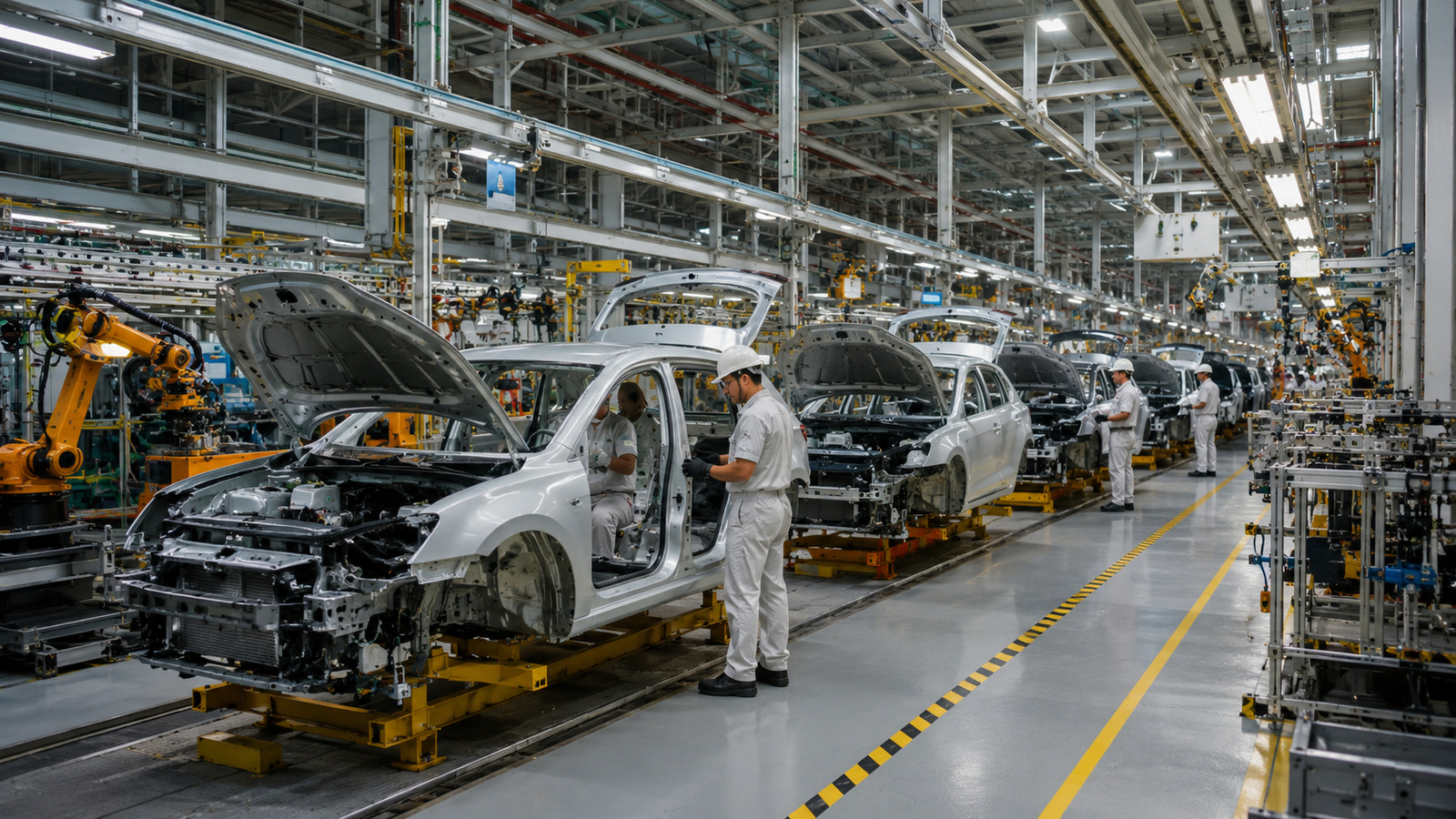
This model, produced in partnership with JMC, is already available and running on Chinese roads, proving to be a viable and accessible alternative in the autonomous taxi market.
The Technological Power Of The Yichi 06
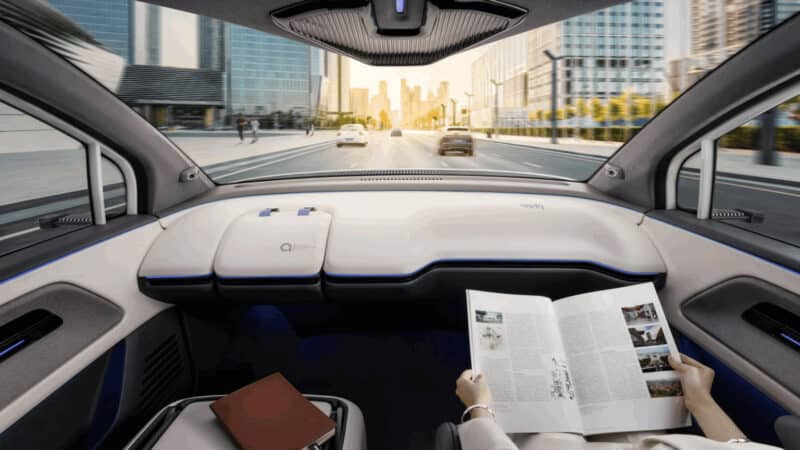
The Yichi 06, also known as Apollo RT6, is a minimalist electric vehicle that stands out for its advanced autonomous driving technology.
With compact dimensions and a modern style, the model features four seats and sliding rear doors, providing a comfortable and safe travel experience.
The sixth-generation autonomous driving system, developed by Baidu’s Apollo platform, is the main feature of the Yichi 06, with 40 integrated sensors, including 5 LiDAR units. These sensors enable the vehicle to navigate with precision and safety, even in complex traffic scenarios.
In addition to the sensors, the Yichi 06 is equipped with processors that reach a processing capability of 1,200 TOPS (Tera Operations Per Second), a level of performance that supports the Level 4 (L4) autonomous system.
This level of autonomy means that the vehicle can operate completely independently in complex situations, without the need for human intervention. A notable feature of the Yichi 06 is that it can be sold without a steering wheel, standing out as a true next-generation autonomous vehicle.
Large-Scale Operations
Baidu has been heavily investing in the development of its autonomous transport platform, called Apollo Go. In July 2024, the company announced that its fleet of robocabs had completed over 7 million trips, solidifying its position as one of the leaders in the autonomous transport market.
In the second quarter of 2024, Apollo Go performed around 899,000 trips, representing a significant 26% increase compared to the same period last year.
These numbers are impressive, especially when compared to Google’s robocab service operated by Waymo, which serves about 100,000 paid trips per week in cities like Los Angeles, San Francisco, and Phoenix. The rapid expansion of Apollo Go highlights Baidu’s commitment to transforming urban transport with autonomous solutions.
Cost Reduction And Future Prospects
One of Baidu’s greatest achievements with the Yichi 06 was the significant reduction in production costs. In May 2024, the company announced it had managed to decrease the manufacturing cost of the Yichi 06 by 60%, resulting in a final price of 204,600 yuan (approximately $28,950).
This cost reduction was crucial in making the vehicle more accessible and viable for large-scale implementation. JMC, the manufacturer of the Yichi 06, has already delivered 1,000 units to the Apollo Go fleet, meaning these vehicles are already circulating on the streets of China.
With the autonomous taxi market in China projected to reach a value of $165.2 billion by 2025 and $410.2 billion by 2030, Baidu is strategically positioned to capitalize on this opportunity. The company has also announced plans to expand its robocab service outside China, with launches expected in other countries over the coming years.
This move puts Baidu in a prominent position in the global autonomous vehicle landscape, especially compared to competitors like Tesla.
Comparing The Yichi 06 With The Tesla Cybercab
While the Tesla Cybercab is still in development and expected to launch before 2027, the Yichi 06 is already operating successfully. Both vehicles share similarities, such as the ability to operate without a steering wheel and the promise of making transport more accessible with prices below $30,000.
However, Baidu’s advantage lies in its ability to execute on a large scale, with millions of kilometers already traveled and millions of trips completed.
Elon Musk has great ambitions with the Tesla Cybercab, but Baidu, with the Yichi 06, has already proven to be a force to be reckoned with in the autonomous transport market. With its advanced technology, robust operation, and competitive pricing, the Yichi 06 positions itself as a leading candidate to revolutionize urban transport in the coming years.






Test
e
****