





 English
  6 min of reading
  0 comments


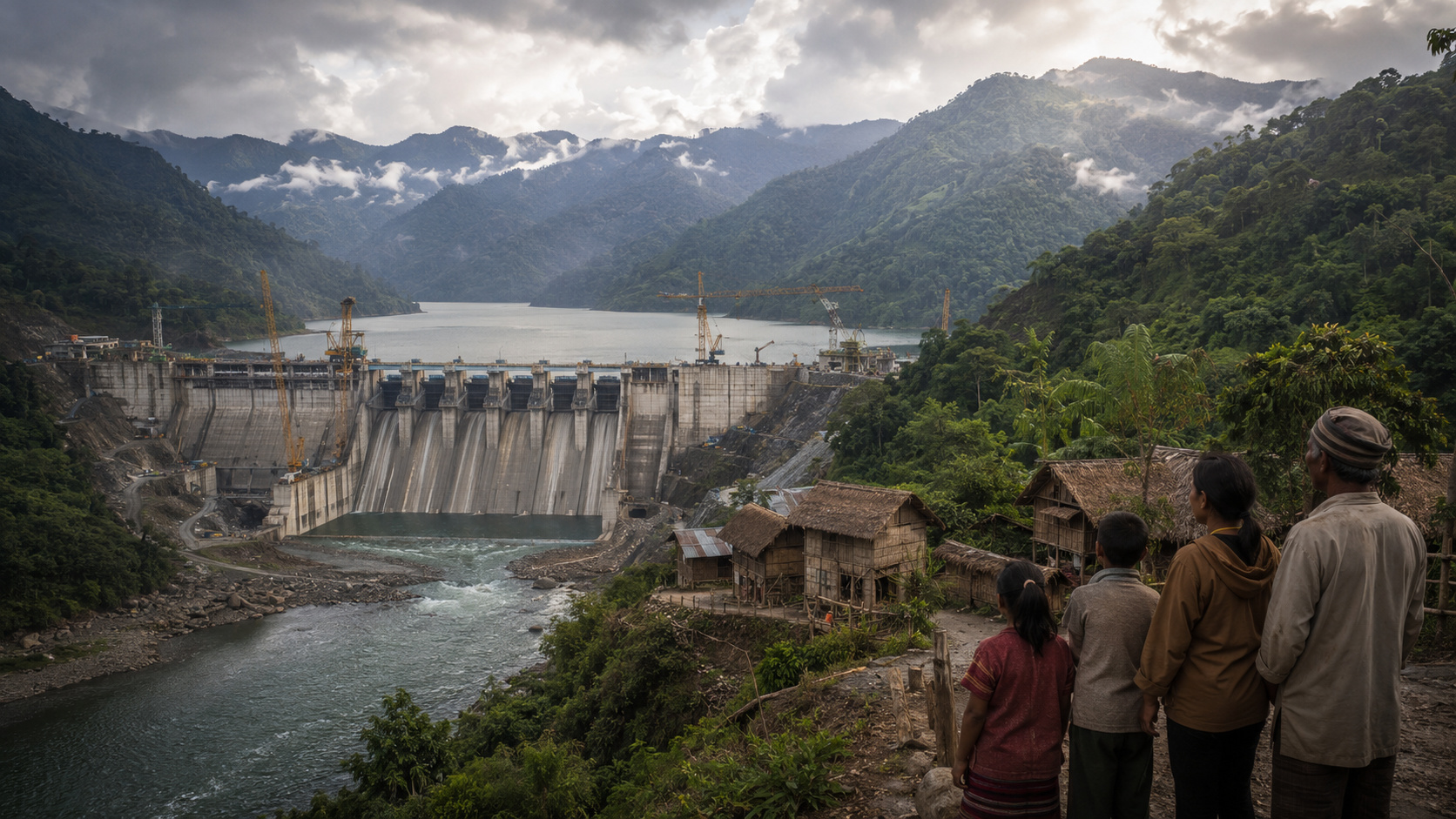
The Kaliwa Dam promises to strengthen Manila’s water supply with 600 million liters per day, but indigenous residents of the Sierra Madre fear losing homes, ancestral territory, and part of life connected to the Kaliwa River.
The dam, a US$ 211 million project in the Philippines, promises to quench Manila’s thirst with 600 million liters of water per day, but indigenous residents of the Sierra Madre fear losing homes in the mountains. The Kaliwa Dam project has become a dilemma between urban supply and the protection of communities living near the Kaliwa River.
The information was published by the Philippine Center for Investigative Journalism, an investigative journalism organization based in the Philippines. The publication was released on December 28, 2024 and showed that the dam should still be treated as a work in progress, with risks pointed out by residents, indigenous leaders, and evaluations of the area.
The case draws attention because it does not involve a hydroelectric plant. The Kaliwa Dam is a dam aimed at water supply. In simple terms, it was designed to store water and help send this water to Manila, not to generate electricity.
-
A Brazilian city launched “Operation Tom & Jerry,” releasing an army of cats to hunt rats along the coast, and saw the plan spiral out of control after animal abandonment, an explosion of the feline population, and a new public health issue.

-
A student from São Paulo named Júlia Ramos Genzini creates a thermal method that separates the fiberglass from the resin of wind turbine blades, winning 1st place in Engineering at USP’s Febrace and tackling waste that could amount to 43 million tons worldwide.

-
Elevator work in a hotel in Barcelona descended a few meters and found the lost heart of the Roman city: a monumental 2,000-year-old floor revealed the forum of Barcino and made archaeologists redraw the map of the ancient capital by 90 degrees under the modern city.
-
“Bottomless” lakes leave legends behind and reveal real abysses: in the Caucasus, a lake of just 2 hectares can exceed 270 meters, drains 70 million liters per day, and still challenges measurements due to underground currents.


The question behind the Kaliwa Dam is how far a city can go to ensure water for millions of people
Manila needs more water, and the Kaliwa Dam appears as one of the answers to this problem. The project’s goal is to deliver 600 million liters of water per day to the metropolitan region, a volume high enough to place the work at the center of supply discussions.


The other side of the story is in the Sierra Madre, a region of mountains, forests, communities, and rivers. Indigenous residents fear that the dam’s reservoir will encroach on homes and areas linked to ancestral territory.
A reservoir is the area where water accumulates after a dam holds back the river’s flow. When this area grows, lower parts around it can become flooded. This is why the work concerns families living in Daraitan, in the province of Rizal.
The dilemma is straightforward: more water for Manila can mean more pressure on indigenous homes. And this issue is not just technical, because it involves memory, housing, and way of life.
The promise of 600 million liters per day contrasts with the fear of submersion in Daraitan
The Kaliwa Dam was planned to increase the water security of Manila. Water security means having enough water to supply homes, businesses, and services without relying on fragile or insufficient sources.
But the same project that promises to relieve the capital may impact Daraitan, a community located in the Tanay region, in Rizal. There, indigenous and non-indigenous residents live near areas that may be affected by the reservoir.
Philippine Center for Investigative Journalism, an investigative journalism organization based in the Philippines, detailed the central points of the issue. The investigation indicated that assessments related to the project increased concern about the reach of water in Daraitan homes.
This point requires editorial care. The fear of the residents should not be presented as if all houses have already been submerged. The reliable information is that there is a pointed risk of submersion with the completion of the dam and the formation of the reservoir.
Environmental study and new assessments left residents on alert
The environmental study is a document used to analyze the effects of a major project before or during its execution. It observes possible impacts on water, forest, animals, soil, and residents.
In the case of the Kaliwa Dam, the environmental study appears as an important part of the discussion because it helps to show how the project could affect the region. Even so, subsequent assessments increased tension in Daraitan.
Residents began to question whether areas previously seen as out of risk could be affected by the water. For those living in a mountain range cut by rivers, a difference in level can separate a safe house from a threatened house.
This type of doubt changes the life of a community. A family needs to know if they can continue living where they are or if they will have to seek a higher area. For indigenous peoples, this change can mean much more than just swapping one house for another.
The Sierra Madre enters the center of the dispute over water, forest, and ancestral territory
The Sierra Madre does not appear in this story just as a backdrop. The mountain range is part of the territory inhabited by indigenous communities, with rivers, forest areas, paths, and places linked to collective memory.
Ancestral territory is the space associated with the history of a people. It is not just a property on the map. It is the place where families maintain ties with ancestors, survival practices, and their own ways of living.
The concern also reaches the Kaliwa River. When a dam holds the course of a river, the water stops following its natural movement. This can alter nearby areas, crossing points, and places used by residents.
Therefore, the impact of the Kaliwa Dam is not limited to the concrete of the construction. It reaches houses, forest, river, and indigenous territory, four elements that make the project sensitive for those living in the Sierra Madre.
Supply dam is not hydroelectric, but it also changes life around it
The Kaliwa Dam should not be confused with a hydroelectric plant. A hydroelectric plant uses the force of water to generate electricity. The supply dam has another function: to store water for delivery to a city.
Even without generating energy, a dam of this type can transform the landscape. It creates an area of impounded water, changes the use of the river, and may require changes for residents of nearby regions.
In the Filipino case, the big promise is the supply of 600 million liters per day to Manila. The big risk, for indigenous residents, is losing part of the space where they live and maintain their relationships with the mountain range.
This difference helps the reader understand the conflict. The construction may be useful for millions of people in a metropolis, but it can weigh more directly on a smaller and more vulnerable community.
The project shows how large constructions can solve one problem and create another
The Kaliwa Dam raises a common question in infrastructure works: who receives the benefit and who faces the heavier cost. The water may reach Manila, but the uncertainties are concentrated in Daraitan and the Sierra Madre.
This situation does not make the decision simple. The lack of water in a large city is a serious problem. At the same time, the risk of displacement of indigenous communities also requires attention, as it involves rights, territory, and daily life.
The US$ 211 million project also carries an important financial factor. The amount helps to show the size of the project, but it does not alone answer the main concern of the residents: what will happen to houses located in the lower areas.
The case is of interest to the Brazilian public because dams also generate intense debates in Brazil. Even with different functions, any construction that impounds water and affects nearby communities needs to be explained carefully.
The Kaliwa Dam was planned to reinforce the supply of Manila with 600 million liters of water per day, but indigenous residents of the Sierra Madre fear that part of this cost will fall on their homes and territory.
The story reveals a difficult conflict: a metropolis needs water, while a community fears losing the ground where they built their life.
Do you think it’s fair for a project to supply millions to proceed when indigenous residents fear losing homes and ancestral territory? Leave your opinion in the comments and share this discussion.






Be the first to react!