Portuguese
  Spanish


According to People, Sha’rel Moore and her husband, Brandon, bought a 1920 farmhouse for $12,000, transported the structure about 6 km to a plot in Iowa, and invested approximately $80,000 in renovations to preserve original wood, history, and family comfort.
The 1920 farmhouse found by Sha’rel Moore and her husband, Brandon, became the solution to a common problem in old renovations: how to preserve historical charm without taking on a project beyond the budget. The couple had purchased three acres of abandoned land in northwest Iowa in 2024, but realized that restoring the existing house on the land would be too costly.
The story was published by People on June 29, 2026, in a report by Jordan Greene. According to the source, the solution found was to buy another old house, located about 4 miles, or approximately 6 km, transport the entire structure to the family property, and begin a planned restoration.
Land in Iowa came with a house difficult to recover
When Sha’rel and Brandon bought the land of three acres in northwest Iowa, the idea was to build the home where they would raise their family. However, the property already had an old building, and it soon became clear that restoring that property would require more money than the couple could invest at that time.
-
The largest stadium in the world is being built in Morocco with a capacity for 115,000 spectators and a cost of $500 million, while the country invests $6 billion in projects to try to host the 2030 World Cup final and establish itself as an African tourism powerhouse.

-
While cities are still demolishing entire buildings to construct from scratch, Sydney preserved 95% of the core of an old tower, nearly doubled its area, and avoided an estimated 12,000 tons of emissions.

-
California wants to dig a 72 km long and 11 meters wide tunnel capable of swallowing more than 609 million liters per hour during “atmospheric rivers,” store the deluge for droughts, and protect the supply for 27 million people.

-
Builder reveals the real cost of roofing with sandwich panels and explains the difference between EPS, PUR, and PIR, showing why calculating only the price of the panel can blow the budget and cause leaks in the construction.



Instead of giving up on the plan to live in an old house, they sought a more viable alternative. The decision was to find another structure with historical value, purchase it at an affordable price, and move it entirely to the land where the family wanted to live.
Farmhouse appeared 4 miles away
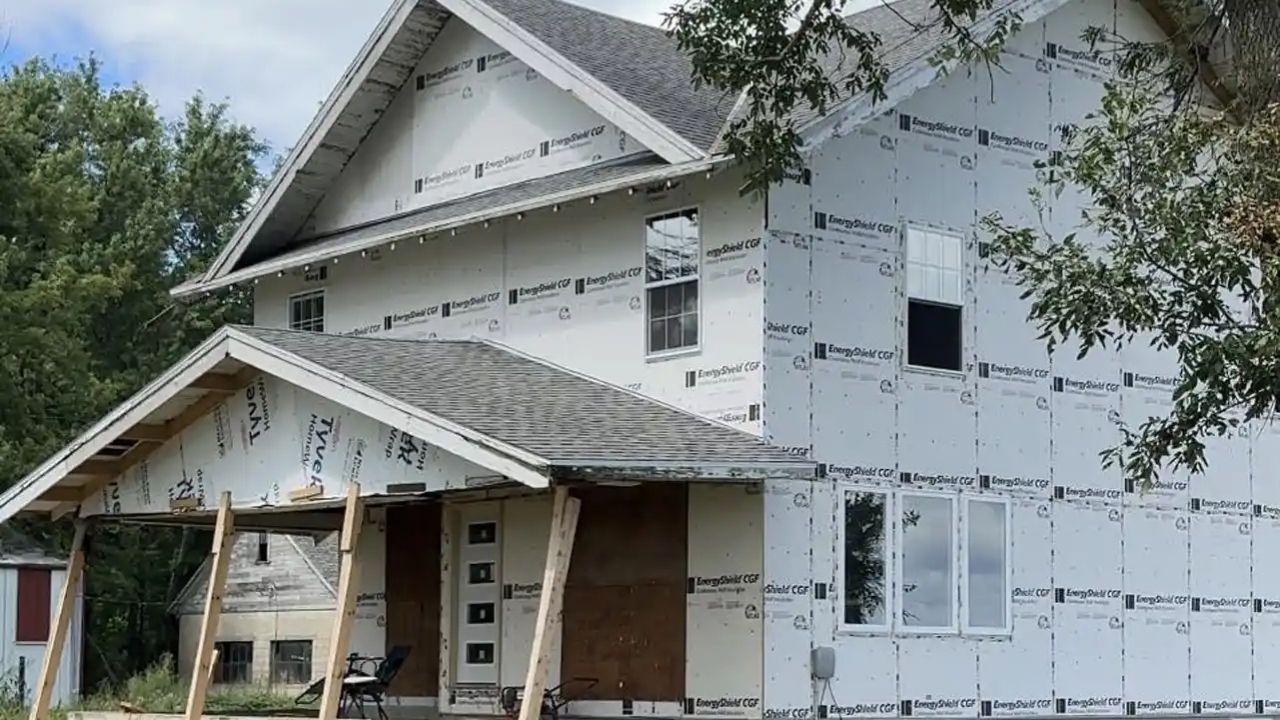
The opportunity arose when the couple found a farmhouse built in 1920, located just 4 miles from the property, a distance equivalent to about 6 km. The former owners had built a new house and no longer needed the original structure.
It was in this context that Sha’rel and Brandon bought the property for $12,000. The operation was not just a common purchase: the house needed to be transported whole to the new land, preserving the structure so that the renovation could begin at another address.
Transport kept the century-old structure in use
Moving an entire farmhouse is an unusual decision, but it made sense for the couple because it allowed them to preserve an old building and avoid an even more expensive renovation on the house that was already on the land. The move also kept in circulation a structure that might have lost its use.
The report does not detail the company responsible for the transport or the separate cost of this stage. What the source informs is that the house was moved 4 miles to the family’s property, where the adaptation process began to turn it into a permanent residence.
Renovation required more work than expected
After the move, the restoration revealed problems that were not fully visible at the beginning. Sha’rel told People that, upon opening parts of the house, the family found greater structural damage than anticipated, which increased time and costs.
This is a common reality in old properties: walls, floors, and structures can hide damages that only appear during the work. In the case of the 1920 farmhouse, the charm of the construction came with typical technical challenges of a property over 100 years old.
Investment reached around $80,000
By the time the report was published, the family estimated having invested approximately $80,000 in repairs and renovations. The amount was used to transform the old house into a functional, comfortable space suitable for the couple and their three children.
The project was not presented as a luxury work or transformation with an unlimited budget. On the contrary, Sha’rel explained that the family tried to save whenever possible, resorting to creativity, their own labor, and practical decisions to advance the renovation.
Original wood became a central part of the preservation
One of the most important points for the couple was to preserve the original details of the house. The family removed and stored all the original wood, with plans to restore and reinstall these elements throughout the process.
For Sha’rel, this wood represents the character and craftsmanship of a construction made in 1920. The preservation of these details prevents the renovation from completely erasing the identity of the house, even with necessary adaptations for current use.
Social media followed the transformation
Sha’rel started documenting the work to keep her husband’s family, who live in Washington state, updated on the progress of the renovation. What began as a form of family communication ended up reaching hundreds of thousands of followers on social media.
According to People, the response surprised the family itself. Many people began to follow the process, send messages, and comment on the progress of the renovation, especially during the period when Sha’rel was pregnant with their third child.
Project deviated from the perfect internet renovation
The couple’s proposal on social media was not to show a flawless project with a high budget and professional finish in every detail. Sha’rel stated that she wanted to present a more realistic view of what it means to renovate an old house with limited resources.
This aspect sets the story apart from many renovations showcased online. The farmhouse did not become content just for the final result, but for the process: unforeseen events, savings, manual labor, gradual decisions, and preservation of what could still be saved.
Family has already moved into the property
With the main stages completed, the family officially moved into the house. After the most intense phase of the work, Sha’rel said that the pace became more careful, with attention to details, landscaping, and improvements that can be made gradually.
The pressure to finish quickly gave way to a more intentional phase. The family completed the exterior cladding and began planning new details to make the property more personal, without losing the initial proposal of creating a welcoming home.
History shows another path for old houses
The journey of the 1920 farmhouse in Iowa shows an alternative for old properties that still have structure, history, and original elements that can be preserved. Instead of demolishing, the couple bought, transported, renovated, and adapted the construction for a new stage.
The case also raises a question about residential preservation: is it better to build from scratch or restore an old house when there is still material, memory, and artisanal quality? Would you have the courage to transport an entire house for miles to transform it into a home? Leave your opinion in the comments.