Portuguese
  Spanish


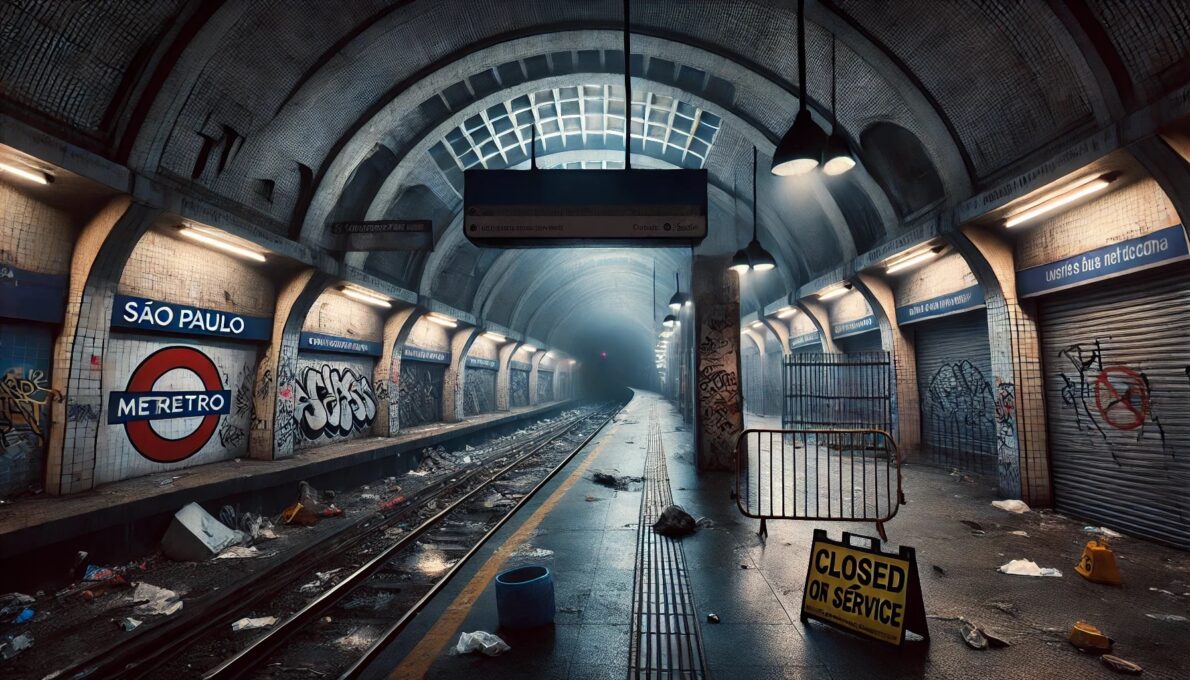

The São Paulo Metro, One of Brazil’s Main Transport Systems, Faces the Abandonment of Three Stations That Could Transform Urban Mobility. Discover the “Ghost Stations” of São Paulo and the Impact of These Stalled Works on the City’s Transport.
The metro in São Paulo is one of the most important transport systems in the country, connecting millions of people every day and facilitating movement across a giant and bustling city like São Paulo. However, despite having 91 active stations, São Paulo could have more stops if not for the abandonment of 3 metro stations in São Paulo that were never completed or operated as planned. Let’s understand more about the abandonment of metro stations in São Paulo and how it affects urban mobility.
The Ghost Stations of São Paulo: Tutóia, Ibirapuera, and Moema
The story of these three stations is, at the very least, curious. The city of São Paulo has always had ambitious plans to expand its metro system, and the Tutóia, Ibirapuera, and Moema stations were designed to create an extension of the Paraíso Station, connecting Lines 1-Blue and 2-Green. With this expansion, the metro in São Paulo would have an even more extensive connection between the city zones, making life easier for thousands of people.
However, the plan did not go as expected, and the abandonment of these stations ended up creating what many call “ghost stations”. Let’s understand a bit about what happened to each of them.
-
France Revamps 530 Social Housing Units with Large Balconies and Glass Facades Without Demolishing Existing Buildings

-
10-Year-Old Max Makes History with Paris Fashion Show, Launches Own Brand, Hires Staff, and Sets World Record as Youngest Runway Designer

-
Bolivian Female Construction Workers Form Association to Combat Discrimination and 38% Pay Gap in the Industry
-
Near Amsterdam, residents buy land and discover they must also build streets, manage drainage, handle waste, and grow food on half their plot.




Tutóia Station: An Unfulfilled Promise
The Tutóia Station was part of the expansion plan for the metro in São Paulo and would be one of the intermediate stations between Paraíso and other areas of the city. According to historical records, this station appeared on maps and projects as part of a network that would extend to Moema Station. However, the Tutóia Station never materialized, disappointing expectations for an improvement in urban mobility in the city.
If it had been built, Tutóia could have facilitated access to strategic regions of São Paulo, in addition to distributing passenger flow across different routes. Its abandonment is an example of how a lack of investment in public transportation directly affects the daily life of São Paulo residents.
Ibirapuera Station: Another Unfulfilled Promise of the Metro in São Paulo
Following the same fate as the Tutóia Station, the Ibirapuera Station was also never built. The project included a station in the area of the famous Ibirapuera Park, a place of significant movement for people, tourists, and residents. The construction of this station could have revolutionized transport in the area, providing more accessibility and facilitating transportation for those visiting the park and nearby neighborhoods.
The absence of this station, like Tutóia, is yet another consequence of the abandonment of metro stations in São Paulo and represents a lost opportunity to improve urban mobility. Unfortunately, the region lost the chance to become even more accessible and better connected to the rest of the city.
Moema Station
Unlike the Tutóia and Ibirapuera stations, the Moema Station was built and inaugurated in 2018. However, this station ended up not connecting with the original expansion project of the Paraíso Station. Instead, it was integrated into Line 5-Pink, which runs from Capão Redondo to Chácara Klabin, connecting with other lines such as 2-Green, 1-Blue, and 9-Emerald.
Moema Station is located between the Eucaliptos and AACD – Servidor stations and does not have a direct connection to the lines that originated from the initial project. Although it is in operation, this station does not exactly fulfill the initial proposal to facilitate connections between Line 1-Blue and Line 2-Green, leaving a “gap” in the urban mobility plan designed for São Paulo.
The Consequences of Abandoning 3 Metro Stations in São Paulo
The abandonment of 3 metro stations in São Paulo is a clear example of how interrupted or poorly executed projects directly impact urban mobility. Each abandoned station represents one less connection for São Paulo residents, who face daily difficulties in moving around such a large city. The construction of the Tutóia and Ibirapuera stations would have alleviated passenger flow on Lines 1 and 2, preventing overcrowding and reducing travel time for metro users.
This failure in the expansion affects the planning of other lines and future projects. Often, areas that could benefit from greater mobility end up overwhelmed by traffic, with no practical alternatives for public transportation.
Urban Mobility in São Paulo
São Paulo is known for its complexity and size, which makes urban mobility a constant challenge. With over 5 million people using the metro daily, the six operational lines are no longer sufficient to meet the demands of a constantly growing city. The abandonment of metro stations in São Paulo only worsens this situation, forcing more people to use private vehicles or face crowded conditions in public transport.
Today, the São Paulo metro covers over 100 kilometers of track and has 91 stations distributed across its six lines. However, if the original expansion project had been completed, the number of stations could be even higher, benefiting different regions and facilitating the movement of thousands of São Paulo residents.
The Hope for New Projects for the Metro in São Paulo
Even with the abandonment of 3 metro stations in São Paulo, the residents remain hopeful for an even broader expansion. New projects for lines and stations are still being discussed, and the population hopes they will come to fruition to finally reduce traffic and improve the quality of life for those who depend on public transport.
Experts in urban mobility point to the importance of new lines and stations that cater to more distant and disconnected areas of the city center. São Paulo has the potential to offer an even larger metro system that is accessible to all and less dependent on automobiles, reducing pollution and traffic jams.