






 Portuguese
  Spanish


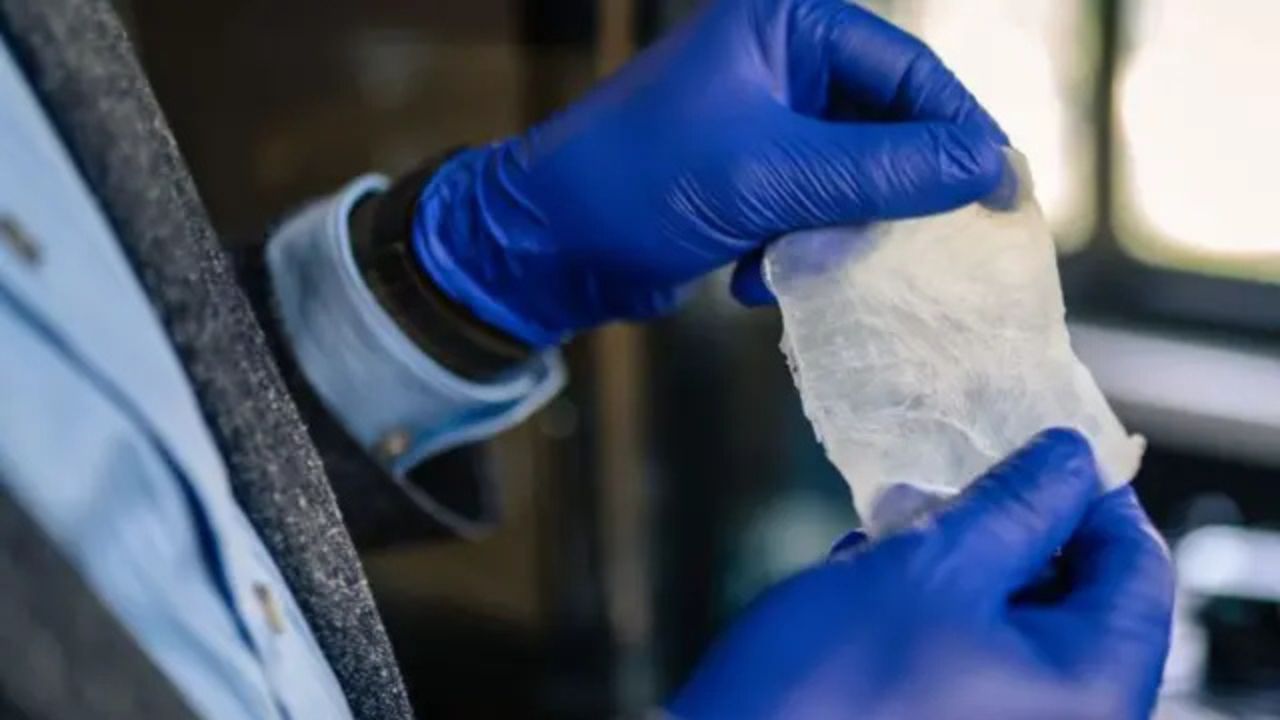

Discovery at the University of Houston Promises to Replace Conventional Plastic with a Revolutionary and Ecologically Correct Material
In the fight against the growing problem of plastic waste, an innovation promises to change everything. A team from the University of Houston, led by Maksud Rahman, assistant professor of mechanical and aerospace engineering, developed a one-step method to create biodegradable cellulose sheets. The most impressive part is that these sheets are strong enough to compete with traditional plastics.
US Engineer Develops Innovative Plastic Alternative
Maksud Rahman was the driving force behind the effort to transform bacterial cellulose into a high-performance material. The goal? Replace plastic in our daily lives. The real breakthrough lies not only in the material but in how it is made. By controlling the movement of bacteria inside a rotating incubator, the team was able to guide the production of aligned cellulose nanofibers.
The result is an incredibly flexible yet robust sheet, with potential applications in various areas, from packaging to medical dressings. “We envision that these resilient, multifunctional, and eco-friendly bacterial cellulose sheets will become ubiquitous, replacing plastics in various sectors and helping to mitigate environmental damage,” Rahman noted.
-
Warm water hidden deep in the ocean has been moving towards Antarctica for 20 years, potentially accelerating glacier melting from below.

-
U.S. Offers Nearly $200,000 to Combat Invasive Mussels Threatening Waterways and Hydroelectric Plants
-
Cigarette Butts Pollute Brazilian Beaches, Sparking Debate on Coastal Environmental Protection Measures
-
App Drivers Unite in Major Solidarity Effort to Aid Venezuela Earthquake Victims, Mobilizing the Brazilian Amazon with Donation Campaign


The New Era of Biodegradable Materials

Source: University of Houston.
Bacterial cellulose is already known for being naturally abundant and biodegradable, forming the backbone of this new material. But the researchers did not stop there. They enhanced the cellulose sheets by adding boron nitride nanosheets to the nutrient solution. This allowed for the creation of hybrid sheets with significantly better properties.
The composite sheets exhibited remarkable tensile strength, reaching up to 553 MPa. Additionally, they demonstrated superior thermal conductivity, dissipating heat three times faster than untreated samples. “We reported a simple, scalable, one-step upward strategy to biosynthesize robust bacterial cellulose sheets with aligned nanofibrils and multifunctional hybrid nanosheets based on bacterial cellulose using shear flow forces in a rotational culture device,” Rahman explained.
MASR Saadi, a Ph.D. student at Rice University and the first author of the study, commented: “The resulting bacterial cellulose sheets exhibit high tensile strength, flexibility, foldability, optical transparency, and long-term mechanical stability. Shyam Bhakta, a postdoctoral fellow at Rice, assisted in the biological implementation.
How Bacterial Engineering Is Redefining Sustainable Production
The main innovation is a customized rotational culture device. This cylindrical and oxygen-permeable incubator rotates around a central axis. This continuous movement generates a directional flow of fluids, which guides the bacteria to follow an organized path.
“We are essentially guiding the bacteria to behave with a purpose,” Rahman said. “Instead of moving randomly, we direct their movement so that they produce cellulose in an organized manner.”
The study, published in Nature Communications, marks a significant step towards scalable and green manufacturing. Unlike traditional bioplastics, which often require energy-intensive processing, this approach uses simple biological principles enhanced by mechanical design.
With the growing interest in sustainable materials, Rahman’s technique has the potential to be widely adopted in industries seeking to reduce their reliance on plastic. The team believes this method could open doors to a vast range of industrial uses. “This scalable, one-step biofabrication approach, producing strong, multifunctional aligned bacterial cellulose sheets, would pave the way for applications in structural materials, thermal management, packaging, textiles, green electronics, and energy storage,” Rahman added.
By combining biology, materials science, and nanoengineering, the team created a viable pathway for sustainable, high-performance alternatives to plastic, without relying on petroleum-based materials or complex chemical processing.


