





 Portuguese
  English
  Spanish
  5 min of reading
  0 comments


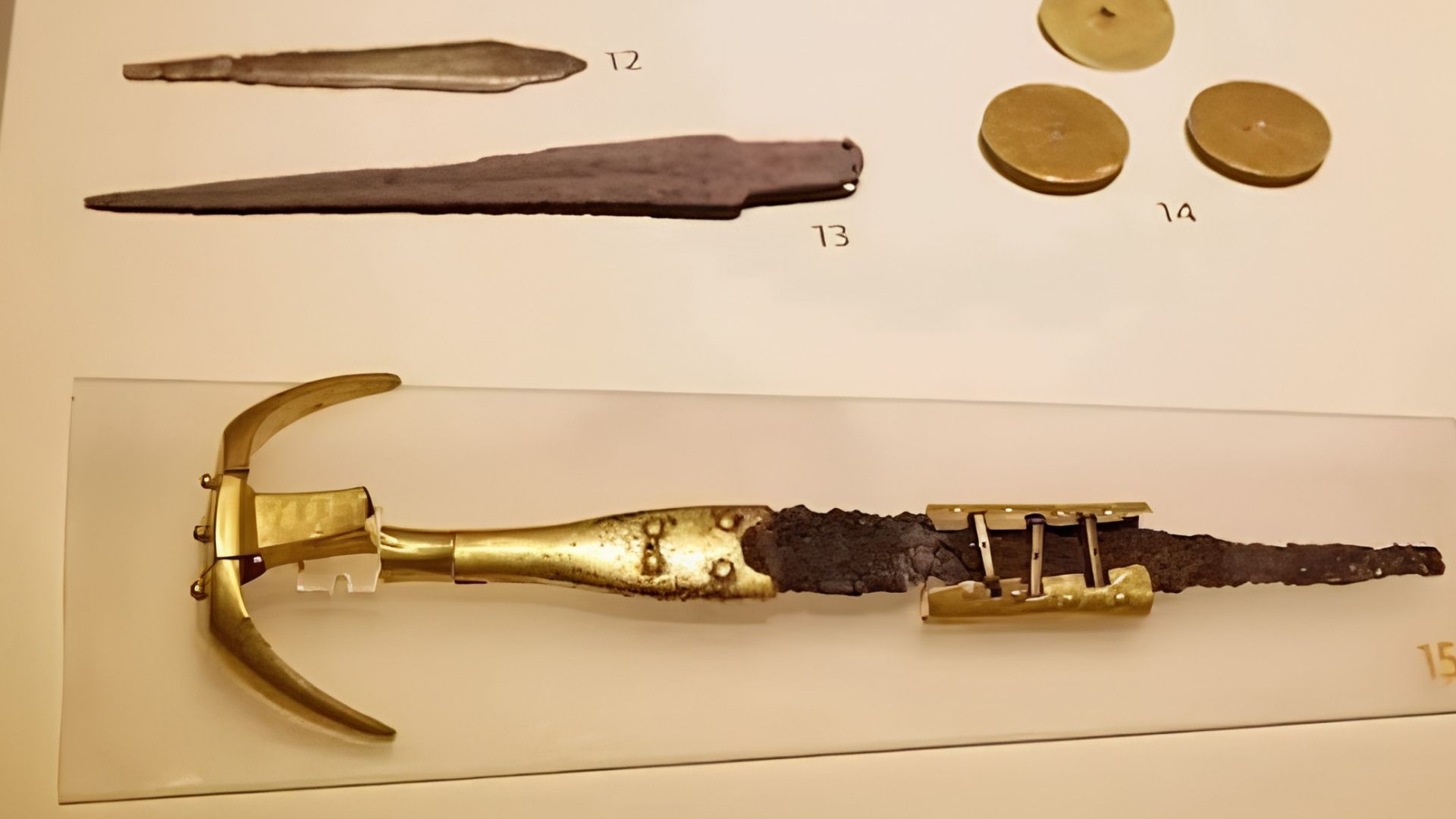
Dagger of Alaca Höyük, in Turkey, may have been made with meteoric iron about 1,300 years before the Iron Age, according to scientific analyses.
Long before iron metallurgy spread throughout the ancient world, some elites already possessed objects made with this metal. The most impressive detail is that, in some cases, this iron did not come from terrestrial mines but from meteorites. One of the most striking examples is the dagger of Alaca Höyük, found in a royal tomb in present-day Turkey and dated to around 2500 BC, centuries before the beginning of the Iron Age in the region.
The piece gained even more relevance after analyses published by researcher Albert Jambon in the Journal of Archaeological Science showed that its chemical composition is compatible with meteoric iron. This means that the blade may have been forged with metal from space, transforming the dagger into one of the oldest and most extraordinary examples of the use of iron by humanity.
Dagger of Alaca Höyük was buried more than a thousand years before the Iron Age
Alaca Höyük is one of the most important archaeological sites in Anatolia and became known for the so-called royal tombs of the Bronze Age, rich in gold, silver, bronze, and ceremonial objects. Among these finds appeared an iron dagger found in Tomb K, identified as Al.K.14, whose chronology revolves around 2500 BC.
-
Before the great colonial centers were born, São Vicente was already voting: in 1532, the first city in Brazil held the first recorded elections in the Americas and marked the beginning of the continent’s political life on the coast of São Paulo.

-
Three-story house weighing 128,000 kg is lifted by hydraulic jacks and removed from the coast in the US before being swallowed by the ocean; 20 properties have already collapsed in the region and the advance of the sea raises an alert for the Brazilian coast.

-
At 360 meters high, a glass bridge extends 35 meters over a canyon in Brazil, leaving visitors “floating” over the Vale da Ferradura, with views of the Caí River and the Caracol Waterfall.

-
The song that made the whole of Brazil sing during the 1970 World Cup seemed like just a celebration of the third championship, but it hid a much more complex story linked to the military dictatorship.





This fact draws attention because the Iron Age is usually situated, in that part of the world, around 1200 BC. In other words, the dagger of Alaca Höyük predates by about 1,300 years the period normally associated with the broader use of iron in Anatolia.
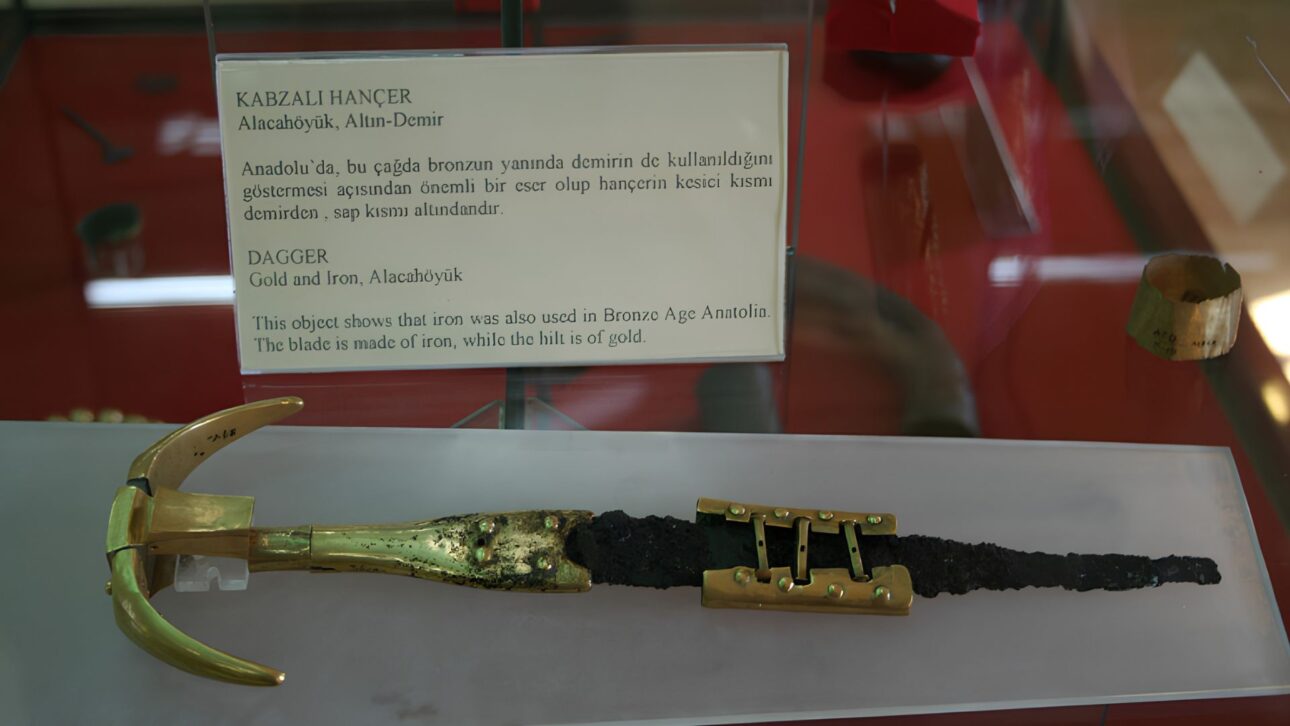
This helps explain why the object has intrigued archaeologists for so long. It appears in a historical moment when iron was not yet part of common metallurgy and, therefore, could not be treated as a trivial material in the context of the Bronze Age.
Iron was a rare metal and much more extraordinary than it seems today
Today, iron is one of the most abundant and widely used metals on the planet. But in the ancient world, the situation was completely different. According to the study by Albert Jambon, iron objects from the Bronze Age were extremely rare because the technology to extract iron on a large scale from terrestrial ores was not yet widespread.


This made each piece of iron have enormous symbolic, political, and ritual value. In many cultures of the ancient Near East, the metal was associated with something unusual, precious, and almost supernatural, precisely because its origin was mysterious and its presence was much rarer than that of several other prestigious materials.
In this context, the dagger of Alaca Höyük was not just a weapon. It was probably also an object of extreme status, reserved for an elite capable of controlling unusual and meaningful materials.
Chemical composition revealed that the metal may have come from a meteorite
The major breakthrough in the interpretation of these ancient objects came with chemistry. According to the study by Albert Jambon, the best way to distinguish terrestrial iron from meteoric iron is not just to look at the amount of nickel alone, but at the relationship between iron, nickel, and cobalt.
Metallic meteorites typically have high concentrations of nickel and geochemical patterns that do not appear in iron obtained from common ores. Applying this strategy to various Bronze Age artifacts, Jambon concluded that some of them were compatible with an extraterrestrial origin. Among the highlighted objects is precisely the dagger of Alaca Höyük.
This changes the way the piece is understood. Instead of representing very early terrestrial metallurgy, it is now seen as part of an ancient tradition of utilizing iron fallen from the sky, used in rare objects long before iron smelting became common.
Turkish dagger enters the same group of famous objects as Tutankhamun’s dagger
The most well-known case of meteoric iron remains Tutankhamun’s dagger in Egypt. But the dagger of Alaca Höyük is even older. While the pharaoh’s weapon is dated to around 1330 B.C., the piece from Turkey dates back to approximately 2500 B.C..
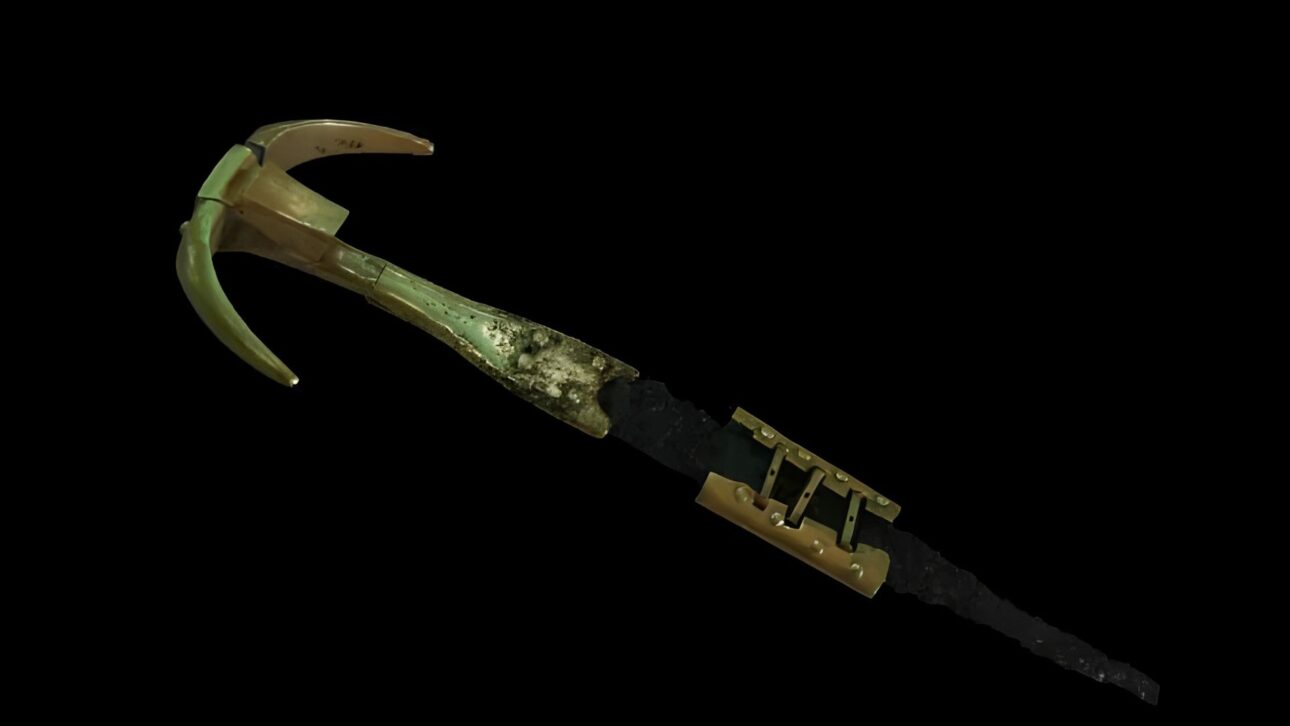
This comparison helps to gauge the significance of the discovery. The two pieces seem to be part of an ancient pattern where objects made with meteoric iron were reserved for high-prestige figures and buried in elite funerary or ceremonial contexts.
Rather than being an isolated curiosity, the Alaca Höyük dagger reinforces the idea that humanity’s first contact with iron may have occurred precisely through metallic fragments from space.
Before smelting ore, humanity may have known iron by observing the sky
One of the strongest conclusions of Albert Jambon’s work is that the few iron objects from the Bronze Age that have been analyzed so far largely point to a meteoric origin. This suggests that the first iron used by humans may not have been extracted from the Earth’s crust but collected from meteorites.
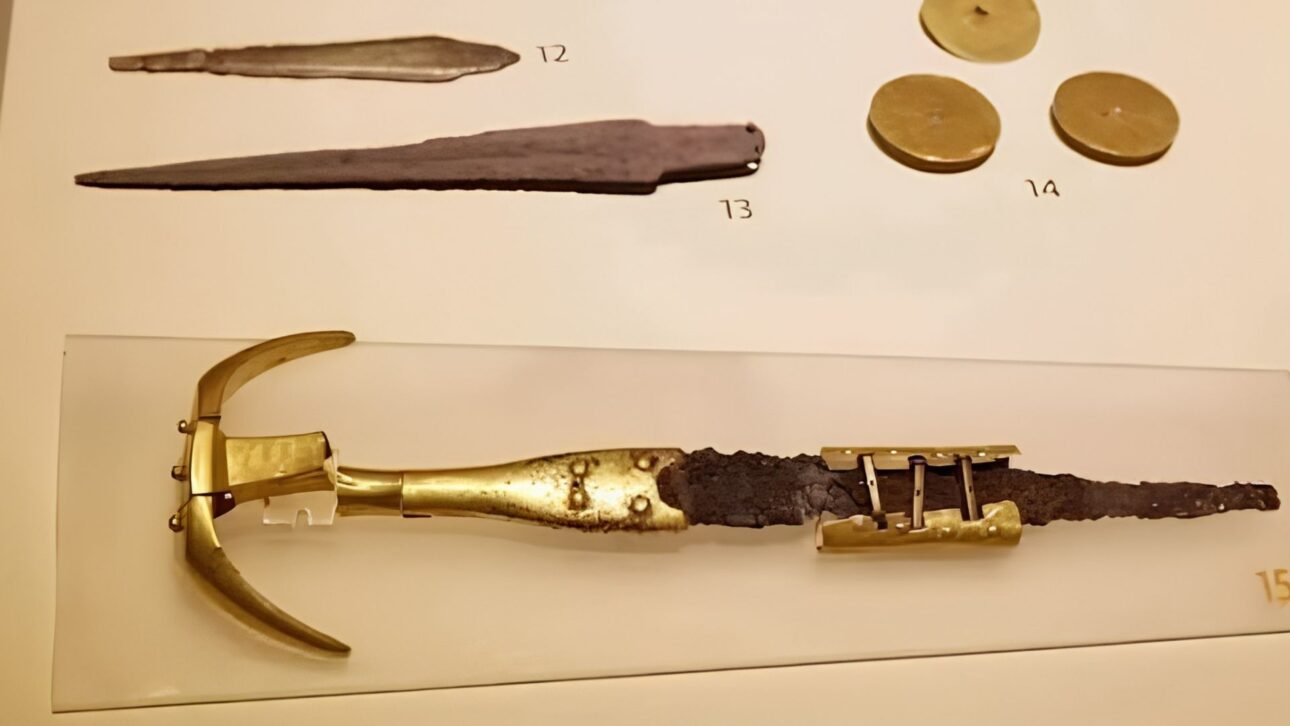
This changes the way many people imagine the history of metallurgy. Before learning to smelt iron ore in furnaces, different societies may have known this metal as a very rare material, ready for use, found in fragments that had traveled through space.
In the case of the Alaca Höyük dagger, this hypothesis makes the piece even more extraordinary. It ceases to be just an ancient weapon to become an object that connects archaeology, metallurgy, and astronomy in a single story.
The Alaca Höyük dagger remains one of the most impressive pieces of ancient archaeology
More than 4,500 years after being buried in a royal tomb in Anatolia, the dagger continues to raise important questions about technology, power, and symbolism in the ancient world.
It shows that some elites of the Bronze Age had access to a very rare material and perhaps treated it as something much more valuable than a simple raw material.

It seems that one of the first iron weapons known to humanity may not have been born in an earthly forge, but in a metallic meteorite that crossed space before hitting the Earth. It is this detail that transforms the piece from Alaca Höyük into one of the most fascinating artifacts in Near Eastern archaeology.






Be the first to react!