





 Portuguese
  English
  Spanish
  5 min of reading
  0 comments


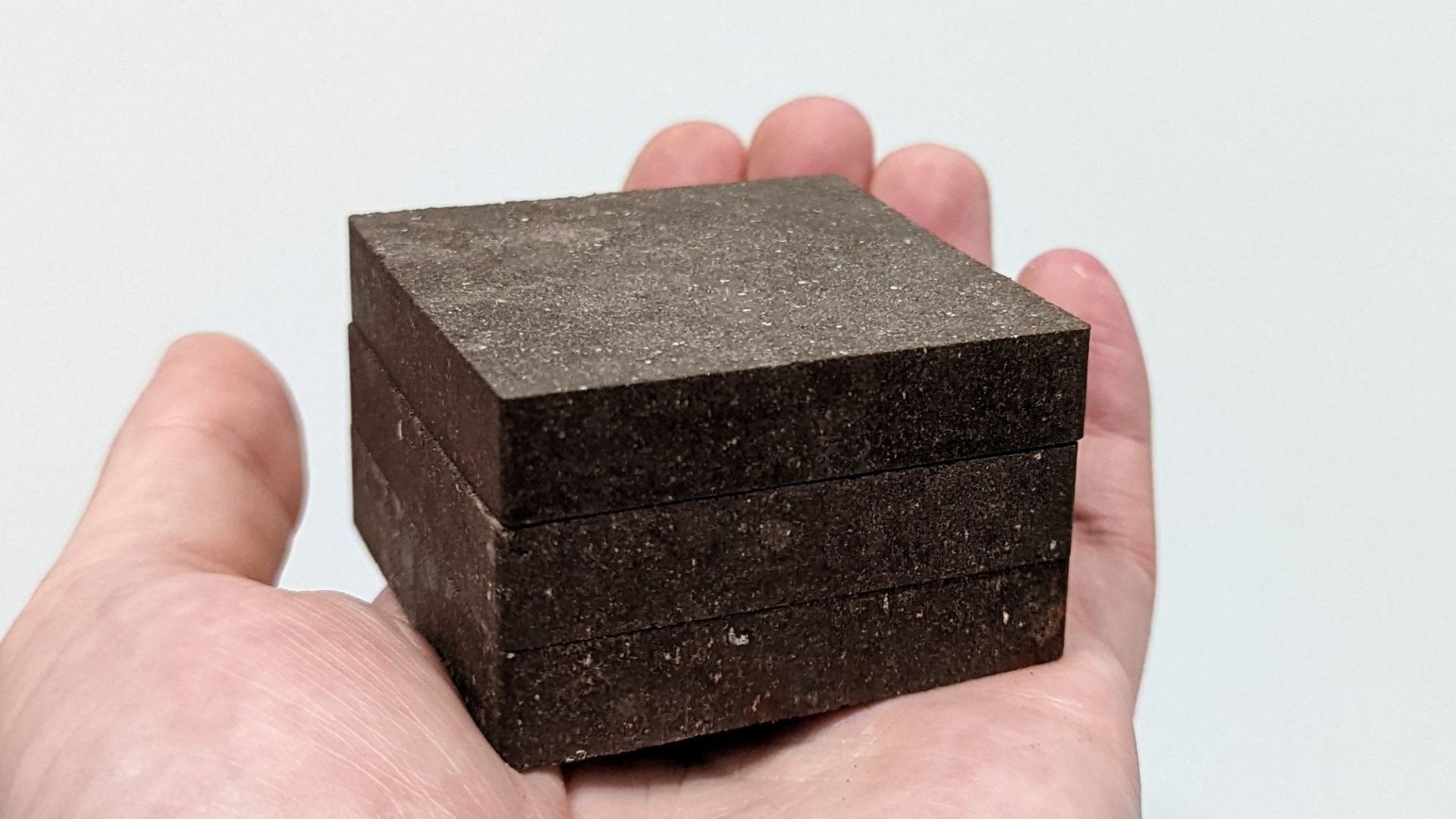
Material called StarCrete uses simulated Mars dust, potato starch, and salt, reaches 72 MPa, and surpasses the strength of conventional concrete.
When it comes to building houses, roads, and structures on Mars, the biggest challenge is not just reaching the red planet, but figuring out how to erect all of this without bringing tons of cement, steel, and heavy equipment from Earth. It was in trying to solve this problem that researchers from the University of Manchester developed StarCrete, a material made with simulated Mars dust, potato starch, and small amounts of salt.
According to the University of Manchester and the article published in Open Engineering, the material achieved 72 MPa of compressive strength, above the 32 MPa cited as a reference for conventional concrete. In tests with lunar soil simulant, the result was even higher, reaching 91.7 MPa.
StarCrete was born to solve the biggest bottleneck of construction on Mars
Bringing construction materials to Mars is an extremely expensive and complex operation. Each kilogram launched into space requires fuel, logistical support, and a transportation chain that raises the mission’s cost. Therefore, construction outside Earth depends on the logic of using what already exists in the destination environment itself.
-
Brazil hasn’t won a World Cup since the time when brick cell phones were a luxury, dial-up internet froze everything, ICQ had user numbers, and Windows XP seemed like futuristic technology.

-
Far beyond the colossal glaciers: the “hidden culprit” that raises sea levels even without new ice blocks melting: the ocean also warms, expands, and takes up more space.

-
Each 100-word email you request from ChatGPT can evaporate the equivalent of a bottle of water in data centers on the other side of the world; researchers estimate 520 milliliters per message and warn about what happens when this is multiplied by millions.

-
Frightened by the speed of Chinese manufacturers, Renault decided to mimic the pace, made the new electric Twingo in just 21 months, wants to repeat the feat with 36 models by 2030, and along the way, will cut up to 2,400 engineering positions.






In the Martian case, the most abundant resource is the regolith, the layer of dust and rock fragments that covers the planet’s surface. The advancement of StarCrete is precisely in showing that this material can become a kind of resistant structural composite using a simple binder with low energy consumption.
The proposal attracted attention because it avoids very heavy industrial solutions. Instead of relying on large furnaces, Portland cement or sophisticated sintering processes, the study followed a much simpler path, based on resources that could be produced or found during a prolonged human mission.
Potato starch became the binder that gave strength to the Martian material
The central point of the research was to demonstrate that common starch can act as a binder when mixed with simulated Martian soil. According to the article from Open Engineering, this starch allowed for the production of a high-strength structural biocomposite, capable of surpassing several other proposed solutions for construction beyond Earth.
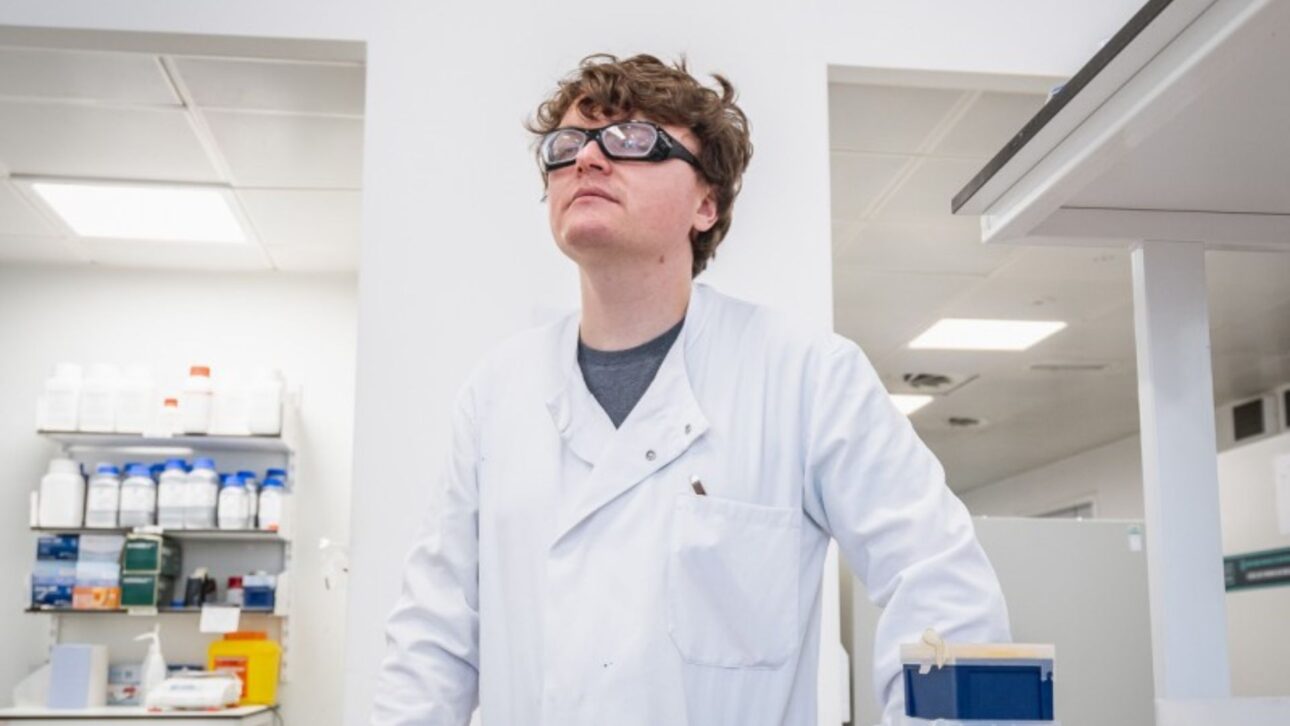
In addition to starch, the researchers added magnesium chloride, a salt that can also be obtained on Mars. The combination improved the compound’s strength and reinforced the material’s viability as a practical alternative for future space missions.
The result was a material with an appearance and function similar to that of a brick or lightweight structural concrete. The difference is that it is born from a logic much more adapted to space exploration, where simplicity, low energy consumption, and local resource utilization make all the difference.
StarCrete’s Strength Placed the Material Above Common Concrete
The compressive strength was one of the results that drew the most attention in the work. According to the University of Manchester, the StarCrete produced with simulated Martian regolith reached 72 MPa, more than double the reference of 32 MPa used for conventional concretes in various applications.
In the Open Engineering article, the authors detail that, after optimization, the Martian StarCrete reached 72.0 MPa and the lunar version 91.7 MPa, clearly entering the range of high-strength materials. The study also reports that the flexural strength of the Martian material was 8.4 MPa, a value comparable to or superior to many common concretes.
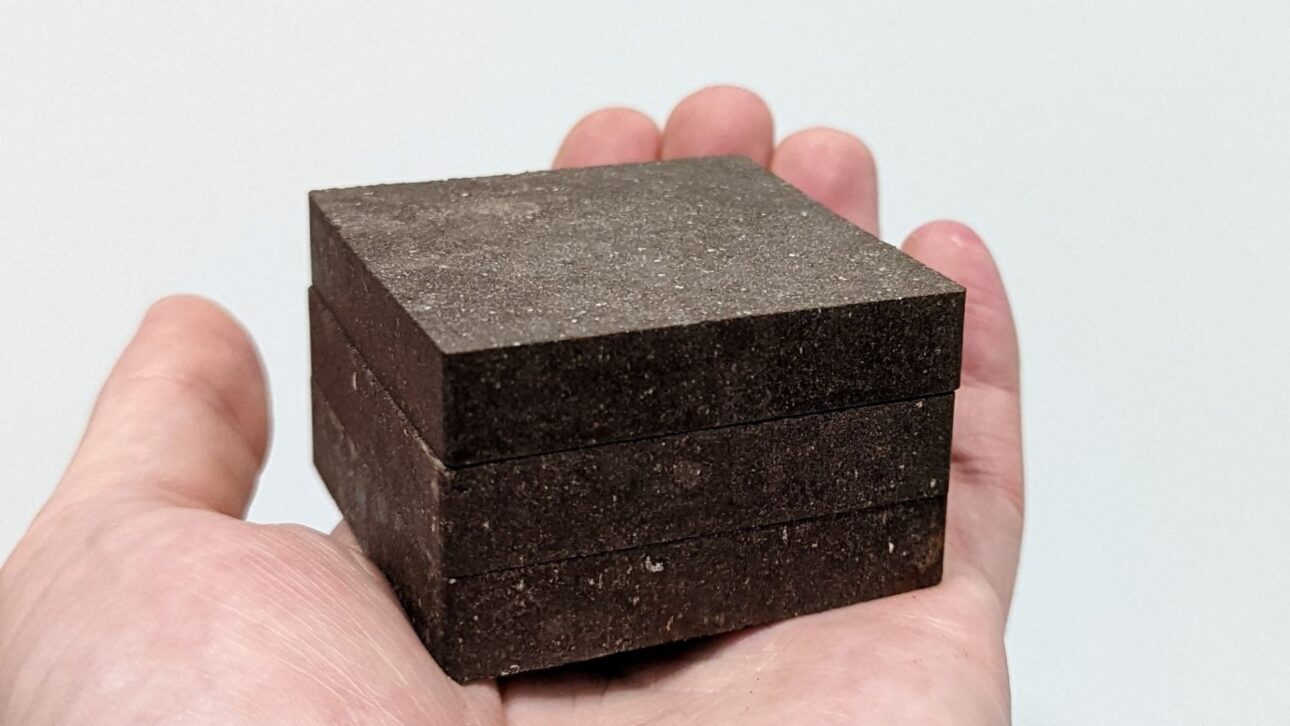
These numbers are relevant because they indicate that the material is not just a laboratory curiosity. It already appears in a performance range that interests both extraterrestrial structures and discussions about alternative construction materials on Earth.
A bag of potatoes can yield more than 200 StarCrete bricks
Another fact that gained prominence in the research dissemination was the relationship between food and construction. According to the University of Manchester, a bag of 25 kg of dehydrated potatoes contains enough starch to generate almost half a ton of StarCrete, equivalent to more than 213 bricks.
This calculation is important because future long-duration human missions will likely already have agricultural systems to produce food. In this scenario, part of the raw material used to feed astronauts could also supply the production of construction materials, integrating two critical needs of space colonization.
The logic makes StarCrete especially attractive for missions on Mars. Instead of bringing large stocks of ready-made materials from Earth, the mission could use the local soil and combine it with resources produced within the habitat itself.
Research replaced biological material with a much more realistic solution
StarCrete also represented an evolution compared to a previous attempt by the same team. Before potato starch, the researchers had produced a material using blood and urea, which reached about 40 MPa of compressive strength.
Despite the reasonable mechanical result, this alternative had an obvious limitation: relying on human biological material repeatedly in a hostile environment like Mars was not a practical solution. That is precisely why the group began to seek a simpler, renewable binder compatible with life support systems already planned for manned missions.
The switch to potato starch made the proposal much more plausible. Instead of an extreme experiment, the project began to point towards a more concrete route for real use in extraterrestrial habitats and structures.
StarCrete also enters the discussion on sustainable construction on Earth
Although the initial goal of the research is construction off-planet, the researchers themselves highlight that the material may have terrestrial applications. According to the University of Manchester, StarCrete could emerge as a potentially more sustainable alternative in certain situations because it does not rely on the high-temperature industrial processes used in traditional cement manufacturing.
The university also notes that cement and concrete account for about 8% of global carbon dioxide emissions. In this context, any technology capable of reducing production energy and opening new routes for manufacturing structural materials becomes of immediate interest to the construction industry.
There are still important challenges, such as long-term durability, behavior in humid environments, and industrial scalability. Even so, StarCrete has already made it clear that one of the answers for the construction of the future may come from much simpler ingredients than imagined.





Be the first to react!