Portuguese
  Spanish





If the company delivers the termination guides after 10 days of dismissal, you may be entitled to a fine equivalent to one full salary, as foreseen in Article 477 of the CLT — but only if the date and signature in the term are correctly registered.
The termination of employment is one of the most delicate moments in the relationship between employer and employee. According to the law firm Magalhães & Moreno Attorneys, seemingly simple details in the TRCT (Termination of Employment Contract Term) can be costly.
An incorrectly filled field, a hasty signature, or a retroactive date can result in the loss of unemployment insurance, FGTS, and even a fine of one full salary.
Lawyer Daniel Moreno, a specialist in labor law, warns that, often, errors go unnoticed because the worker is weakened by the dismissal.
-
As Brazil Expands Social Welfare, Survey Reveals 40% Blame Poverty on Laziness, While 58% Cite Lack of Opportunities

-
China Tightens Control on Antimony, Driving Prices from $22,000 to Nearly $40,000 per Ton as U.S. Rushes to Bolster Strategic Reserves

-
BlackRock Freezes $1 Billion in Brazilian Renewable Energy, Impacting 1.5 GW of Planned Projects and Highlighting Investor Concerns Over Infrastructure Bottlenecks Cutting Up to 25% of Solar and Wind Generation
-
Labor Shortage: Despite Record Average Salary, 90% of Brazilian Bar and Restaurant Owners Struggle to Hire Key Roles Like Sushi Chefs and Head Cooks


However, by not correctly checking the document, the employee may forfeit significant amounts that would be legally owed.
Check the Reason for the Dismissal (Field 22)
The first field to analyze is the one that records the reason for the worker’s departure.
It can indicate dismissal without just cause, just cause, resignation, or agreement.
An error here completely changes the rights of the employee.
The problem is that some companies, either by mistake or bad faith, record “resignation” when in fact there was a dismissal without just cause.
This difference is crucial: in the case of resignation, the worker loses the right to unemployment insurance and the 40% FGTS fine.
According to Moreno, it is easier to overturn a just cause dismissal in Labor Court than to challenge a resignation signed by the worker.
Check the Net Amount to Receive
Another critical point is the net amount indicated at the end of the termination, which includes proportional vacation, 13th salary, notice period, and legal deductions.
The lawyer warns that signing the TRCT means giving full clearance of the amount, even if the deposit has not been properly made yet.
A recurring example is when the document indicates R$ 5,000, but the worker received only R$ 2,000 at the time.
By signing, the courts may interpret that the R$ 5,000 has already been paid, making it difficult to collect the remainder.
The guidance is clear: only sign after verifying that the stated amount is already available in account or received in hand.
Check the Date and Signature of the Termination
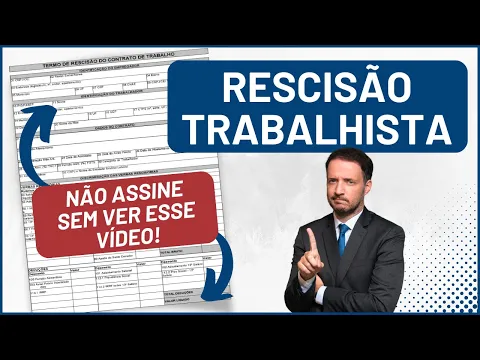

The law establishes a 10-day period from the date of dismissal for the company to deliver guides and make payments.
However, some companies date the signature of the TRCT weeks later and fill in the date retroactively.
This practice masks delays and harms the worker.
According to Article 477 of the CLT, when the company fails to comply with this deadline, the employee is entitled to a fine equivalent to one salary.
To protect themselves, Moreno recommends manually noting on the document: “Guides delivered on XX/XX/2025”, if irregularities are noticed.
This record can be crucial as evidence in any legal action.
Why These Checks Are Crucial
The three highlighted points — reason for dismissal, net amount, and date of signature — may seem bureaucratic, but they represent the guarantee of important benefits. A mistake can mean the loss of thousands of reais in damages and social benefits.
According to Magalhães & Moreno, rushing to sign can be costly. It is ideal to review every detail, demand receipts, and keep copies of all documents to avoid future headaches.
And you, have you faced difficulties in the termination process due to company errors or lack of checking in the TRCT? Do you think workers are well-informed about these risks? Share your experience in the comments — we want to hear from those who live this in practice.