Portuguese
  Spanish


Brazilian hypersonic research advances in a field that combines extreme speed, scramjet engines, resistant materials, and high-complexity testing, while the 14-X brings together universities, national industry, and FAB structures in one of the most demanding areas of modern aerospace engineering.
Through the 14-X Hypersonic Propulsion Project, Brazil maintains a research front led by the Brazilian Air Force, with participation from the Institute of Advanced Studies in São José dos Campos, in the interior of São Paulo.
The initiative seeks to expand national competencies in an area that combines aerodynamics, propulsion, materials, navigation, control, and testing under extreme conditions, factors considered essential for mastering high-complexity aerospace technologies.
Compared to the Concorde, the Brazilian challenge gains another technical dimension, as the supersonic plane operated by British Airways cruised near Mach 2, while the 14-X was designed to demonstrate technologies at much higher levels.
-
Archaeologists Uncover 1,200-Year-Old Gold Treasure in Saudi Arabia, Ownership Remains a Mystery

-
Brazilian Startup Converts Tucumã Seeds into Bioplastic for Bicycle Pedals, Cups, and Construction Materials

-
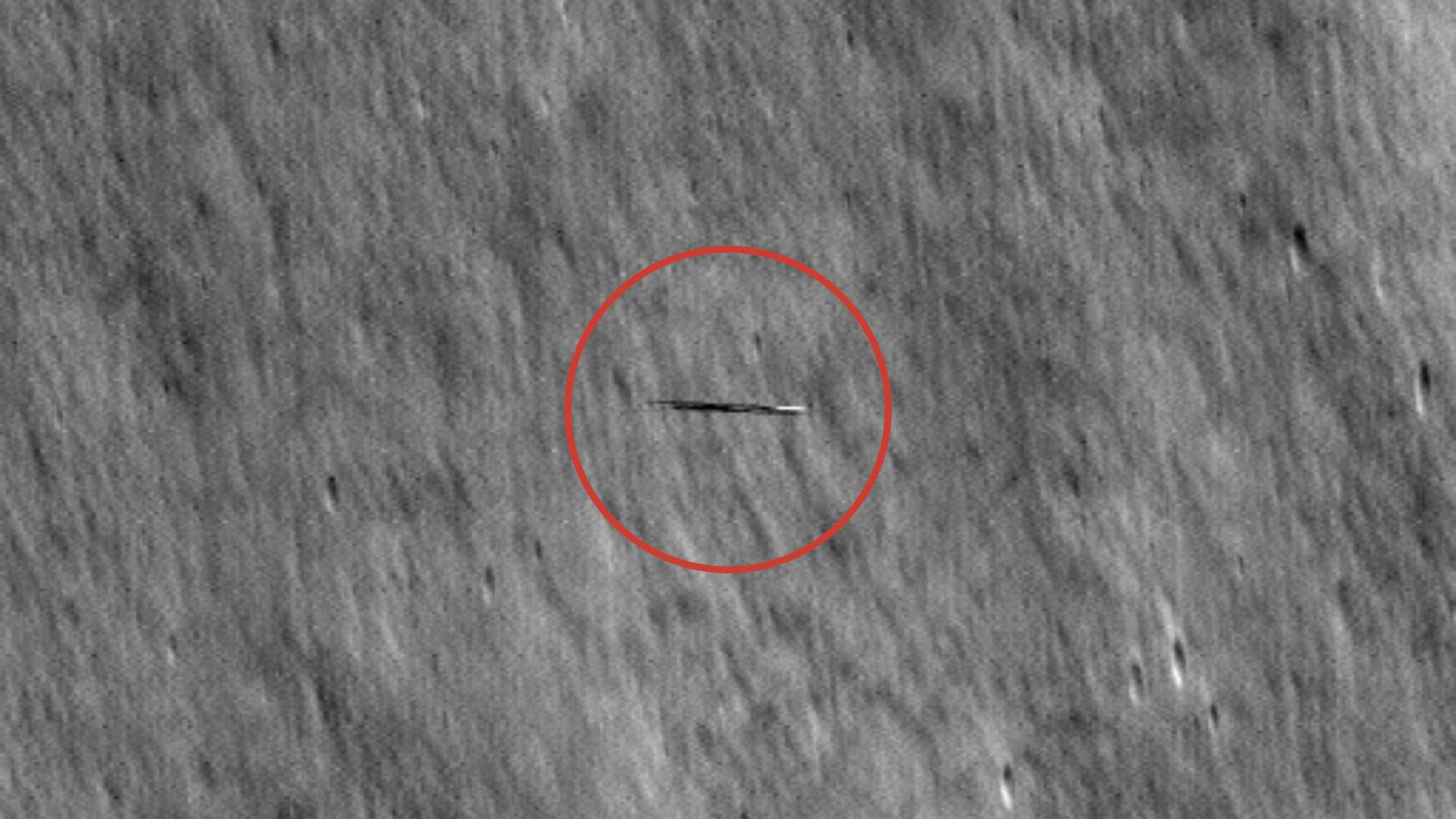
NASA Captures Rare Encounter of South Korean “Surfboard” Spacecraft Crossing Lunar Orbit at Over 11,000 km/h

-
Germany Opens World’s Largest Smart Power Semiconductor Factory with €5 Billion Investment, Creating 1,000 Jobs and Doubling Capacity for AI and Energy Needs



In this scenario, the goal associated with the project involves speeds of up to Mach 10 in a stratospheric environment, a condition that requires strict control of temperature, stability, combustion, and structural behavior during critical phases of the flight.
14-X Project expands hypersonic research in Brazil
Within the FAB, the project integrates a long-term effort to consolidate knowledge in aspirated hypersonics, an area where the engine uses atmospheric air in the combustion process, without relying solely on the onboard oxidant.
Since the mid-1990s, the IEAv has maintained research in this field within the Brazilian aerospace system, focusing on training specialists and developing technical solutions aimed at high-speed vehicles.
In 2008, this set of studies began to be organized by PropHiper, created to coordinate the development of two central technologies: the scramjet engine and the aerodynamic configuration known as waverider.
By combining these two fronts, the project seeks to make the vehicle’s shape itself contribute to high-speed performance, in a regime where pressure, temperature, and stability impose severe limits on the design.
According to the FAB, the integrated scramjet-waverider vehicle was planned to reach about ten times the speed of sound, approximately 12,000 kilometers per hour, at an altitude close to 30 kilometers.
With this objective, the 14-X is part of the field of frontier technologies, alongside research conducted by countries such as the United States, Japan, Australia, Russia, France, and China.
Flights above Mach 5 require extreme mastery
Above Mach 5, the flight ceases to be just a quest for more speed and starts to involve physical phenomena that change the relationship between the vehicle, the surrounding air, and the structure itself.
Under these conditions, the air undergoes intense compressions, the temperature rises sharply, and the aerodynamic loads require resistant materials, precise sensors, and computational models capable of predicting behaviors difficult to reproduce on the ground.
At the center of this challenge is the scramjet engine, which needs to maintain combustion in supersonic flow, with an extremely short interval to mix air and fuel during the vehicle’s passage through the planned operation range.
For this reason, each stage of the 14-X functions as a technological demonstration, aimed at validating subsystems before the project advances to more integrated and demanding configurations from an operational standpoint.
The FAB reports that PropHiper was divided into major phases of flight tests, in which demonstrators are used to test specific parts of the vehicle in trajectories compatible with the hypersonic regime.
One of these stages involves the 14-X S, a demonstration platform for the hypersonic air-breathing engine, brought to the initial operating condition by an accelerator vehicle based on the VSB-30 sounding rocket.
Since the scramjet does not start from rest like a conventional engine, the demonstrator needs to first reach suitable speed and altitude, allowing for the analysis of combustion, airflow, and integration between engine and vehicle.
Hypersonic technology strengthens the aerospace industry
Although speed is the most visible aspect, the advancement of the 14-X also involves a chain of knowledge with a direct impact on Brazil’s ability to design, test, and qualify complex aerospace technologies.
Among the areas mobilized are high-temperature materials, test instrumentation, sensors, measurement methods, numerical simulation, guidance systems, and techniques for integration between propulsion and aerodynamics.
Even as an experimental demonstrator, the program helps create a scientific base for future solutions for space access, high-speed vehicles, and engineering systems prepared to operate in extreme environments.
The participation of national companies appears in the project’s history, as the construction of the 14-X S involved contracting Orbital Engenharia, as well as inspections and tests conducted with institutions from the Brazilian aerospace system.
In this process, organizations such as the Institute of Aeronautics and Space and the Institute of Industrial Promotion and Coordination were also mobilized, responsible for stages related to the validation and technical qualification of the demonstrator.
Alcântara enters the hypersonic test route
To conduct flight tests, the project requires infrastructure compatible with high-energy trajectories, a wide safety area, and tracking capability during phases where speed, altitude, and temperature change rapidly.
Therefore, Operation Cruzeiro was planned for launch from the Alcântara Launch Center in Maranhão, a structure that offers a favorable location and a flight corridor over the Atlantic Ocean.
Besides the Maranhão base, the Barreira do Inferno Launch Center in Rio Grande do Norte was planned as a remote tracking station, reinforcing the need for precise monitoring during the mission.
In hypersonic projects, tracking trajectory, altitude, acceleration, and thermal behavior is part of the technical validation, as each collected data helps to understand the vehicle’s performance under extreme conditions.
More than a race for speed, the 14-X brings together academic research, applied engineering, launch infrastructure, national industry, and the training of specialists in a technology that still poses challenges to countries with a consolidated aerospace tradition.
By transforming decades of study into flight demonstrators, Brazil seeks to reduce technological dependencies and expand its presence in strategic areas of aerospace engineering, where each advance requires years of testing and rigorous physical mastery.
In a sector marked by special materials, complex tests, and phenomena difficult to control, how far can Brazil go with the 14-X?