Portuguese
  Spanish


Archaeological discovery in Dhariyah gathers more than 100 objects of gold, silver, and precious stones. Furthermore, researchers investigate whether the collection belonged to a medieval pilgrim who followed the historic Hajj route.
An archaeological discovery in Saudi Arabia is attracting the attention of the scientific community. During the sixth season of excavations at the Dhariyah site, archaeologists located a treasure of gold buried about 1,200 years ago. The collection gathers more than 100 pieces and, as indicated by researchers, may be related to a medieval pilgrim who was heading towards Mecca via the traditional Hajj route.
Moreover, the find expands knowledge about the circulation of luxury goods and the historical importance of ancient Islamic pilgrimage routes. The information was released by the Saudi Heritage Commission.
Where was the 1,200-year-old gold treasure found?
The treasure was found at the archaeological site of Dhariyah, located in the Al-Qassim region, in Saudi Arabia.
-
Brazilian Startup Converts Tucumã Seeds into Bioplastic for Bicycle Pedals, Cups, and Construction Materials

-
NASA Captures Rare Encounter of South Korean “Surfboard” Spacecraft Crossing Lunar Orbit at Over 11,000 km/h

-
Germany Opens World’s Largest Smart Power Semiconductor Factory with €5 Billion Investment, Creating 1,000 Jobs and Doubling Capacity for AI and Energy Needs

-
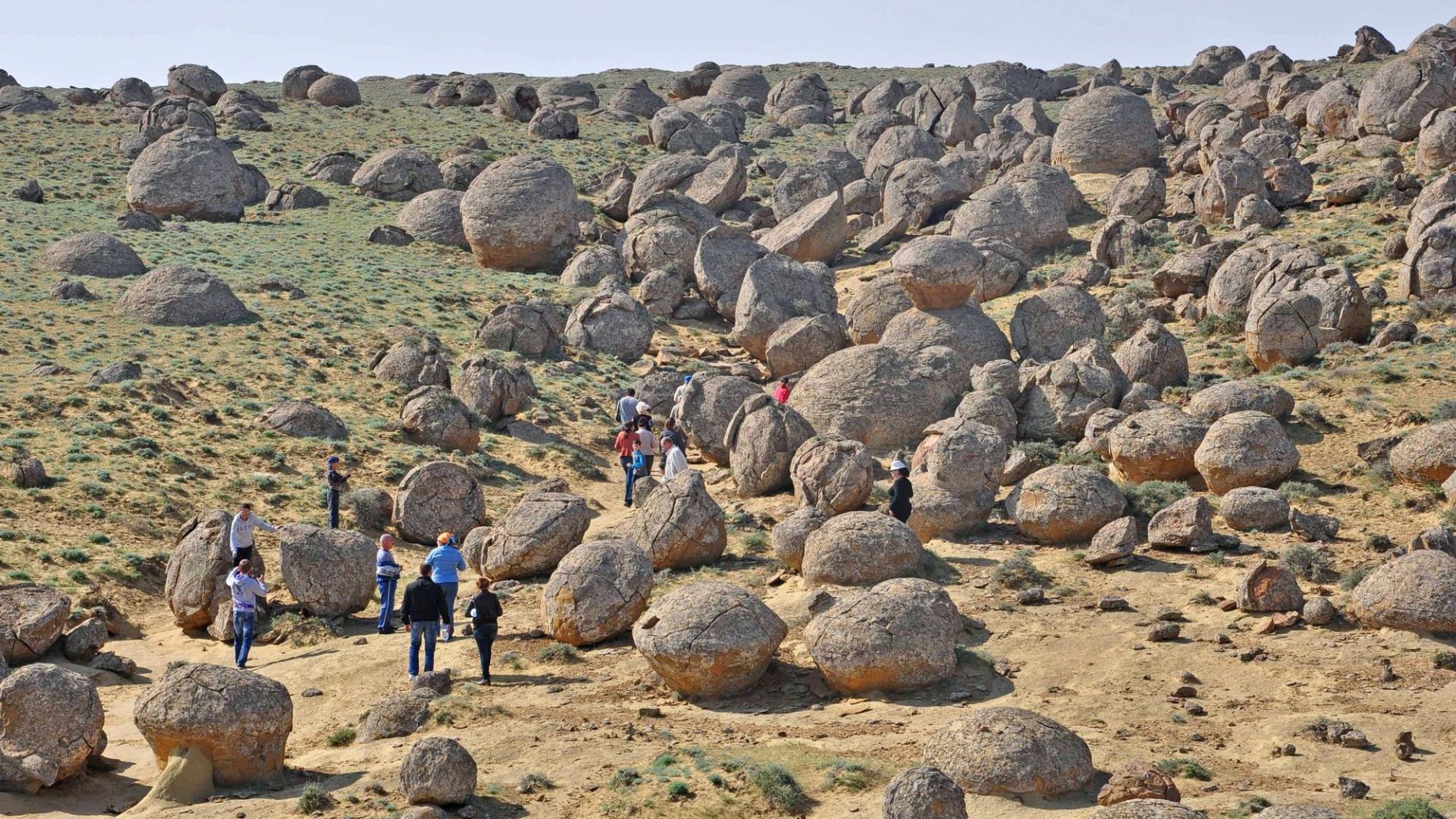
Kazakhstan’s Torysh Valley Holds Thousands of Giant Stone Spheres, Intriguing Scientists with Ancient Oceanic “Cannonballs”

Historically, the site functioned as an important stop on the Hajj route, used by pilgrims traveling from Basra, currently in Iraq, to the holy city of Mecca.
According to the Saudi Heritage Commission, archaeological analyses indicate that the main settlement in the region was occupied between 743 and 753 AD. This period coincides with the early years of the Abbasid Caliphate, which began in 750 AD.
What was inside the Dhariyah Treasure?
During the excavations, a buried ceramic vessel was located. Inside it, more than 100 pieces were preserved.
Among the main objects found are:
- Jewelry made of gold;
- Pieces produced in silver;
- Inlaid semi-precious stones;
- Elements decorated with floral patterns;
- Detailed geometric motifs;
- Fragments of oxidized copper;
- Gold sheets worked in relief.
In addition to this set, residential structures, water reservoirs coated with plaster, and various fragments of glass and ceramics had already been identified in previous research seasons.
Why do archaeologists believe the treasure may have belonged to a pilgrim?
So far, it has not been determined who buried the treasure nor for what reason this occurred.
However, as the container was found at an ancient stop on the Hajj route, archaeologists consider it plausible that the set belonged to an Islamic pilgrim.
In this scenario, the goods may have been hidden during the journey and, subsequently, never recovered by the owner. However, this hypothesis still depends on new archaeological evidence.
What is the historical importance of the discovery?
Researchers highlight that the treasure was probably buried in the early years of the Abbasid Caliphate, a period that began in 750 AD.
This phase is widely recognized as part of the so-called Islamic Golden Age, marked by scientific, cultural, and economic development.
Besides the artistic value of the jewelry, the set provides new information about pilgrimage routes, regional trade, and the circulation of luxury items in the Arabian Peninsula during the 8th century.
Moreover, the pieces reveal a high level of craftsmanship, evidenced by the metallurgical techniques and ornamental details present in the objects.
Research continues to unravel the mystery of the Dhariyah Treasure
Despite the discovery, many questions remain unanswered.
Therefore, excavations will need to be expanded to identify who occupied the region and understand the circumstances that led to the burial of the treasure.
While new studies are conducted, the Tesouro de Dhariyah remains one of the most significant archaeological discoveries recently made in Saudi Arabia, contributing to expanding the knowledge about the ancient Hajj routes, the trade of luxury items, and the occupation of the region during the early years of the Abbasid Caliphate.