






 Portuguese
  Spanish


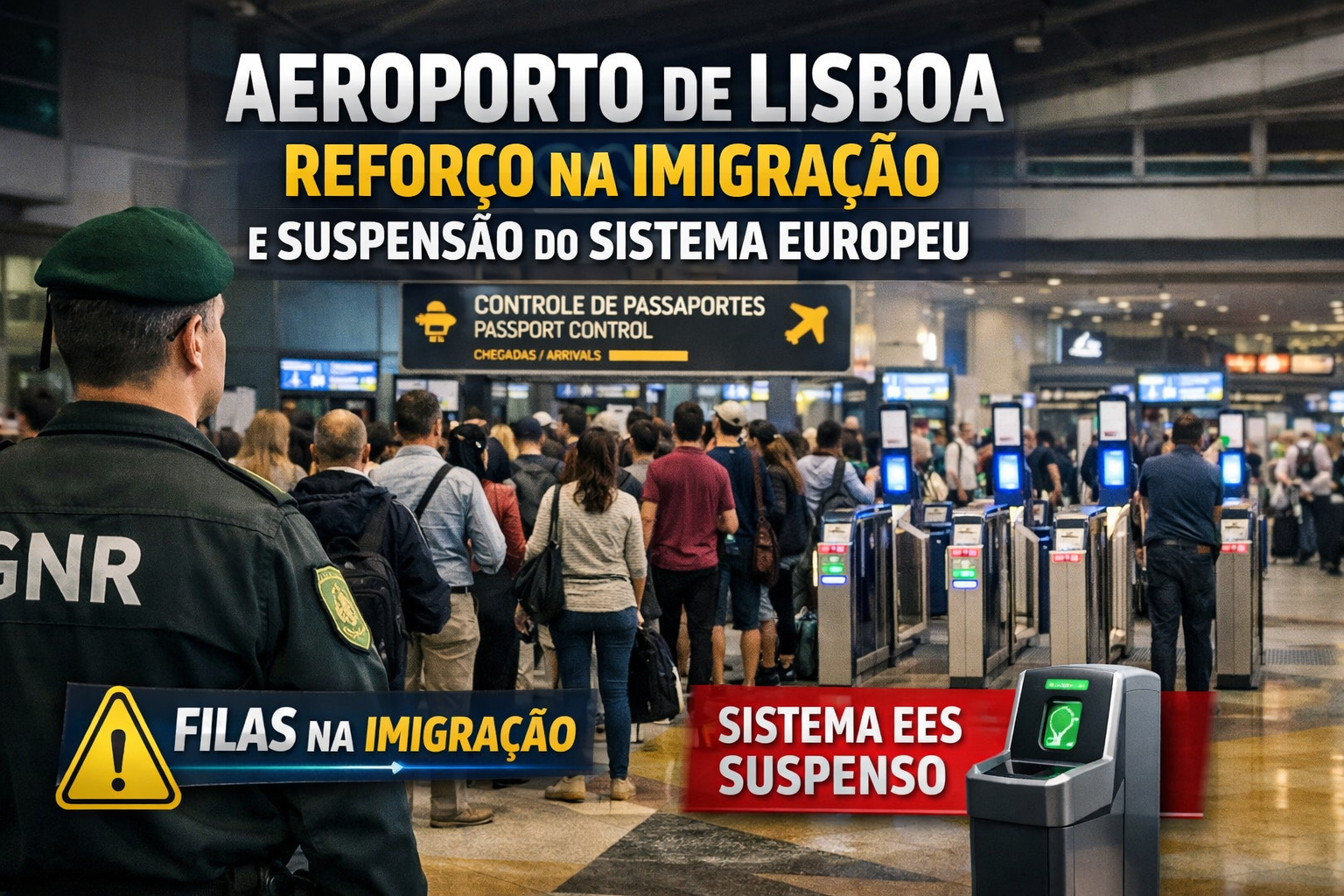
Lisbon Airport Suspends Immigration System for 3 Months and Strengthens Police Control to Reduce Lines and Improve Air Transport.
The Lisbon Airport has started operating with new immigration measures after the Government determined the suspension of the European entry and exit control system for three months. At the same time, the authorities increased police presence to reduce lines and improve flow in air transport.
The decision took effect immediately and affects border control at Humberto Delgado Airport. The Government adopted the measure in light of the high flow of passengers, especially from outside the Schengen Area.
Immediate Reinforcement of Immigration Control
The Public Security Police confirmed that it will receive military personnel from the National Republican Guard in the coming days to support immigration control at Lisbon Airport. In this way, the Government seeks to respond quickly to the increased demand.
-
Brazil Welcomes Spanish Wamos Air and Nigerian Air Peace, Potentially Transforming International Routes and Increasing Competition

-
Offshore air transport soars in Brazil, surpasses 2.5 million passengers, and reveals how oil has transformed Rio’s airports into key pieces of national logistics.

-
Latin America becomes the “global champion” of aviation taxes, tickets may become more expensive in Brazil, and IATA’s warning exposes risk for flights, tourism, and passengers.
-
Brazil has lost 85 air routes since 2019 and is still flying less than before the pandemic, leaving passengers with fewer destinations, fewer frequencies, and a more limited air network.


“Considering the extremely high flow of passengers at AHD, PSP will be reinforced in the coming days with GNR military personnel, a reinforcement that PSP greatly appreciates,” the police reported in a statement sent to RTP.
Although the law assigns the responsibility for air borders to the PSP, the Executive decided to take advantage of the certified capacity of the GNR. Thus, the human reinforcement takes effect without legal changes.
Limited Structure Pressures Lisbon Airport
PSP maintains a Airport Security and Border Control Division in permanent operation. However, the available structure limits the speed of service.
In Terminal 1, the airport offers 16 service counters in arrivals, as well as six in area T, and 14 in departures. In Terminal 2, only six counters serve passengers.
Therefore, even with teams at maximum capacity, the police admit that waiting times do not always meet the desired level, especially during peak hours.
Government Determines Suspension of the EES System
In light of worsening lines, the Ministry of Internal Administration decided to suspend the EES computer system at Lisbon Airport for three months. The Government made the decision based on European regulations.
According to the authority, the system directly impacted the arrivals area for non-European passengers. The second phase, which collects biometric data such as photographs and fingerprints, intensified the constraints.
Meanwhile, the Executive authorized an increase of about 30% in the capacity of electronic and physical border control equipment, within the limits of current infrastructure.
Investment of 7.5 Million in Technology
In addition to the temporary suspension, the Council of Ministers approved an investment of 7.5 million euros for the PSP between 2026 and 2028. The amount will finance the purchase of e-gates, software, and maintenance services.
According to the Government, the project is part of the Smart Borders initiative of the Schengen Area. Thus, the Executive aims to strengthen internal security and improve the management of migration flows at Lisbon Airport.
Emergency Measures in Air Transport
During Christmas and New Year, the PSP had already reinforced the airport with 80 agents. Additionally, the Government created an emergency task force when the European system was implemented in October.
Now, with more agents, the temporary suspension of the system, and new investments, the authorities hope to normalize immigration control. The goal is to ensure security without compromising the efficiency of air transport.








Be the first to react!